


- Multiple account types for different traders
- Supports MT4 and MT5
- Segregated client funds
- Swap-free Islamic accounts available
- Copy trading support
- Protection varies by regulatory entity
- Offshore clients may get weaker safeguards
- Higher deposit for ECN/Pro accounts
- Inactivity or withdrawal fees may apply
- Not available to US traders
This Alpari review evaluates the broker’s regulation, fees, platforms and account conditions using verified 2026 data to help traders decide if it fits their trading needs. Alpari operates as a multi-entity broker, with separate legal entities offering forex, CFDs and other instruments under different regional licenses.
Alpari’s safety status depends on which regulated entity a trader opens an account with. The broker holds licenses from financial authorities that vary by jurisdiction and client region.
Alpari’s account types differ mainly in spread structure, commission charges and maximum leverage available to clients. Standard and ECN-style accounts carry different minimum deposit requirements, spreads, commission structures and maximum leverage terms compared to competing brokers.
Deposit and withdrawal options at Alpari, along with platform access, vary based on the trader’s country of residence. Alpari supports several payment methods for deposits and withdrawals and restricts its services in certain jurisdictions due to regulatory limits. Forex Bit examines these details below to clarify what traders can expect before signing up.
The sections below start by answering whether Alpari is a safe and trustworthy broker in 2026, then break down its account types, spreads, commissions and leverage, followed by an overview of the trading platforms it offers.
Is Alpari a Safe and Trustworthy Broker in 2026?

Alpari qualifies as a broker with credible trust indicators in 2026, though its safety level depends on which regional entity a trader chooses. The group traces its presence back to the early 2000s and continues operating today under multiple corporate entities rather than a single global license. Alpari has operated in the retail forex sector for many years, which contributes to its recognition among traders worldwide. This extended track record, combined with segregated client funds practices commonly cited for the group, forms part of its general trust profile. However, trust cannot be assessed uniformly across all Alpari entities, since regulatory oversight and investor protections differ by jurisdiction. The next sections break down the specific licenses held by each Alpari entity and what protections apply to clients registering under them.
Which Regulatory Licenses Does Alpari Hold?
Alpari operates through multiple regulated entities, with different licenses applying depending on the client’s country of residence. This grouping question requires separating the entities rather than treating Alpari as one single licensed broker.
Alpari’s international client base typically registers under an offshore-regulated entity, separate from its regionally licensed operations.
Onshore or region-specific clients may deal with separate Alpari entities operating under local licensing arrangements distinct from the offshore structure. Each entity applies its own terms for leverage caps, negative balance protection and client fund segregation rules, based on the regulator overseeing that specific license.
Traders opening an account confirm which entity and license applies to their region before funding, since account protections and regulatory recourse differ between the offshore and onshore structures.
How Does Alpari Protect Client Funds?
Alpari protects client funds through segregated client accounts, negative balance protection and, for certain entities, participation in a compensation scheme. These three safeguards apply differently across Alpari’s regulated entities rather than uniformly across the whole group.
Client money segregation keeps trader deposits separate from Alpari’s own operating funds, a practice the group cites across its entities. Negative balance protection terms for Alpari clients, where applicable, depend on the specific licensed entity a trader is registered under, so the exact conditions can vary rather than applying uniformly across all Alpari entities.
Some Alpari entities additionally offer access to an investor compensation scheme, though eligibility depends on the specific license under which the client account is registered. Traders confirm which of these protections apply before depositing, since coverage differs by entity and region.
What Are Alpari’s Account Types, Spreads, Commissions and Leverage?
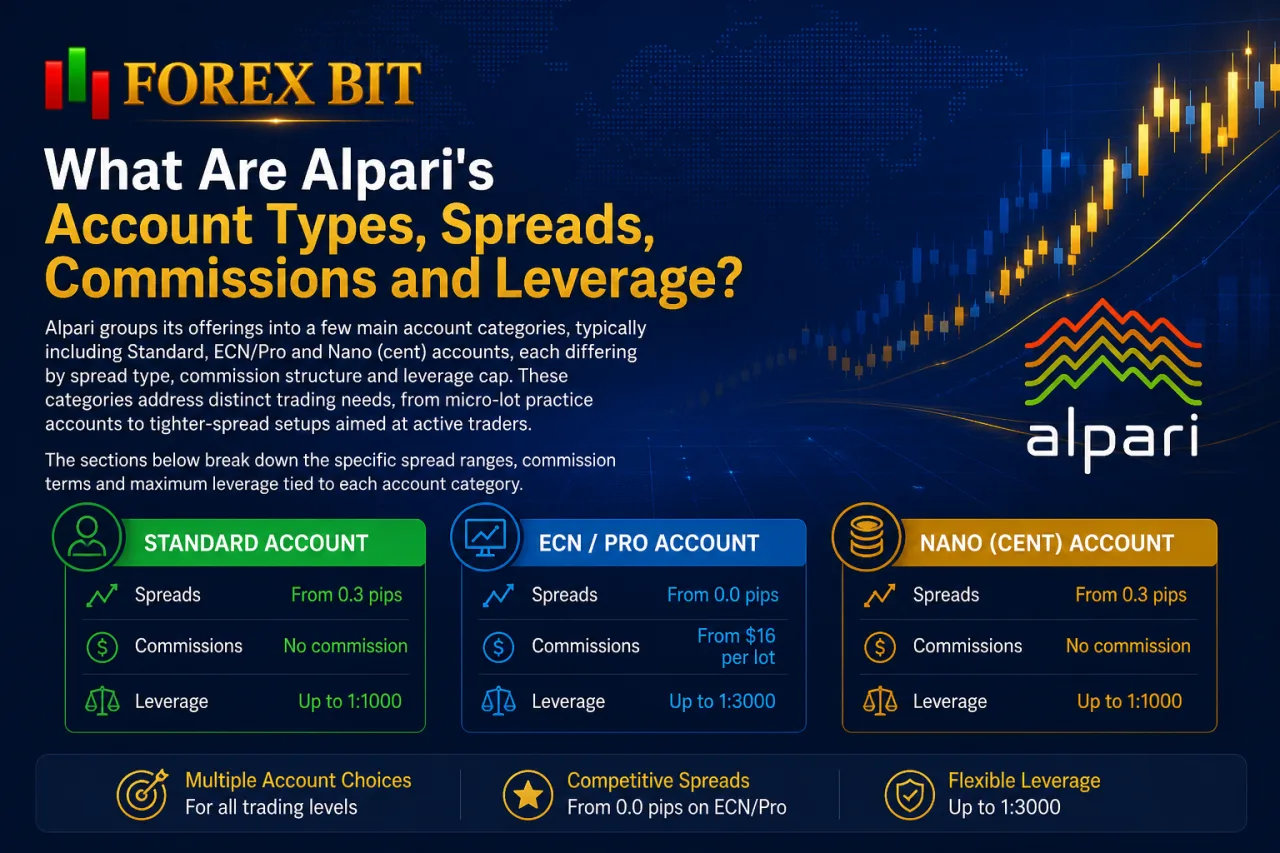
Alpari groups its offerings into a few main account categories, typically including Standard, ECN/Pro and Nano (cent) accounts, each differing by spread type, commission structure and leverage cap. These categories address distinct trading needs, from micro-lot practice accounts to tighter-spread setups aimed at active traders. The sections below break down the specific spread ranges, commission terms and maximum leverage tied to each account category.
Alpari Standard vs ECN Account: Which One Should You Choose?
The Standard account suits traders who prefer spread-only pricing, while the ECN/Pro account suits active traders who accept commission fees for tighter raw spreads. This comparison sets these two account types against each other on pricing structure, minimum deposit and trader profile.
The Standard account builds its cost into the spread, so no separate commission applies per trade. The ECN/Pro account charges a fixed commission per lot on top of raw interbank-level spreads, a structure typically favored by scalpers and high-volume traders, though traders should confirm the exact commission rate directly with Alpari before opening an account.
Minimum deposit requirements differ between the two categories, with the ECN/Pro account generally requiring a higher entry threshold than Standard, though traders should confirm the exact figures directly with Alpari before opening an account.
Beginners and lower-frequency traders lean toward the Standard account for simpler cost calculation, while experienced traders running high-volume or algorithmic strategies lean toward ECN/Pro for tighter effective spreads despite the added commission.
How Much Does It Cost to Trade with Alpari?
Trading costs at Alpari combine spread or commission charges, overnight swap fees and select non-trading fees, with the exact total depending on the account type chosen. This cost structure builds on the Standard versus ECN/Pro distinction already outlined above, since each account applies a different pricing model.
On Standard accounts, the spread itself covers the broker’s compensation, so no per-lot commission applies. ECN/Pro accounts add a fixed commission per lot traded on top of narrower raw spreads, though traders should confirm the exact rate directly with Alpari before opening an account.
Positions held overnight incur swap fees, which vary by instrument and by direction (long or short), reflecting interbank interest rate differentials. Swap rates at Alpari vary by trading instrument and market conditions, so traders should check the live swap schedule in the platform before holding positions overnight.
Beyond spreads and swaps, non-trading fees such as inactivity charges or withdrawal fees may apply depending on the entity and payment method used. Alpari’s fee schedule for inactivity and non-trading charges differs by regulated entity, so traders should verify the applicable terms with their specific account region before funding.
What Is the Maximum Leverage Offered by Alpari?
Alpari’s maximum leverage varies by account type and instrument, with the exact cap depending on the regulated entity handling the client’s account, so traders should confirm the current leverage limits directly with Alpari before opening an account. This leverage figure ties directly into the entity-based licensing structure already outlined for Alpari’s regulation and account protections.
Offshore-regulated Alpari entities typically permit higher leverage ratios, appealing to traders seeking greater capital efficiency on smaller deposits. Onshore or regionally licensed Alpari entities apply lower leverage caps, following restrictions set by the local financial regulator governing that entity, so traders should confirm the exact cap with Alpari before opening an account.
Leverage limits also vary by instrument category, with forex majors generally allowing higher ratios than indices, commodities or share CFDs. Account type plays a role as well, since Nano and Standard accounts may carry different maximum leverage settings than ECN/Pro accounts.
Traders confirm the exact leverage cap tied to their specific account entity and instrument before opening a position, since mismatched expectations around leverage directly affect margin requirements and liquidation risk.
What Trading Platforms Does Alpari Offer?

Alpari offers two main trading platforms, MetaTrader 4 and MetaTrader 5, both available across desktop, web and mobile access points. This platform question follows directly from the account and leverage structure already outlined, since platform choice ties into which account type and instrument range a trader selects. The next sections break down what each platform offers and how mobile and web access compare across devices.
MT4 vs MT5 at Alpari: What’s the Difference?
MT5 wins on instrument range and order types, while MT4 remains the more familiar choice for pure forex trading on Alpari. This comparison builds directly on the platform overview already outlined, since MT4 and MT5 share the same account access but differ in technical scope.
MT5 supports a broader instrument list, additional order types and a built-in economic calendar, features not carried over from MT4’s original design. MT4 retains a narrower focus on forex and CFD trading, which keeps its interface simpler for traders who only need core charting and order execution tools.
Execution speed and order processing depend on the account type and server infrastructure Alpari applies to that account, rather than a fixed difference between the two platforms themselves. Alpari’s execution model on ECN/Pro accounts may differ between the MT4 and MT5 platforms, so traders should confirm any execution differences directly with Alpari before choosing.
Trading style guides the practical choice between the two:
- Scalpers and multi-asset traders favor MT5 for its expanded order depth and instrument coverage.
- Forex-focused traders favor MT4 for its lighter, long-established interface.
- Algorithmic traders on either platform rely on Expert Advisors, though script compatibility differs between MT4’s MQL4 and MT5’s MQL5 languages.
How Do You Deposit and Withdraw Funds with Alpari?
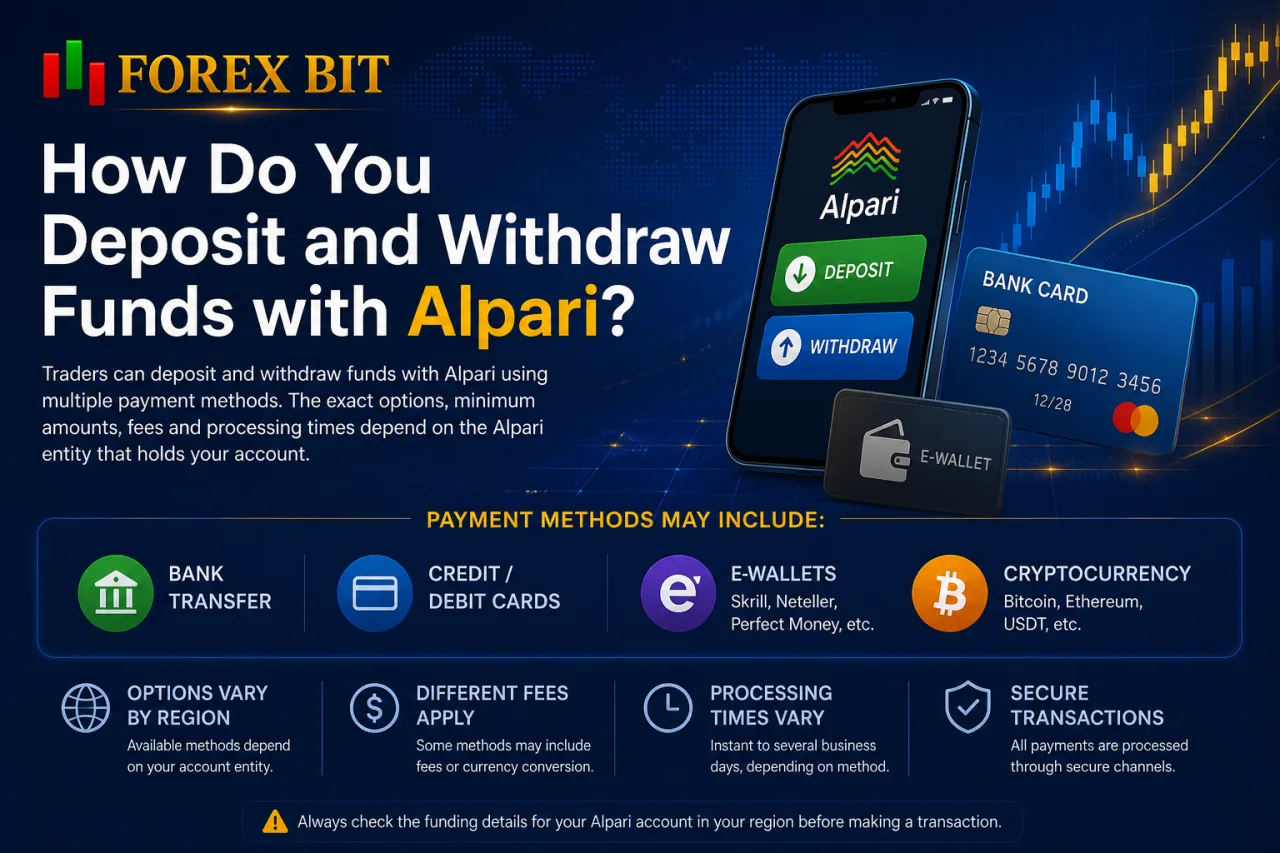
To deposit or withdraw funds with Alpari, traders select from several supported payment methods, with the exact options, minimum amount and processing time depending on the regional entity handling their account. This payment question builds directly on the entity-based structure already outlined for Alpari’s regulation and account terms, since funding methods and restrictions differ by license and country. The sections below break down which payment channels apply, what fees traders face and how long transactions typically take to clear.
What Is the Minimum Deposit Required to Open an Alpari Account?
Alpari’s minimum deposit generally starts at a low entry threshold for Standard and Nano (cent) accounts, while ECN/Pro accounts require a higher opening balance, though traders should confirm the exact figures directly with Alpari for their specific regulated entity before opening an account. This funding question connects directly to the account categories already outlined for Alpari, since each account tier sets its own deposit floor.
Nano (cent) accounts carry the lowest minimum deposit, aimed at beginners testing strategies with small capital exposure. Standard accounts sit slightly higher, keeping the entry point accessible for retail traders opening their first live account.
ECN/Pro accounts demand a larger minimum deposit, reflecting the tighter raw spreads and commission-based pricing that active traders expect from this tier.
Alpari accepts deposits in multiple base currencies, letting traders fund accounts without forced conversion into a single reporting currency. Alpari’s supported account currencies vary by regulated entity and payment method, so traders should confirm the exact currency options directly with Alpari before funding.
Which Countries Can Legally Open an Alpari Account?
Alpari accepts clients from most regions worldwide through its offshore-regulated entity, while excluding the United States and other jurisdictions where local licensing requirements block its service model, so traders should confirm the current country restrictions directly with Alpari before opening an account. This country-availability question ties directly into the entity-based licensing structure already outlined for Alpari’s regulation and account protections.
Clients residing in regions without a dedicated Alpari license typically register under the group’s international offshore entity, subject to standard onboarding and verification checks. Traders based in jurisdictions where Alpari maintains a locally licensed entity register under that specific regional structure instead.
The United States is generally excluded from Alpari’s client base, in line with the broader pattern of restrictions applied across the offshore retail forex industry, so traders should confirm current country eligibility directly with Alpari before opening an account.
Additional restrictions may apply to countries where local financial regulators require brokers to hold a specific domestic license before soliciting retail clients. Traders confirm their country’s eligibility status directly with Alpari during the account registration process, since availability can change based on updated regulatory decisions.
What Unique Tools and Services Set Alpari Apart from Other Brokers?
Alpari differentiates itself through copy trading, swap-free Islamic accounts, and structured educational resources layered on top of its core trading conditions. These additions address needs beyond spreads and platforms already outlined, targeting traders who value automation, faith-based compliance, or skill development. The sections below break down each of these differentiators individually.
Does Alpari Offer Swap-Free (Islamic) Accounts?
Yes, Alpari offers swap-free Islamic accounts, available on eligible account types for clients who require Sharia-compliant trading conditions. This swap-free option connects directly to the account categories and fee structure already outlined for Alpari, since it removes overnight interest charges rather than the spread or commission model itself.
Eligibility for swap-free status typically requires a request during or after account opening, along with confirmation that the client follows Islamic finance principles regarding interest. Alpari’s swap-free terms and eligible instrument list vary by regulated entity, so traders should confirm the exact conditions directly with Alpari before applying.
Certain instruments may carry restrictions or alternative fee structures under swap-free status, since brokers commonly replace overnight swaps with a fixed administrative charge on some symbols held long-term. Traders confirm which instruments qualify and whether any substitute fee applies before relying on the swap-free designation for extended holding periods.
What Copy Trading and Investment Services Does Alpari Provide?
Alpari provides copy trading through a dedicated social trading platform where clients allocate funds to follow strategies run by other traders, separate from standard self-directed accounts. This copy trading and investment question sits apart from the account, spread and leverage terms already outlined, since it shifts trading decisions to a selected strategy provider rather than the account holder.
The platform lists strategy providers alongside performance history, drawdown figures and risk indicators, letting investors compare options before allocating funds. Alpari’s specific copy trading platform name, fee structure and profit-sharing terms vary by regulated entity, so traders should confirm the current program details directly with Alpari before participating.
Investors typically set an allocation amount and risk parameters, after which trades from the chosen strategy provider mirror automatically into the investor’s linked account. Strategy providers, in turn, earn compensation based on investor capital following their trades, though the exact commission split depends on the program’s current terms.
This service structure separates Alpari from brokers offering only standard self-directed trading accounts without a built-in social or copy trading layer.
Conclusion
Alpari’s 2026 profile positions it as a multi-entity broker whose safety, costs and trading conditions shift depending on the regulated entity a trader joins. Its Standard, ECN/Pro and Nano account tiers cover a wide range of budgets and trading styles, MT4 and MT5 access covers both simple forex trading and broader multi-asset strategies, and swap-free plus copy trading options extend its appeal beyond core spreads and leverage.
Country restrictions, including exclusion of US clients, still shape who can register. Traders weighing Alpari against alternatives get a clear picture here of what to verify directly with the broker: entity-specific licensing, exact leverage caps and current fee schedules before funding an account.
Thomas Dite is the Best Forex Brokers Research Manager at Forex Bit, specializing in researching, comparing, and editing broker-related content for different trader needs. He focuses on evaluating trading platforms, costs, regulation, account conditions, and other key factors to help readers make more informed broker comparisons.
Email: [email protected]