
Review Methodology Forex Bit is designed to evaluate forex brokers beyond headline spreads or a simple list of platform features. A broker needs to be considered from multiple perspectives, including its legal entities, regulation, trading costs, accounts, platforms, payment methods, and customer support.
Forex Bit follows a consistent research process to collect, verify, and organize this information before presenting it to readers. Our goal is to provide clear information that helps traders research and compare brokers on relevant criteria rather than relying only on promotional claims.
Forex Bit provides informational and educational content and does not offer personalized investment advice. Before looking at individual criteria, here is how our broker review process works from research to publication.
How Forex Bit Reviews Forex Brokers
Our review methodology follows a structured process so that important areas of a broker can be examined consistently. Rather than judging a broker by one attractive feature or marketing claim, we research multiple factors that may affect traders.
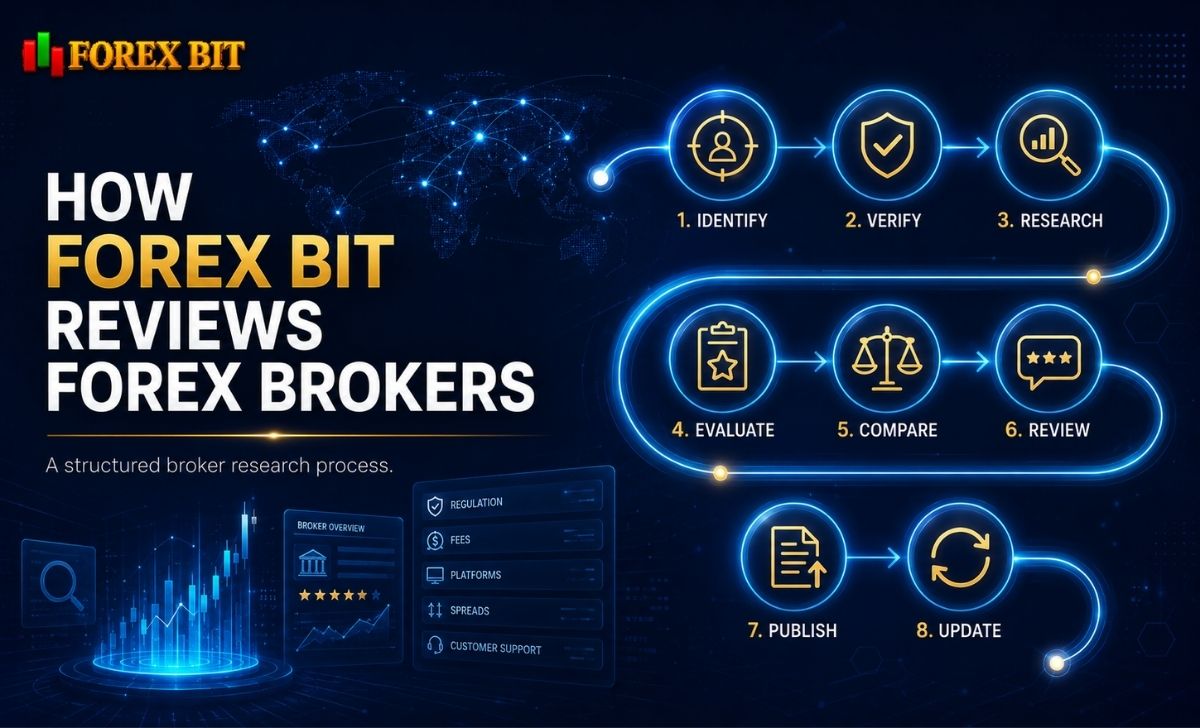
Our methodology flow: Identify → Verify → Research → Evaluate → Compare → Review → Publish → Update
Step 1: Identify the Broker and Legal Entities
The first step is establishing exactly who operates the broker. This is important because a single broker brand may operate through several legal entities across different jurisdictions.
We check information such as:
- Official broker website
- Company operating the broker
- Legal company name
- Registered entity or entities
- Jurisdiction
- Countries or regions served
- Relationship between the brand and its legal entities
A broker’s services, trading conditions, regulatory oversight, and available client protections may differ depending on which entity serves a particular customer. For this reason, we avoid treating the broker’s brand name and all of its legal entities as interchangeable.
Step 2: Verify Regulation and Licenses
We then examine the broker’s regulatory claims and attempt to verify them through relevant regulatory sources. Regulation is particularly important because the same brand may operate under different licenses in different jurisdictions.
Our checks may include:
- Financial regulator
- License or reference number
- Licensed legal entity
- License status
- Regulatory jurisdiction
- Registered domain information where available
- Regulatory warnings or enforcement information where relevant
Depending on the broker, relevant regulators may include the Financial Conduct Authority (FCA), Australian Securities and Investments Commission (ASIC), Cyprus Securities and Exchange Commission (CySEC), Monetary Authority of Singapore (MAS), and other financial authorities.
Where possible, we prioritize information published directly by the relevant regulator. A regulatory license associated with one legal entity should not automatically be treated as covering every entity operating under the same broker brand.
Step 3: Research Trading Costs
A broker advertising spreads “from 0.0 pips” does not necessarily mean it is the lowest-cost option for every trader. We therefore look beyond headline pricing and examine the broader fee structure.
Trading and non-trading costs we may research include:
- Spreads
- Trading commissions
- Swap or overnight fees
- Deposit fees
- Withdrawal fees
- Inactivity fees
- Currency conversion fees
- Other disclosed charges
We also consider the account type and conditions attached to a quoted spread or commission. This helps avoid drawing conclusions from a single promotional pricing figure without its relevant context.
Step 4: Review Accounts & Trading Conditions
Account structures can differ considerably between brokers and sometimes between entities of the same broker. We examine the conditions attached to available accounts to help readers understand these differences.
Our research may cover:
- Account types
- Minimum deposit
- Base currencies
- Leverage
- Margin requirements
- Available instruments
- Execution model or conditions
- Demo accounts
- Islamic accounts
- Professional accounts, where available
Account availability, leverage limits, and other conditions can vary by jurisdiction and legal entity. Where these distinctions are relevant and available, we aim to make them clear.
Step 5: Review Trading Platforms & Tools
Platform availability can influence how traders analyze markets, place orders, automate strategies, and manage positions. We therefore look at both the platforms offered and the relevant tools available through them.
Depending on the broker, we may examine:
- MetaTrader 4 (MT4)
- MetaTrader 5 (MT5)
- cTrader
- TradingView
- Proprietary trading platforms
- Web traders
- Mobile applications
- Copy trading
- Social trading
- Trading and analytical tools
We do not simply record whether a broker advertises a particular platform. Where information is available, we also consider whether platforms or features are restricted to certain account types, entities, or customer groups.
Step 6: Review Deposits & Withdrawals
Funding and withdrawing from a trading account are important practical considerations when researching a broker. Our reviews examine the payment information made available by the broker and other relevant official sources.
We may check:
- Deposit methods
- Withdrawal methods
- Supported currencies
- Minimum deposit or withdrawal amounts
- Published processing times
- Deposit and withdrawal fees
- Payment restrictions
- Regional availability
When a processing time is based solely on information published by the broker, we treat it as a stated processing time rather than guaranteeing that every transaction will be completed within that period.
Step 7: Review Customer Support & Resources
Customer support may become important when users have questions about registration, verification, trading conditions, or payments. We therefore examine the support options and resources that a broker makes available.
These may include:
- Live chat
- Phone support
- Support hours
- Supported languages
- Help center
- FAQs
- Educational resources
We distinguish between support channels that a broker states it provides and any service experience that Forex Bit has actually verified. We do not describe a support service as personally tested unless such testing has taken place.
Step 8: Compare the Broker With Alternatives
A broker’s strengths and limitations are often easier to understand when placed alongside comparable alternatives. We therefore consider relevant competitors where comparison adds useful context.
Comparison factors can include:
- Regulation
- Trading costs
- Account conditions
- Platforms
- Minimum deposits
- Trading instruments
- Payment options
- Customer support
The purpose is not always to identify a single “winner.” Instead, comparison helps readers understand trade-offs and determine which characteristics deserve closer attention during their own research.
Once the research is complete, we organize the findings around a consistent set of evaluation criteria.
Our Forex Broker Evaluation Criteria
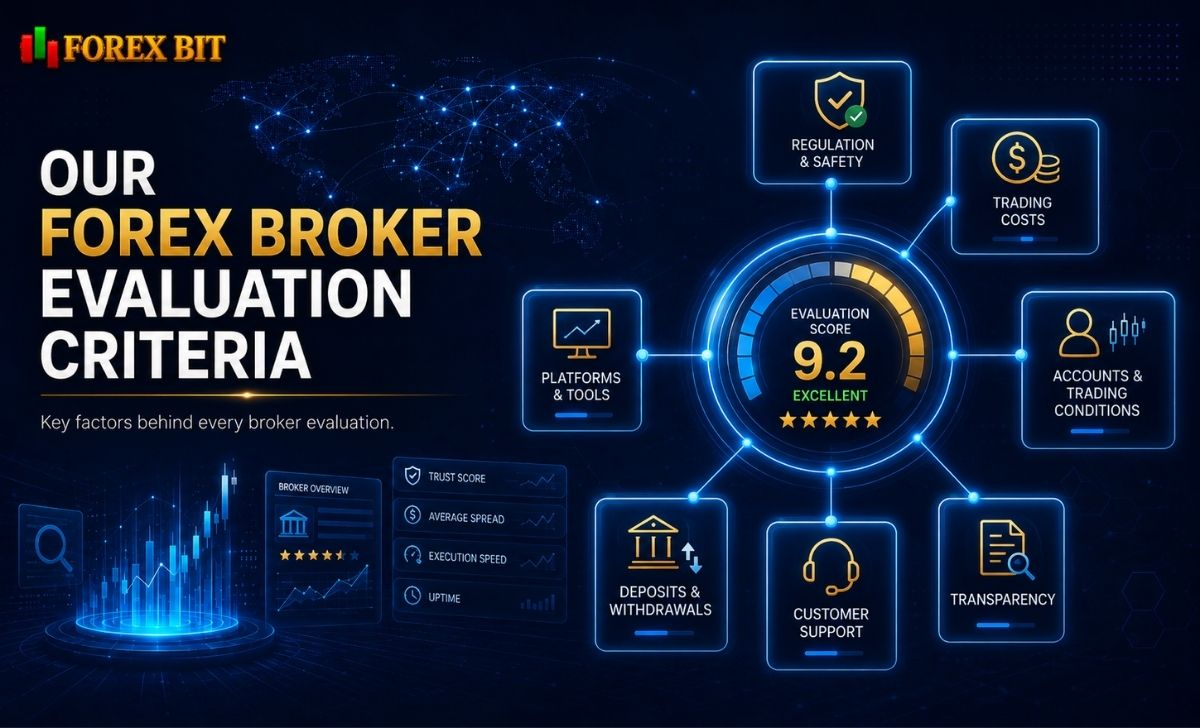
Forex Bit uses several core criteria when evaluating forex brokers, helping us consider both regulatory and practical aspects of brokerage services. Not every criterion carries the same importance in every article, as its relevance can depend on the purpose of a particular review, comparison, or ranking.
Regulation & Broker Safety
Regulation and broker safety are among the areas we prioritize when researching a broker. We look beyond the presence of a regulator’s name and examine the legal and jurisdictional context surrounding the license.
Factors may include:
- Regulatory licenses and status
- Legal entities
- Jurisdictions
- Regulatory transparency
- Disclosed client-fund arrangements or protections
- Relevant regulatory warnings or actions
- Transparency of company information
The protections available to a customer can depend on the entity under which the account is opened, so we aim to preserve this distinction throughout our research.
Trading Costs
Trading costs can have a direct effect on the overall cost of using a broker. We consider multiple charges instead of using a single advertised spread as evidence that one broker is cheaper than another.
We may evaluate:
- Spreads
- Commissions
- Swap or overnight fees
- Non-trading fees
- Overall pricing transparency
Where pricing differs by account, instrument, or trading conditions, we consider those differences when sufficient information is available.
Accounts & Trading Conditions
Account options determine which conditions and features are available to different customers. Our evaluation therefore looks at both account variety and the requirements attached to those accounts.
Relevant factors can include:
- Account selection
- Minimum deposit
- Leverage
- Available trading instruments
- Execution conditions
- Account accessibility
- Conditions by jurisdiction
We avoid assuming that conditions advertised for one account or jurisdiction apply to every customer.
Trading Platforms & Tools
Our platform evaluation considers the range of software and tools through which customers can access a broker’s services. Platform selection may be especially relevant for traders who depend on specific charting, automation, or copy-trading functionality.
We may consider:
- Platform selection
- Web and mobile access
- Charting capabilities
- Trading and analytical tools
- Automated trading support
- Copy or social trading features
- Proprietary tools
Platform availability is considered within the context of the broker’s accounts and jurisdictions where relevant.
Deposits & Withdrawals
We evaluate the payment options and conditions disclosed by the broker. The objective is to make important funding and withdrawal requirements easier for readers to identify.
Factors may include:
- Payment method selection
- Published processing times
- Deposit and withdrawal fees
- Supported currencies
- Transparency of withdrawal policies
Payment methods and conditions may differ by country, account, or payment provider.
Customer Support
Customer support is assessed according to the communication channels and assistance resources made available to users.
We may consider:
- Contact methods
- Support availability
- Supported languages
- Help and educational resources
- Accessibility of support information
Where we have not independently tested a support channel, we make a distinction between its advertised availability and verified service performance.
Transparency
Transparency affects how easily traders can verify important information about a broker. We therefore consider whether relevant corporate, regulatory, pricing, and trading information is clearly disclosed.
This may include:
- Company information
- Fee disclosure
- Legal documents
- Regulatory disclosures
- Risk warnings
- Clarity of trading conditions
These criteria tell us what to evaluate, but reliable conclusions also depend on where the underlying information comes from.
Where We Get Our Broker Information
Forex Bit prioritizes primary sources when verifying important information about brokers, especially regulatory, legal, and account-related details. Secondary sources may be used when they provide useful context, but they should not replace authoritative primary information when that information is directly available.
Primary Sources
Our preferred primary sources include:
- Financial regulator databases
- Official broker websites
- Broker legal documents
- Terms and conditions
- Account specifications
- Fee schedules
- Official broker announcements
- Official platform or payment documentation when relevant
For example, when verifying a regulatory license, information from the relevant regulator generally carries more weight than a broker’s marketing statement about its regulatory status.
Secondary Sources
Secondary sources can help provide context, identify developments, or support additional research.
These may include:
- Reputable financial publications
- Established industry publications
- Other credible and relevant sources
When information can be checked directly against an authoritative primary source, we prefer to perform that verification rather than relying solely on a secondary report.
What Happens When Sources Conflict?
Different sources may occasionally display conflicting or outdated information. When this occurs, we investigate the context before deciding what information to publish.
Our process may involve:
- Checking when each source was updated
- Confirming the relevant legal entity and jurisdiction
- Prioritizing regulators for regulatory status
- Prioritizing official legal documentation for applicable terms
- Looking for additional primary evidence
- Clearly noting discrepancies where appropriate
If material information cannot be reliably verified, we avoid presenting an uncertain conclusion as established fact.
After the information is verified, the next challenge is turning different broker characteristics into fair and useful comparisons.
How We Rank “Best Forex Brokers”
A “best broker” ranking should reflect a defined use case rather than assume that every trader has the same priorities. Forex Bit therefore considers criteria relevant to each ranking category instead of applying one universal definition of the best forex broker.
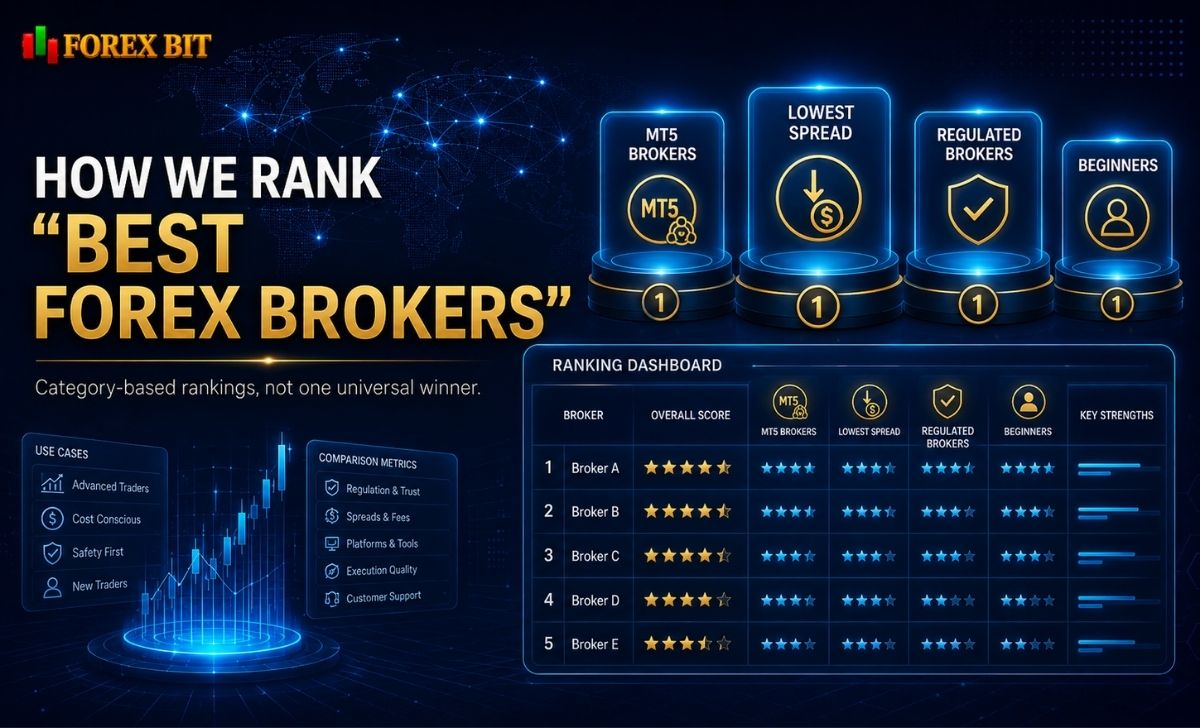
There Is No Single “Best Broker”
A broker that works well for one trader may not meet the needs of another. Suitability can depend on factors such as:
- Trading experience
- Jurisdiction
- Trading strategy
- Platform preference
- Trading costs
- Account requirements
- Available instruments
- Individual priorities
This is why our rankings are organized around specific broker categories and use cases.
Category-Specific Evaluation
Different broker lists require different areas of emphasis while still considering fundamental factors such as regulation and transparency.
Best MT5 Brokers
When researching MetaTrader 5 brokers, relevant factors may include:
- MT5 availability
- MT5 account compatibility
- Regulation
- Trading costs
- Available instruments
- Relevant MT5 features
Lowest Spread Forex Brokers
A low-spread comparison requires more than collecting the smallest advertised number.
We may consider:
- Published or appropriately observed spreads where suitable data is available
- Trading commissions
- Account conditions
- Other relevant trading costs
This provides more context than ranking brokers solely by a “from” spread.
Regulated Forex Brokers
For regulation-focused rankings, greater emphasis is placed on:
- Regulatory status
- Licensed legal entity
- Jurisdiction
- Regulatory transparency
- Safety-related disclosures
We also consider whether the regulatory information can be independently verified.
Best Forex Brokers for Beginners
Beginners may prioritize different features from experienced or highly active traders.
Relevant considerations may include:
- Account accessibility
- Demo account availability
- Platform usability
- Educational resources
- Customer support
- Trading costs
- Regulation
Ranking Does Not Mean Suitability for Everyone
A high position in one Forex Bit category does not mean that a broker is suitable for every trader. Rankings should always be interpreted within the category, jurisdiction, criteria, and conditions under which the broker was evaluated.
The same contextual approach is used when Forex Bit compares two brokers directly.
How We Compare Forex Brokers
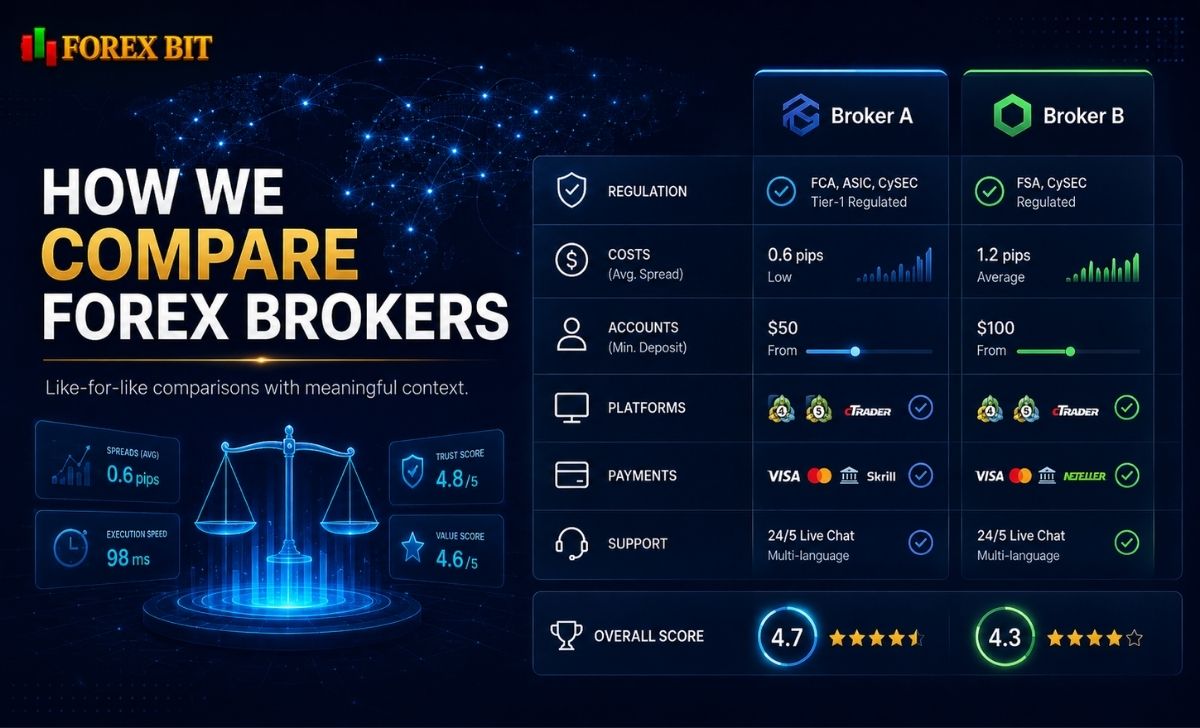
Fair broker comparisons require data to be viewed in the appropriate context rather than placing unrelated numbers side by side. Forex Bit aims to make like-for-like comparisons whenever the available information allows us to do so.
Like-for-Like Comparisons
Where relevant, we try to compare:
- The same or similar account types
- The same instrument when comparing spreads
- Comparable jurisdictions or legal entities
- The same category of fees
- Comparable platform availability
For example, comparing the raw spread of a commission-based account with the all-inclusive spread of a standard account can create a misleading impression unless the commission and account structure are also explained.
What We Compare
| Category | What We Check |
| Regulation | Regulators, entities, jurisdictions |
| Costs | Spreads, commissions, swaps, other fees |
| Accounts | Account types, deposits, leverage |
| Platforms | MT4, MT5, cTrader, TradingView, proprietary platforms |
| Markets | Forex, indices, commodities, and other available instruments |
| Payments | Methods, fees, processing information |
| Support | Channels, availability, languages |
The exact comparison criteria may change according to the brokers and the purpose of the article.
How We Present the Result
Our comparisons are intended to explain differences rather than reduce every decision to “Broker A = winner.”
Where appropriate, we instead explain:
- Areas where Broker A may be stronger
- Situations where Broker B may be more suitable
- Key differences between brokers
- Important limitations or conditions
This approach gives readers more context for determining which characteristics are relevant to their own needs.
Because broker conditions change over time, every comparison and review also requires an update process.
How We Keep Broker Reviews Updated
Forex brokers can change their fees, account types, platforms, payment methods, policies, and legal entities over time. For that reason, the Forex Bit review methodology does not end when an article is first published.
What Can Trigger an Update?
A review may need to be reassessed following changes involving:
- Regulation
- Licenses
- Legal entities
- Trading or non-trading fees
- New or discontinued accounts
- Trading platforms
- Minimum deposits
- Payment methods
- Major terms or policies
- Security incidents
Material changes are prioritized when they could affect how readers understand or compare a broker.
Published and Last Updated Dates
Where appropriate, Forex Bit may display two dates to help readers understand the history of an article:
- Published: The date the content was originally published.
- Last Updated: The date of the most recent substantive update.
Minor formatting adjustments or typo corrections should not automatically be treated as substantive content updates. This distinction helps make update information more meaningful.
Periodic Reviews
Certain types of content can become outdated more quickly or have a greater influence on broker research.
We therefore prioritize periodic reviews of content such as:
- Best Broker rankings
- Broker reviews
- Broker comparisons
- Regulation and broker safety guides
Updates address changing information, while our corrections policy addresses information that was inaccurate when published.
Corrections and Reader Feedback
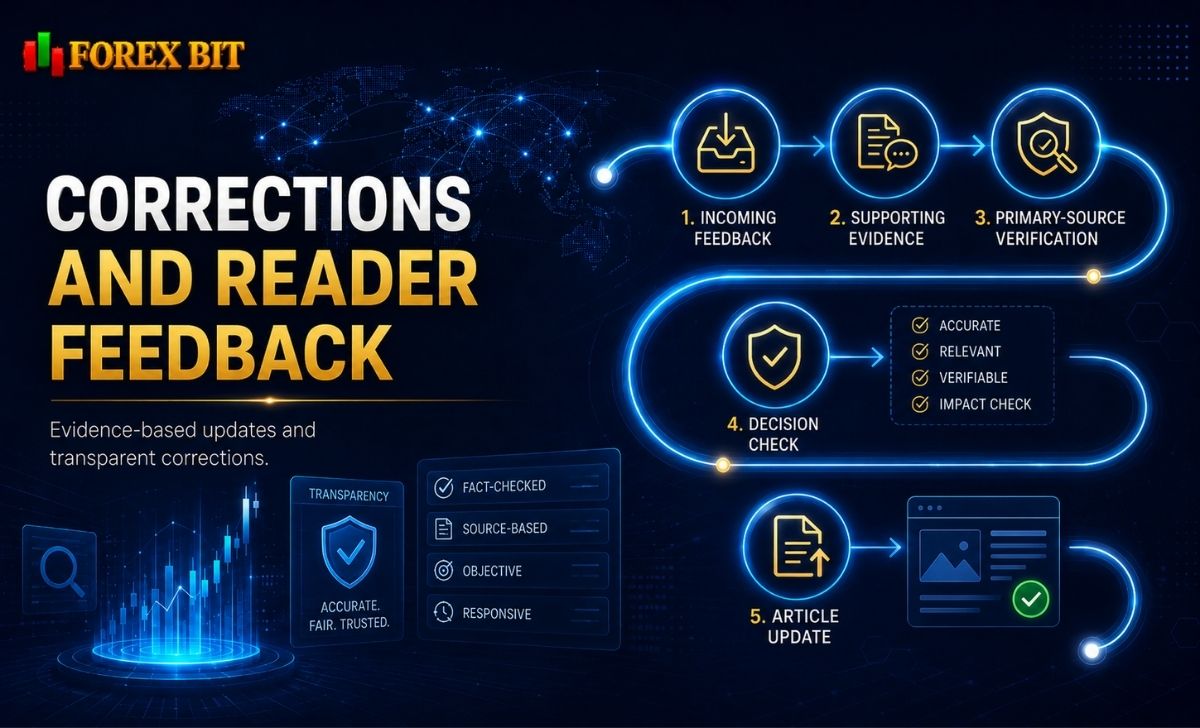
Despite our research process, errors can occur and previously accurate information may become outdated. Readers, brokers, and other relevant parties can provide evidence when they believe information published by Forex Bit should be reviewed.
How We Handle Corrections
Our correction process generally involves:
- Receiving the correction request
- Reviewing supporting evidence
- Checking relevant primary sources
- Determining whether a correction is required
- Updating the article when necessary
- Noting a material correction where appropriate
A correction is based on the evidence available rather than simply on who submitted the request.
Can Brokers Request Changes?
Yes. Brokers may contact Forex Bit and provide evidence if they believe factual information is incorrect or outdated.
However, a request does not automatically result in a change. Forex Bit should independently verify the information, and an editorial conclusion is not changed solely because a broker disagrees with it.
Commercial relationships should not influence whether a factual correction is accepted or rejected.
The same separation between evidence and outside influence applies to our commercial relationships.
Editorial Independence & Affiliate Relationships
Forex Bit may generate revenue through affiliate partnerships, making transparency about the relationship between commercial activity and editorial content important. Affiliate compensation should remain separate from the criteria used to research, compare, and evaluate brokers.

How Affiliate Relationships Work
Forex Bit may receive a commission from certain partners when readers follow eligible links and complete qualifying actions.
Our approach is based on several principles:
- Forex Bit may receive commissions from commercial partners.
- Compensation may result from eligible partner activity.
- Not every broker reviewed by Forex Bit is necessarily a commercial partner.
- Relevant affiliate relationships should be disclosed to readers.
Readers can refer to our Advertising Policy or Affiliate Disclosure for more information about these commercial relationships.
Read more about Forex Bit:
- About Us
- Editorial Policy
- Corrections Policy
- Risk Warning
- Contact
- Privacy Policy
- Terms and Conditions
- Cookie Policy
Can Brokers Pay for Higher Rankings?
Brokers cannot buy a positive editorial review or guaranteed ranking under this methodology.
Commercial relationships do not override the evaluation criteria used for broker research. Editorial conclusions and commercial arrangements are treated as separate considerations.
Sponsored Content
If Forex Bit publishes sponsored content, it should be clearly identified as Sponsored, Advertisement, or with another appropriate disclosure.
Sponsored material should not be presented to readers as an independent broker review when it has been produced as paid promotional content.
Editorial independence also requires us to be clear about what our methodology can and cannot guarantee.
Limitations of Our Review Methodology
No review methodology can reproduce every trader’s experience or predict every future change at a broker. Being transparent about these limitations helps readers understand what Forex Bit research represents and what it cannot guarantee.
Information Can Change
Broker information may change after a review has been researched or updated. Fees, account conditions, platforms, payment methods, legal entities, and regulatory information can all be revised over time.
Readers should therefore confirm important current conditions directly with the relevant broker or regulator before acting on them.
Conditions Vary by Jurisdiction
A broker may offer different services and conditions depending on the customer’s location or the legal entity under which the account is opened.
Differences can involve:
- Leverage
- Account types
- Bonuses or promotions
- Available products
- Regulation
- Investor protections
- Payment methods
Information applicable in one jurisdiction should not automatically be assumed to apply in another.
Published Information vs. Real-World Experience
We distinguish between information published by a broker and information that Forex Bit has independently tested.
For example, when relying on broker documentation, wording such as “according to the broker” or “the broker states” is more appropriate than claiming “we tested” a feature or service that has not actually been tested.
This distinction is especially important for matters such as withdrawal processing, customer support performance, execution quality, and other aspects that can vary between individual users.
A Review Is Not a Guarantee
A Forex Bit broker review does not guarantee:
- Broker performance
- Execution quality under all market conditions
- A particular withdrawal outcome
- Future regulatory status
- Trading profitability
- Suitability for a specific trader
A review represents research based on the information and methodology available at the relevant time.
These limitations are also why our broker research should be treated as information rather than personalized financial advice.
Important Risk Disclosure
Forex and contracts for difference (CFDs) involve significant financial risk, particularly when leverage is used. A Forex Bit broker review, comparison, or ranking should not be interpreted as a recommendation that a reader trade with a particular provider.
Leverage can magnify both gains and losses, and traders may lose part or all of the capital they commit to trading. All Forex Bit content is provided for informational and educational purposes only and does not constitute personalized investment, financial, legal, or tax advice.
Broker conditions, available products, leverage limits, and regulatory protections can vary by jurisdiction and legal entity. Readers should conduct independent research, verify current information relevant to their circumstances, assess their own risk tolerance, and seek qualified professional advice where appropriate.
With these principles in place, our methodology ultimately serves one purpose: making broker research clearer and more transparent for readers.
Contact Forex Bit About Review Methodology
Questions, factual corrections, or supporting evidence related to our review methodology can be submitted through Forex Bit’s official contact channels. When reporting potentially inaccurate broker information, providing the relevant source or documentation can help our editorial team review the issue more effectively.
- Website: https://forex-bit.com
- Email: [email protected]
- Contact Page: https://forex-bit.com/about/contact
- Facebook: https://www.facebook.com/forexbit.global
- Instagram: https://www.instagram.com/forexbit.global
These contact channels provide a way to raise methodology or factual concerns, while the principles above explain how Forex Bit approaches broker research as a whole.
Conclusion
The Forex Bit review methodology is built around verification, consistency, and transparency, with brokers researched across regulation, costs, accounts, platforms, payments, support, and other relevant factors. By using structured criteria, prioritizing reliable sources, providing contextual comparisons, and updating material information, we aim to make broker research clearer without presenting rankings as universal recommendations. Ultimately, our methodology is designed to give readers useful information and context so they can compare brokers, conduct their own research, and make more informed decisions.