
Forex regulation is the framework of laws, licensing requirements, and oversight rules that govern how brokers operate and interact with clients. It sets minimum standards for capital, transparency, and conduct that brokers must meet to legally offer trading services.
**Forex regulators supervise brokers by granting licences, monitoring compliance, and enforcing rules on capital adequacy and client fund handling.**National financial authorities review broker conduct and can suspend or revoke licences for violations.
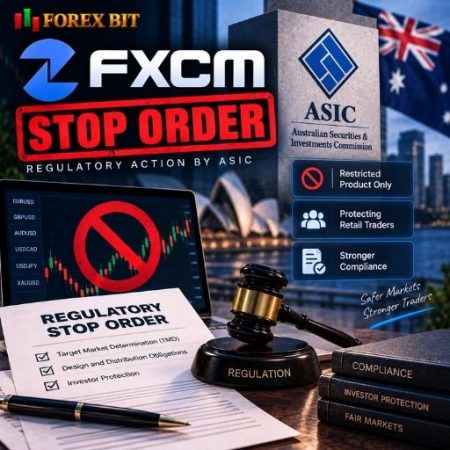
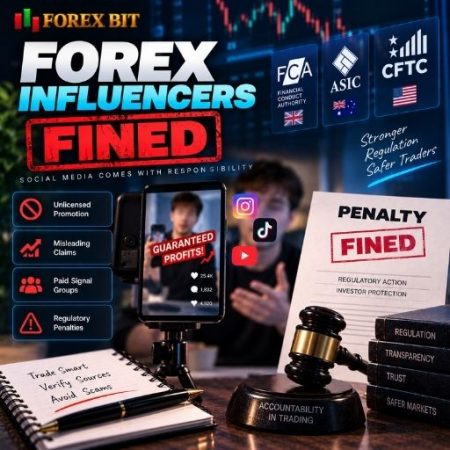
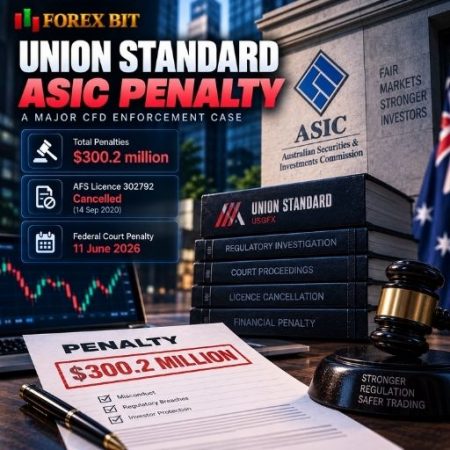
Recent regulatory changes include tighter leverage caps, stricter marketing rules, and enforcement actions against non-compliant brokers. These measures aim to reduce excessive risk-taking and limit misleading practices in the retail trading space.
Regulation protects traders mainly through segregated client accounts, compensation schemes, and mandatory dispute resolution processes. These safeguards reduce the risk of fund misuse and give traders a formal path to recover losses from regulatory breaches. Forex Bit outlines how forex regulation actually works, starting with the core mechanics behind licensing and oversight.
What Is Forex Regulation and How Does It Work?
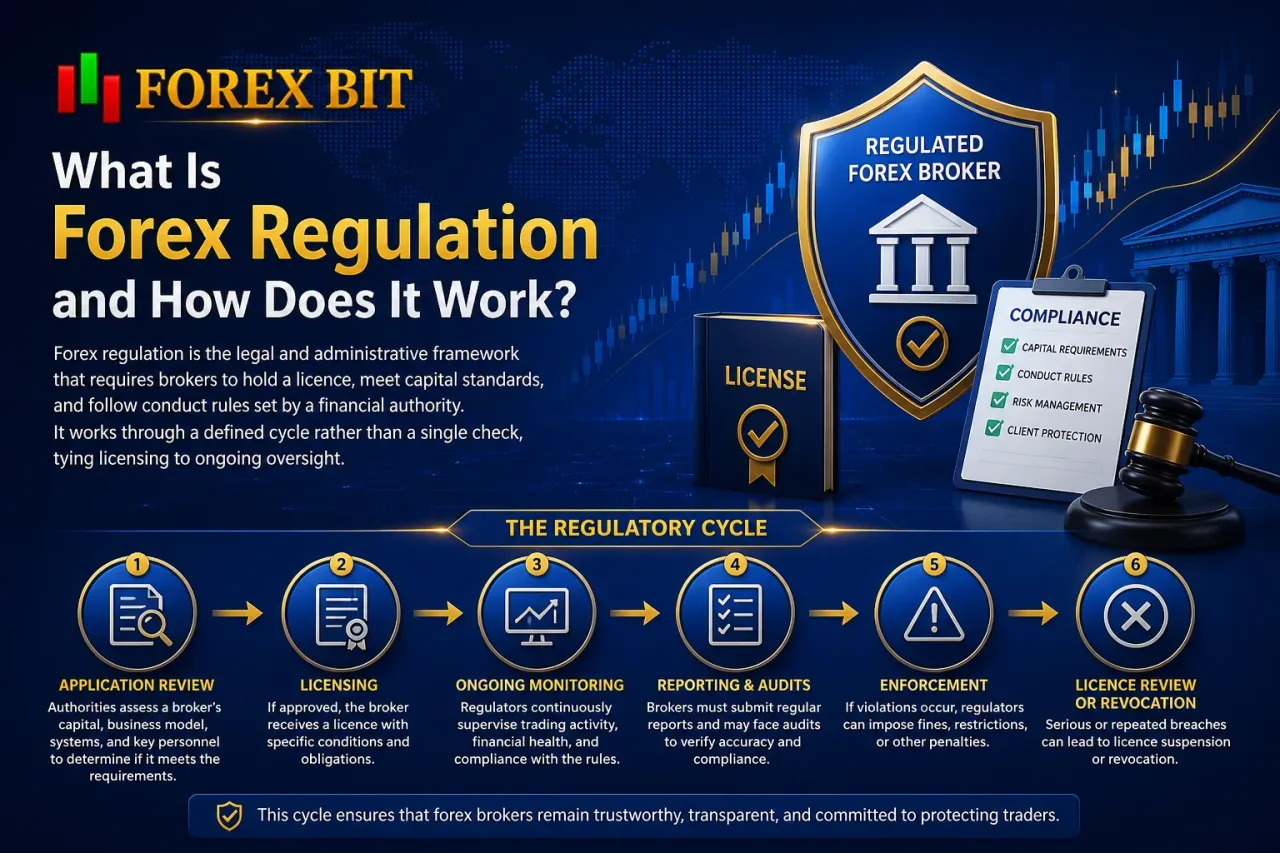
Forex regulation is the legal and administrative framework that requires brokers to hold a licence, meet capital standards, and follow conduct rules set by a financial authority. It works through a defined cycle rather than a single check, tying licensing to ongoing oversight.
That cycle covers how regulators grant approval and then continue monitoring brokers over time. It generally moves through the following stages:
- Application review, where authorities assess a broker’s capital, business structure, and management before granting a licence.
- Licensing, which formally authorises the broker to offer trading services under specific conditions and restrictions.
- Ongoing supervision, where regulators check adherence to rules on leverage, marketing, and client fund segregation.
- Periodic reporting, requiring brokers to submit financial statements and compliance data to regulators on an ongoing basis.
- Enforcement, allowing regulators to fine, suspend, or revoke a licence when a broker breaches its obligations.
Each stage feeds into the next, so a broker’s licence status directly depends on how well it maintains compliance after the initial approval.
What Do Forex Regulators Do and Which Bodies Oversee Brokers?
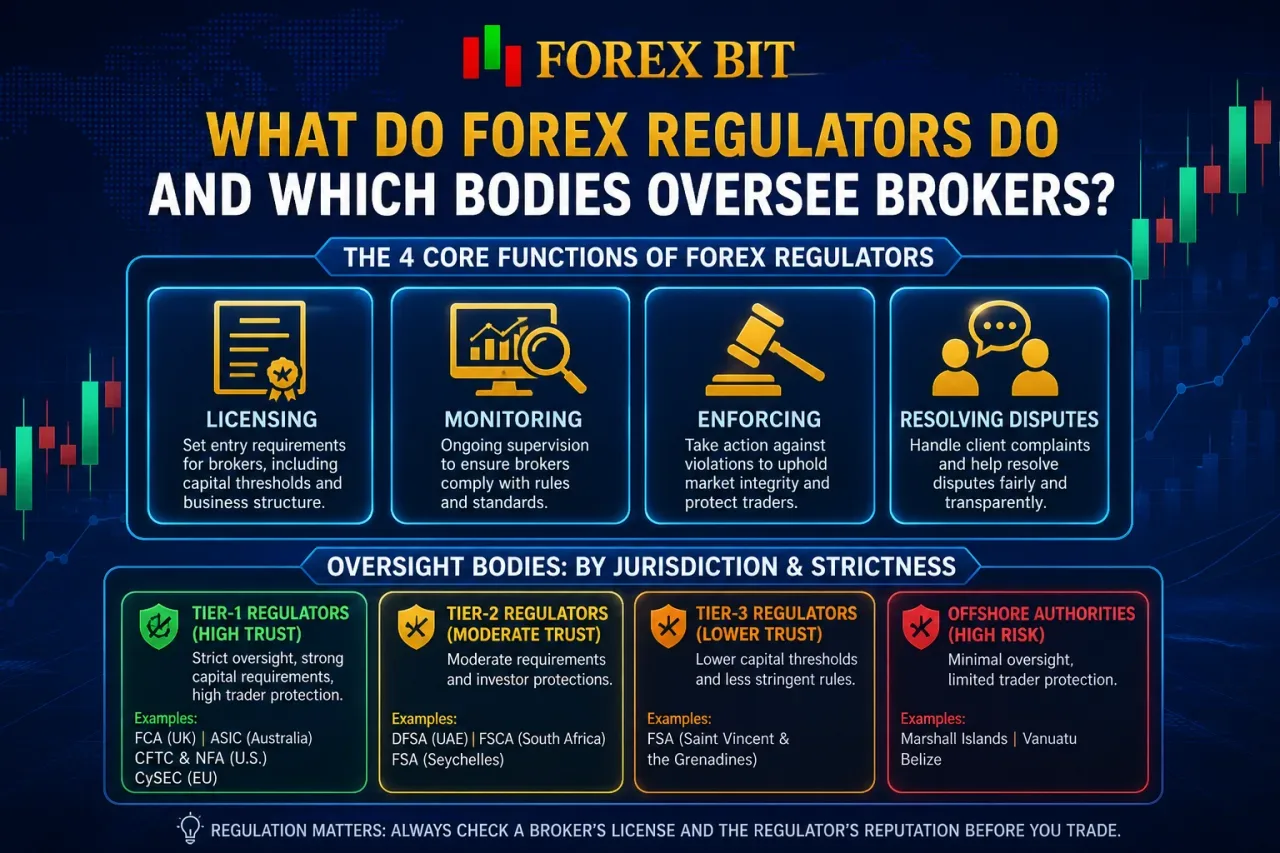
Forex regulators perform four core functions: licensing brokers, monitoring compliance, enforcing rules, and resolving client disputes. Oversight bodies fall into distinct categories based on jurisdiction and strictness, ranging from tier-1 regulators to offshore authorities, each carrying different implications for trader protection.
Licensing sets the entry requirements a broker must meet before accepting clients, covering capital thresholds and business structure. Monitoring involves ongoing checks on leverage limits, marketing conduct, and client fund segregation. Enforcement gives regulators authority to fine, suspend, or revoke licences when brokers breach obligations. Dispute resolution provides clients a formal channel to file complaints and seek compensation when a broker mishandles funds or violates conduct rules.
Regulatory bodies split into two broad groups by strictness and jurisdiction:
- Tier-1 regulators, including the Financial Conduct Authority (FCA), the Australian Securities and Investments Commission (ASIC), and the Cyprus Securities and Exchange Commission (CySEC), impose stricter capital rules, leverage caps, and reporting obligations.
- Tier-2 and offshore regulators generally operate in jurisdictions with lighter capital requirements and reduced reporting obligations, offering fewer investor protections than tier-1 authorities.
Brokers regulated under multiple tiers often disclose which entity handles a specific client base.
What Are the Main Types of Forex Regulatory Bodies?
Forex regulatory bodies fall into three main groups: tier-1 strict regulators, mid-tier regulators, and offshore or lightly regulated authorities, classified by jurisdiction and enforcement strength. Each group applies a different level of oversight to brokers operating under its licence.
That grouping reflects how much protection a trader gets depending on which authority stands behind a broker’s licence.
- Tier-1 regulators enforce high capital requirements, strict leverage limits, and mandatory client fund segregation, with active enforcement and compensation schemes for clients.
- Mid-tier regulators apply moderate capital and reporting standards, offering partial investor protections and less frequent enforcement action compared to tier-1 authorities.
- Offshore and lightly regulated authorities impose minimal capital thresholds and limited ongoing supervision, resulting in fewer safeguards and reduced dispute resolution options for clients.
Brokers often hold licences from more than one tier simultaneously, routing different client regions through different regulated entities.
How Do Licences Signal a Broker’s Regulatory Status?
A broker’s licence signals regulatory status through three verifiable markers: a unique licence number, a registered legal entity name, and a matching entry in the regulator’s public register. Each marker confirms that a specific authority actively authorises and supervises that broker.
Verifying these markers works through a direct lookup rather than a single glance at a website badge.
- Locate the licence number, usually displayed in the website footer or legal documentation, and note the issuing regulator.
- Match the registered legal entity name against the entity accepting client funds, since brokers often operate multiple entities across regions.
- Search the regulator’s public register using the licence number or entity name to confirm active status.
- Check the register entry for licence conditions, permitted services, and any enforcement history tied to that entity.
A licence number without a corresponding public register entry indicates the broker misrepresents its regulatory status, since genuine authorisation always appears on the regulator’s own database.
What New Rules, Leverage Restrictions, and Enforcement Actions Should Traders Know About?
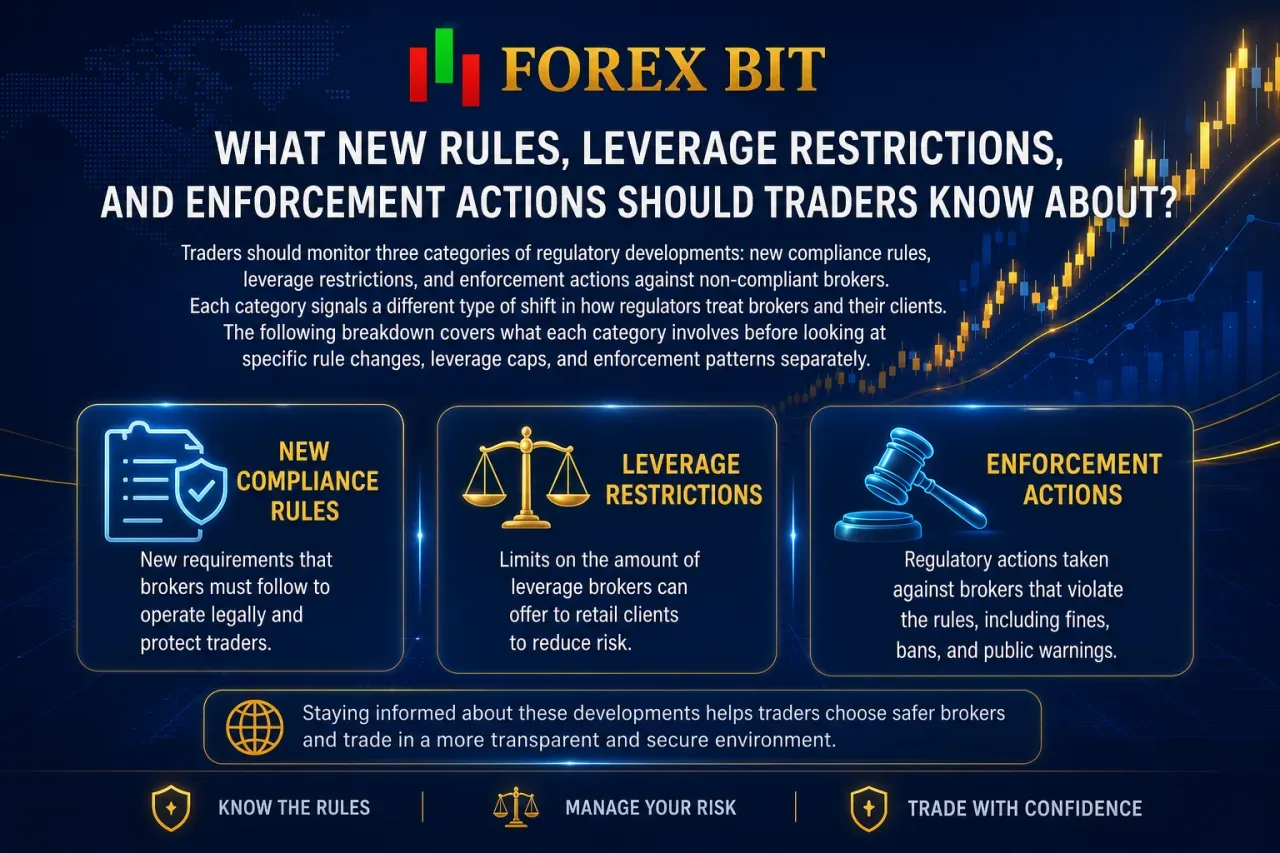
Traders should monitor three categories of regulatory developments: new compliance rules, leverage restrictions, and enforcement actions against non-compliant brokers. Each category signals a different type of shift in how regulators treat brokers and their clients. The following breakdown covers what each category involves before looking at specific rule changes, leverage caps, and enforcement patterns separately.
Why Do Regulators Impose Leverage Restrictions?
Regulators impose leverage restrictions primarily to limit trader losses and reduce systemic risk in the retail forex market. Capping leverage narrows the gap between a small deposit and a large position size, which lowers the speed and severity of margin calls during volatile price swings.
That risk-control purpose plays out differently depending on jurisdiction. Tier-1 regulators generally set tighter leverage caps for retail clients, reflecting a stricter approach to investor protection.Mid-tier and offshore regulators often allow higher leverage ratios, giving brokers more flexibility but shifting more loss exposure onto the trader.
Beyond individual accounts, leverage caps also address systemic concerns. Widespread over-leveraged positions across many retail accounts amplify losses during sharp market moves, which can strain a broker’s capital reserves and, in extreme cases, threaten its ability to meet client withdrawal obligations. Restricting leverage keeps individual losses and broker-wide exposure within levels that capital adequacy rules are designed to absorb.
What Happens When a Regulator Takes Enforcement Action Against a Broker?
Enforcement action against a broker follows a defined sequence: investigation, formal warning, financial penalty, and licence suspension or revocation, with outcomes typically published on the regulator’s public register. This process gives regulators graduated tools to correct or remove non-compliant brokers rather than jumping straight to the most severe measure.
The sequence generally unfolds through the following stages:
- Investigation opens once a regulator identifies a suspected breach through client complaints, routine audits, or reporting irregularities.
- Warning notifies the broker of the specific violation and sets a deadline to correct the issue before further action follows.
- Fine imposes a financial penalty proportional to the severity and duration of the breach, recorded in the regulator’s enforcement history.
- Suspension restricts the broker from onboarding new clients or offering certain services while the breach remains unresolved.
- Revocation withdraws the licence entirely, ending the broker’s authorisation to operate under that regulator.
Regulators publish enforcement outcomes on their official register and enforcement notices, making licence status, penalties, and revocation dates accessible to traders checking a broker’s compliance record.
How Does Regulation Protect Traders and Their Funds?
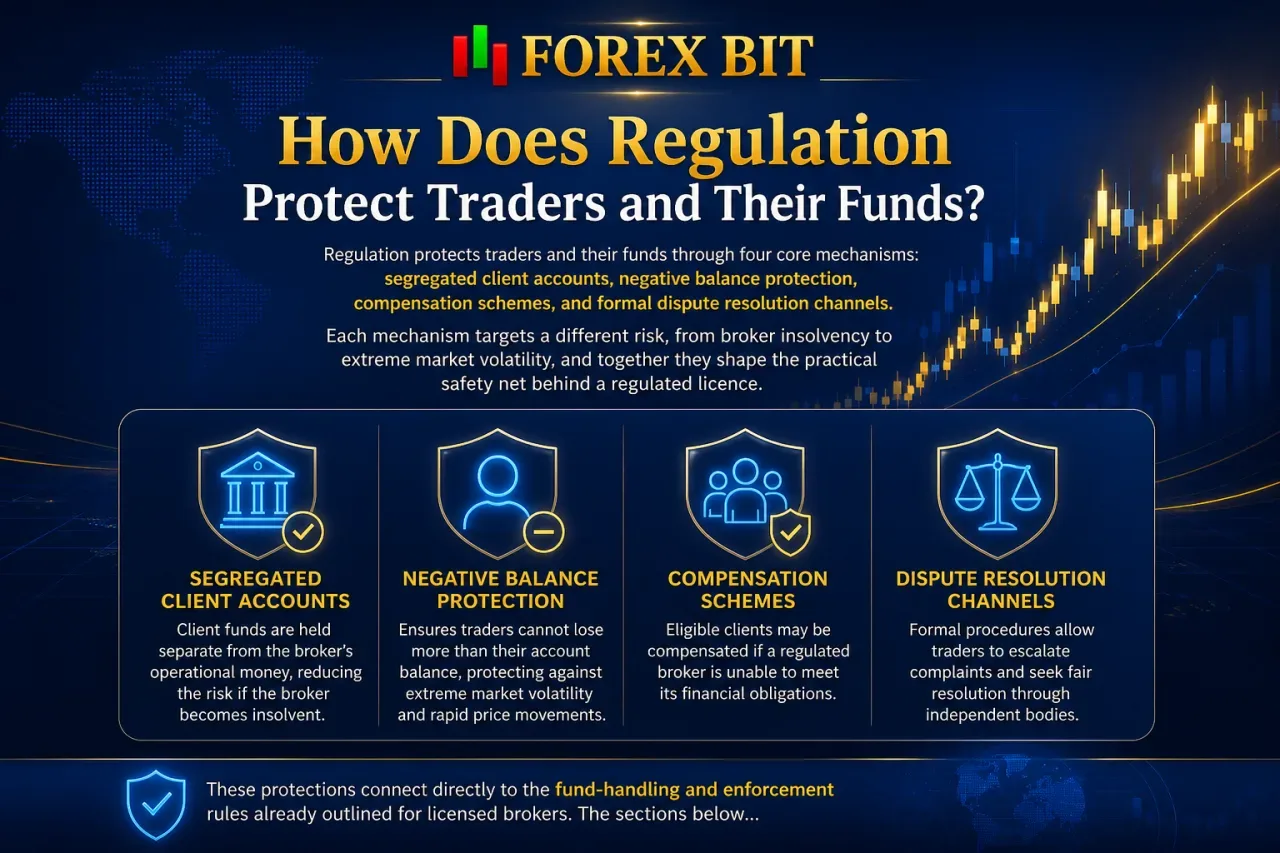
Regulation protects traders and their funds through four core mechanisms: segregated client accounts, negative balance protection, compensation schemes, and formal dispute resolution channels. Each mechanism targets a different risk, from broker insolvency to extreme market volatility, and together they shape the practical safety net behind a regulated licence.
These protections connect directly to the fund-handling and enforcement rules already outlined for licensed brokers. The sections below break down how each mechanism functions and what it delivers to traders in practice.
What Client Fund Protections Are Required Under Regulation?
Regulation requires three core fund-protection measures: segregated bank accounts, participation in investor compensation schemes, and independent audit obligations. Each requirement targets a different point of failure between a client’s deposit and a broker’s own operating funds.
These three measures work together to limit how far a broker’s financial trouble can spread to client money.
- Segregated accounts hold client deposits in separate bank accounts from the broker’s operational funds, preventing use of client money for company expenses.
- Compensation schemes reimburse eligible clients up to a set limit if a regulated broker becomes insolvent or fails to return funds.
- Audit requirements obligate brokers to submit financial statements to independent auditors on a periodic basis, verifying that segregated balances match client records.
Regulators tie these three requirements to licence conditions rather than treating them as optional practices, meaning a broker that fails to maintain segregation or skips required audits risks the enforcement sequence already outlined for licence breaches.
Does Regulation Guarantee Protection Against Trading Losses?
No, regulation does not guarantee protection against trading losses, since it addresses fraud, misconduct, and fund misuse rather than normal market risk. This distinction matters directly for the fund protections just outlined, since segregation, compensation schemes, and audits cover broker failure, not price movement.
A licensed broker operating under full compliance still exposes clients to the same market forces as an unregulated one. That separation between conduct risk and market risk explains why regulation carries clear limits:
- Segregated accounts prevent broker insolvency from wiping out client deposits, but they do not offset losing positions.
- Compensation schemes reimburse clients when a broker fails or misuses funds, not when trades move against a client’s forecast.
- Dispute resolution channels address breaches of conduct rules, such as fund mishandling or misrepresentation, rather than unfavourable trading outcomes.
- Leverage restrictions reduce the speed and severity of losses during volatile swings, yet they do not remove the underlying market risk itself.
Regulation therefore functions as a safeguard against broker-side misconduct and capital mismanagement, leaving the outcome of individual trades entirely dependent on market conditions and the trader’s own strategy.
What Are Some Lesser-Known Aspects of Forex Regulation Worth Understanding?
Forex regulation includes several niche mechanics beyond licensing basics: regulatory arbitrage across jurisdictions, passporting rights within regulatory blocs, and cross-border cooperation between regulators on enforcement cases. These nuances shape how brokers structure their entities and how regulators track conduct that crosses national lines. The subsections below unpack each of these three mechanics in turn.
What Is Regulatory Passporting and How Does It Affect Brokers?
Regulatory passporting is a mechanism that lets a broker licensed in one jurisdiction offer services across other member states within the same regulatory bloc, without obtaining a separate licence in each one. The European Union’s passporting framework under MiFID illustrates this, allowing a CySEC-licensed broker to serve clients in other EU states under that single authorisation.
For traders, this affects which entity actually handles their account. A broker’s website may reference a home-country licence while routing a specific region’s clients through a passported branch, so the protections that apply depend on which entity holds the client agreement rather than which regulator appears most prominently on the site. The European Union operates a passporting framework that allows financial services firms, including forex brokers, to offer services across member states under a unified market structure.
Checking which entity and licence number apply to a specific account matters more than checking the broker’s headquarters location alone, since passporting separates where a firm is based from where it holds direct authorisation to operate.
How Do Regulators Cooperate Across Borders on Enforcement?
Regulators cooperate across borders through information-sharing agreements, joint investigations, and mutual recognition of enforcement actions against brokers operating in multiple jurisdictions. This cross-border coordination fills the gap left when a broker’s clients, entity registration, and servers sit in different countries.
That cooperation generally runs through a few defined channels:
- Sharing client complaint data and audit findings with counterpart regulators when a broker operates under linked or affiliated entities abroad.
- Coordinating joint investigations when a single broker group faces allegations spanning more than one jurisdiction.
- Recognising another regulator’s enforcement action as grounds for reviewing or restricting a broker’s local licence.
- Issuing joint warnings when unlicensed entities target clients across several regulatory borders at once.
These mechanisms let a licence revocation in one jurisdiction trigger scrutiny of the same broker group elsewhere, closing part of the gap that regulatory arbitrage would otherwise create.
Conclusion
Forex regulation functions as a licensing and oversight cycle: authorities vet brokers before granting approval, then monitor capital, conduct, and fund handling on an ongoing basis, escalating to fines or licence revocation when breaches occur. Tier-1, mid-tier, and offshore bodies apply this cycle with varying strictness, which is why checking a licence number against a regulator’s public register reveals more than a website badge ever can. Leverage caps, compensation schemes, segregated accounts, and cross-border cooperation between regulators all reinforce that same framework, though none of it shields a trader from ordinary market losses. Understanding this structure gives traders a clear standard for judging whether a broker’s regulatory claims hold up.