
Risk Warning Forex Bitexplains the financial risks readers should understand before trading forex, CFDs, or other leveraged products. These products can result in substantial losses, while leverage can magnify both potential profits and potential losses.
A favorable broker review, comparison, or ranking does not remove the risks associated with trading or guarantee a particular outcome. Before trading, readers should consider their knowledge, experience, financial circumstances, objectives, and tolerance for loss.
Forex Bit provides information for educational and informational purposes and does not guarantee trading results. Before using a broker or trading leveraged products, it is important to understand the risks described below.
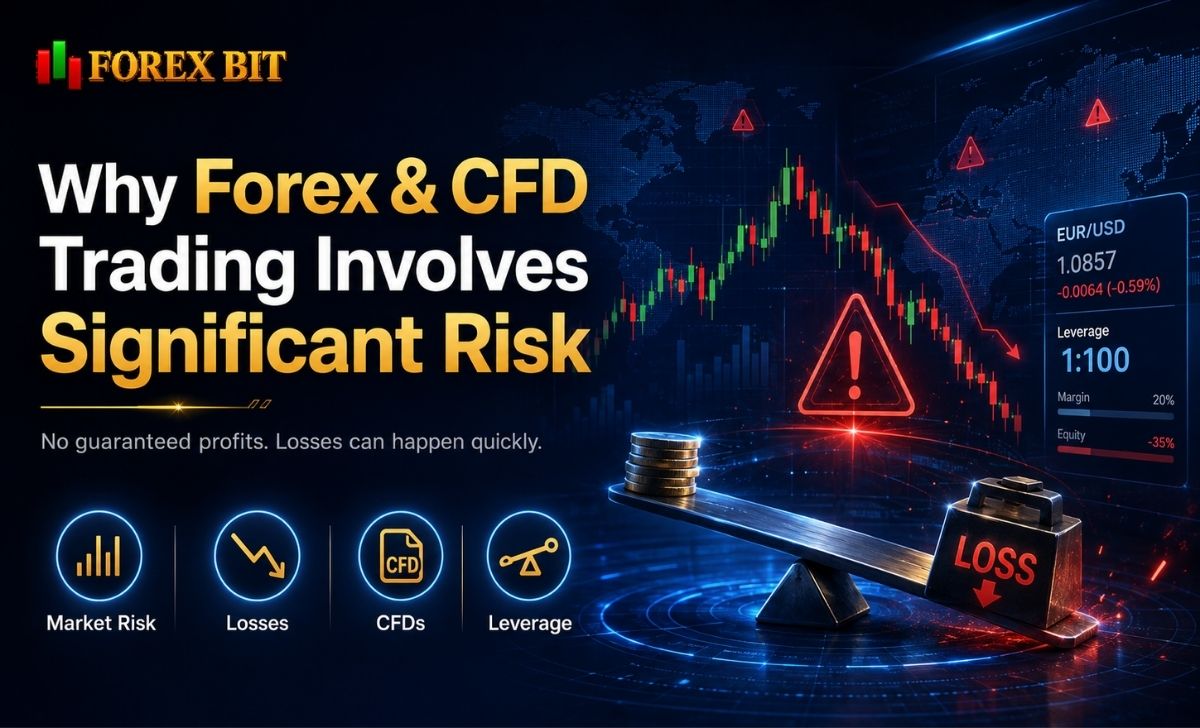
Why Forex & CFD Trading Involves Significant Risk
Forex and CFD trading does not guarantee profits, and market prices can change rapidly in response to economic, political, and market developments. Traders can lose part or all of the capital they commit to trading, sometimes within a short period.
Market Prices Can Move Against You
Currency and other financial-market prices fluctuate continuously. Even when a trader has researched a market carefully, there is no guarantee that prices will move in the expected direction.
Market movements may be influenced by:
- Economic data
- Interest-rate expectations
- Central bank decisions
- Political developments
- Market sentiment
- Geopolitical events
- Unexpected news
A position that is profitable at one point can become a loss when market conditions change. The speed and size of those changes may also make it difficult to react before a loss increases.
Losses Are a Normal Possibility
Losses are an inherent part of trading risk and should not be treated as an exceptional event that can always be avoided with the right strategy.
Readers should understand that:
- Winning trades are not guaranteed
- Historical results do not ensure future performance
- Experienced traders can still lose money
- A previously successful strategy may stop working
- Losses can occur quickly during volatile conditions
A series of successful trades also does not guarantee that the next position will be profitable.
CFDs Are Complex Products
Contracts for difference, commonly known as CFDs, allow traders to speculate on price movements without necessarily owning the underlying asset. The value of a CFD position can therefore rise or fall according to movements in the referenced market and the terms offered by the broker.
CFD trading may involve:
- Leverage and margin
- Rapid changes in profit and loss
- Financing or overnight costs
- Broker-specific trading conditions
- Different contract specifications across instruments
Because product terms can vary between brokers, traders should understand the specific CFD they are considering before opening a position.
Market risk exists even without leverage, but leverage can significantly increase the speed and size of potential losses.
Leverage Can Magnify Losses
Leverage allows traders to control market exposure that is larger than the amount of capital initially committed as margin. While this can increase potential gains from a market movement, it can also cause account equity to fall rapidly when prices move against the position.
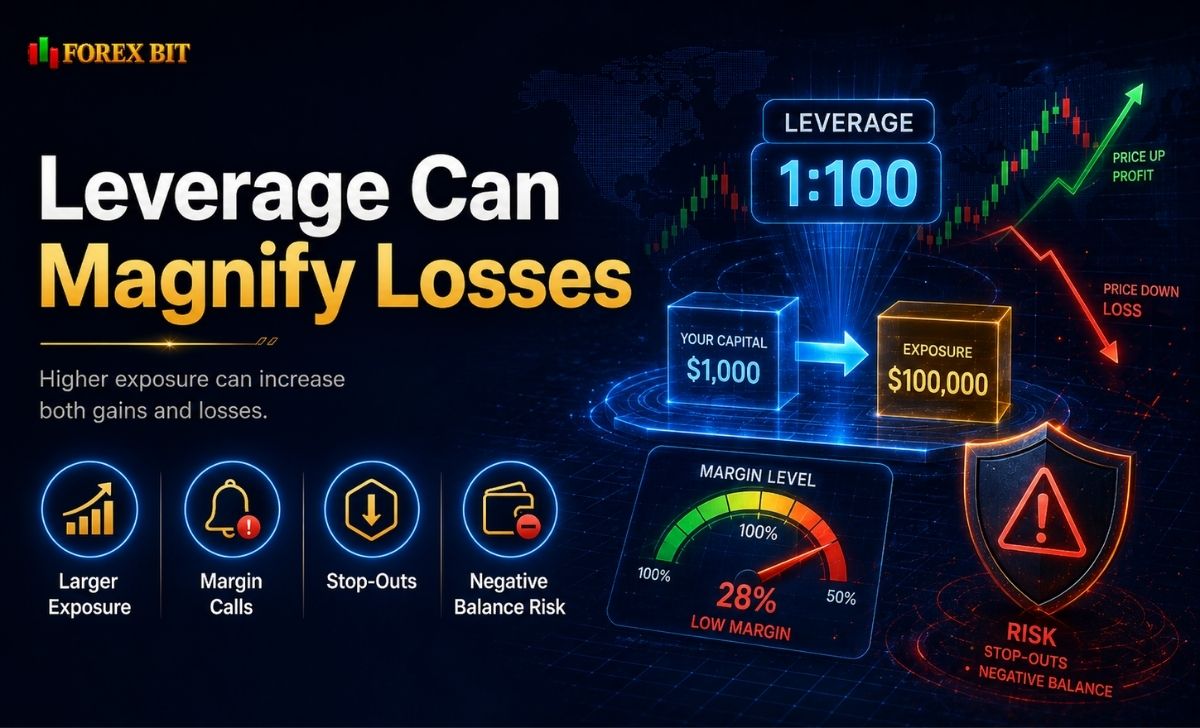
How Leverage Works
In simple terms:
$1,000 capital + leverage → larger market exposure
Margin generally represents only a portion of the total exposure created by a leveraged position. As a result, a relatively small percentage movement in the underlying market can have a much larger effect on the trader’s account equity.
The greater the effective leverage, the more sensitive the account may become to price movements. Traders should therefore consider total market exposure rather than looking only at the amount deposited into an account.
Leverage Magnifies Gains and Losses
Leverage works in both directions. A favorable market movement may increase gains relative to the capital committed, but an unfavorable movement can increase losses in the same way.
Importantly:
- Leverage can increase gains
- Leverage can increase losses
- Leverage does not increase the probability of making a correct trade
- Higher leverage is not automatically better
- Greater exposure can reduce the trader’s room for adverse price movements
The availability of high leverage should therefore not be interpreted as an indication that a trader should use the maximum amount offered.
Margin Calls & Stop-Outs
Leveraged positions require sufficient account equity to satisfy the broker’s applicable margin requirements. When losses reduce equity, the account’s margin level may fall.
Depending on the broker’s rules:
- The trader may receive a margin warning
- Additional margin may be required
- The ability to open new positions may be restricted
- One or more positions may be automatically closed
- The trader may lose control over the timing of a position’s closure
Stop-out levels and procedures can differ between brokers, accounts, products, and jurisdictions. Traders should review the applicable margin policy before using leverage.
Negative Balance Risk
Whether a trader can lose more than the amount deposited may depend on the broker, legal entity, product, client classification, and jurisdiction involved. Negative balance protection should not be assumed to apply universally.
Users should verify the broker’s current terms to determine:
- Whether negative balance protection applies
- Which entity provides the account
- Which clients are eligible
- Whether exceptions or conditions exist
The existence of protection under one entity or jurisdiction does not necessarily mean that the same protection applies to every client of the broker.
Leverage increases exposure, while rapid market movements can create additional risks even when traders use stop-loss orders.
Market Volatility & Gap Risk
Forex markets can move sharply following economic releases, political developments, central bank decisions, or unexpected events. During extreme conditions, prices may move too quickly for an order to execute at exactly the level a trader expects.
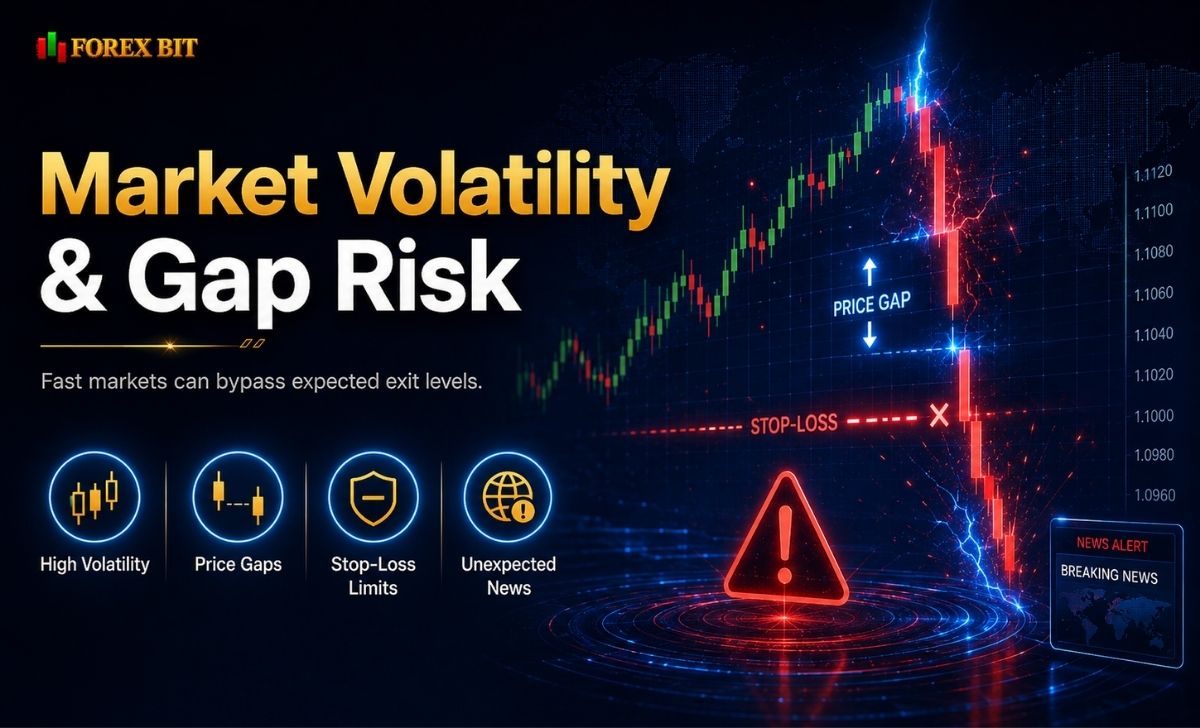
High-Volatility Events
Periods of elevated volatility can occur around events such as:
- Interest-rate decisions
- Inflation reports
- Employment data
- Elections
- Geopolitical developments
- Central bank announcements
- Unexpected economic or political news
These events can produce rapid price changes and wider trading ranges. Liquidity and spreads may also behave differently from normal market conditions.
Price Gaps
Markets do not always move smoothly from one price level to another.
A gap can be illustrated as:
Previous Price → No Trading at Intermediate Levels → New Price
When a market gaps, an order placed at an intermediate price may not be filled at that exact level because no executable price was available there.
As a result:
- A stop order may execute at a different price
- A loss may exceed the expected stop distance
- Slippage may occur
- Planned risk levels may not match the final realized loss
Gap risk can become particularly important around major events or when markets reopen after a period of closure.
Stop-Loss Orders Are Not Guarantees
A stop-loss order can be a useful risk-management tool, but it does not guarantee an exact exit price.
Execution may depend on:
- Available liquidity
- Market volatility
- Price gaps
- Broker execution conditions
- The type of order used
If the market moves rapidly through the stop level, the position may be executed at the next available price rather than the exact requested price.
Volatility can affect execution prices, while market liquidity can also influence spreads and the ability to enter or exit positions.
Liquidity, Spread & Execution Risk
Trading conditions are not constant, particularly during volatile markets or periods of reduced liquidity. Available prices, spreads, execution speed, and the ability to enter or exit a position may differ significantly from normal conditions.
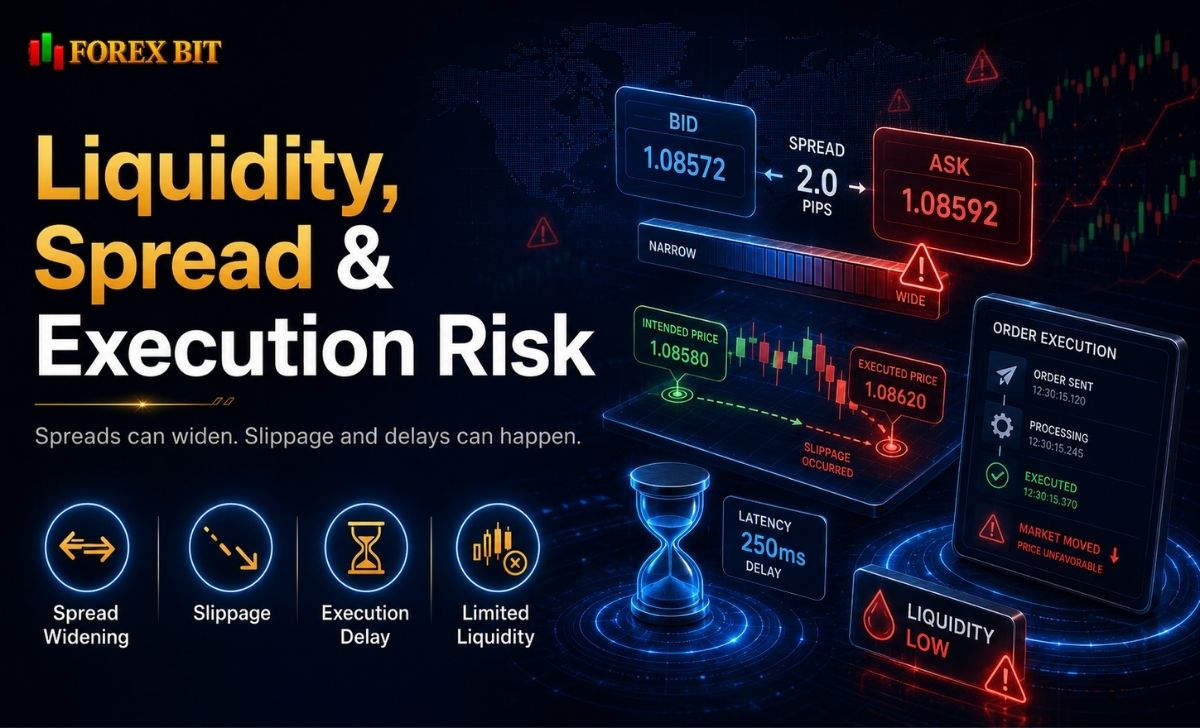
Spread Widening
The spread represents the difference between the available buy and sell prices. Although spreads may remain relatively stable under some market conditions, they can widen.
Possible causes include:
- Low market liquidity
- Major news events
- Market opening or closing periods
- Unexpected volatility
A wider spread can:
- Increase the cost of entering or exiting a trade
- Cause stop levels to be reached sooner
- Affect short-term trading strategies
- Change the effective risk-to-reward profile of a position
Traders should not assume that the spread visible under normal conditions will remain unchanged.
Slippage
Slippage occurs when the price requested for an order differs from the price at which the order is actually executed.
In simple terms: Requested price ≠ Executed price
Slippage can be positive or negative and may become more common during volatile or less liquid market conditions. The possibility of slippage means that the final result of a trade may differ from calculations based solely on the requested entry or exit price.
Execution Delays
An order may also be affected by delays between submission and execution.
Potential causes can include:
- Market conditions
- Trading-platform latency
- Internet connectivity problems
- Broker infrastructure
- Available liquidity
Even a short delay can matter when market prices are changing rapidly.
Orders May Not Execute as Expected
Traders should not assume that online trading provides:
- Instant execution in every circumstance
- A guaranteed requested price
- Guaranteed liquidity
- Unlimited market depth
Actual execution depends on the market, order type, broker, infrastructure, and other applicable conditions.
Execution conditions are only one source of risk, as trading costs can also reduce returns or increase losses over time.
Trading Costs Can Affect Results
A correct prediction about market direction does not necessarily result in a profitable trade after all applicable costs are considered. Traders should understand the charges associated with opening, maintaining, and closing positions before evaluating potential returns.
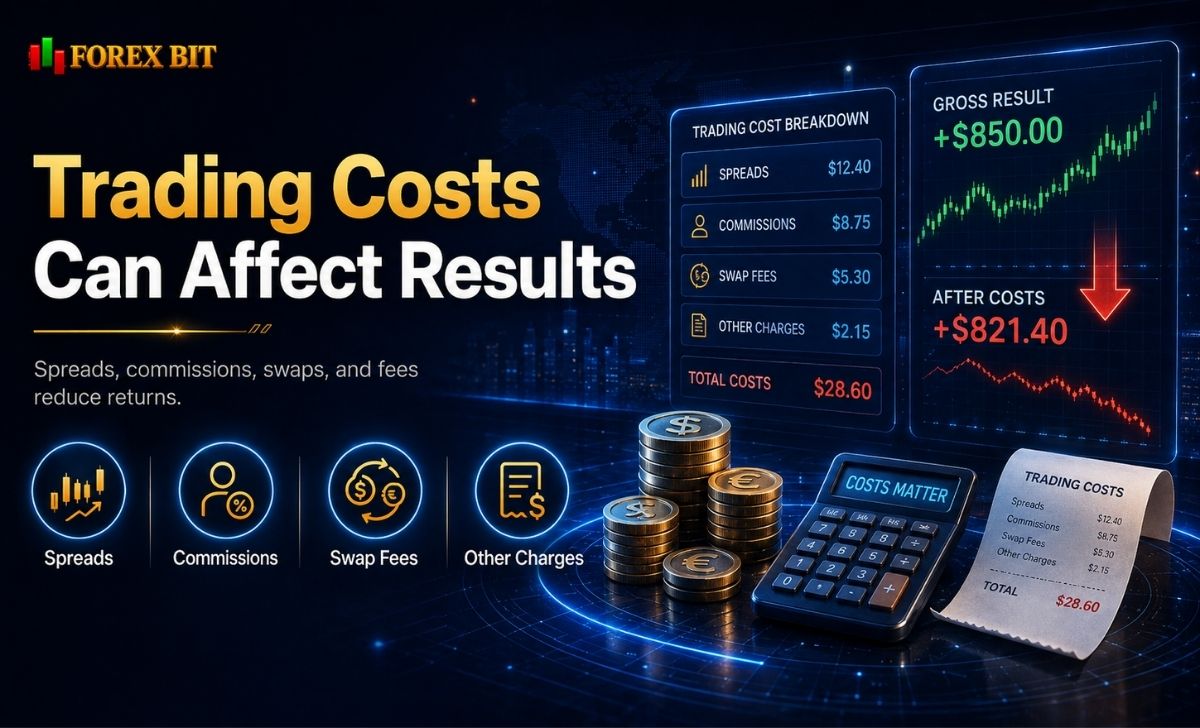
Spreads
The spread can be expressed simply as:
Buy Price – Sell Price = Spread
Spread costs can:
- Change over time
- Increase during volatile markets
- Differ between instruments
- Differ between account types
The effect of spreads can be particularly significant for strategies involving frequent or short-duration trades.
Commissions
Some broker accounts charge a separate trading commission.
Depending on the account, commissions may be:
- Charged per lot
- Charged on each side of a transaction
- Combined with lower quoted spreads
- Structured differently across instruments
A low advertised spread should therefore not be considered in isolation from commissions and other applicable costs.
Swap / Overnight Fees
Positions held beyond a specified time may be subject to swap or overnight financing adjustments.
Depending on the instrument and position, an overnight adjustment may:
- Create a financing charge
- In some circumstances create a credit
- Vary between instruments
- Change over time
Longer holding periods can make these costs increasingly relevant to the final result.
Other Broker Fees
Depending on the broker and account, additional charges may include:
- Inactivity fees
- Currency conversion fees
- Withdrawal fees
- Deposit fees
- Other non-trading charges
Fee structures can change, so users should verify current pricing and terms directly before opening or funding an account.
Costs affect trading performance, but another important risk is that broker services and protections can differ depending on the legal entity serving the client.
Broker & Jurisdiction Risk
The same broker brand may operate through different legal entities across several countries or regions. Regulatory protections, leverage limits, account conditions, complaint procedures, and other client safeguards can therefore differ between users of the same brand.

Regulation Does Not Eliminate Trading Risk
Regulation can establish rules and protections applicable to a broker, but a regulated status does not make trading risk-free.
A regulated broker cannot guarantee:
- Profitable trades
- Protection from market losses
- No slippage
- No platform interruptions
- Future solvency
Regulatory status should therefore be considered separately from the inherent financial risks of trading.
Legal Entity Matters
Before opening an account, users should identify the specific legal entity that will provide their brokerage services.
Relevant checks can include:
- Company name
- Regulator
- License or registration details
- Jurisdiction
- Client agreement
A license held by one company within a broker group should not automatically be assumed to apply to another company operating under the same brand.
Client Protections May Differ
Depending on the legal entity and jurisdiction, differences may exist in areas such as:
- Negative balance protection
- Segregation of client funds
- Compensation schemes
- Complaint mechanisms
- Leverage restrictions
Readers should verify whether a particular protection actually applies to their account rather than assuming that it is available because it is mentioned elsewhere in connection with the broker.
Offshore & Cross-Border Considerations
Cross-border or offshore brokerage arrangements can involve additional considerations.
Depending on the circumstances:
- Regulatory protections may be different
- Complaint mechanisms may be more limited
- Enforcement across jurisdictions may be more difficult
- Account terms may differ materially
Users should understand which entity they are contracting with before depositing funds.
Even when a broker operates normally, technology and connectivity problems can introduce additional trading risks.
Platform & Technology Risk
Online trading depends on trading platforms, broker infrastructure, devices, data feeds, and internet connectivity. Technical failures can prevent traders from opening, modifying, monitoring, or closing positions at the time they intend.
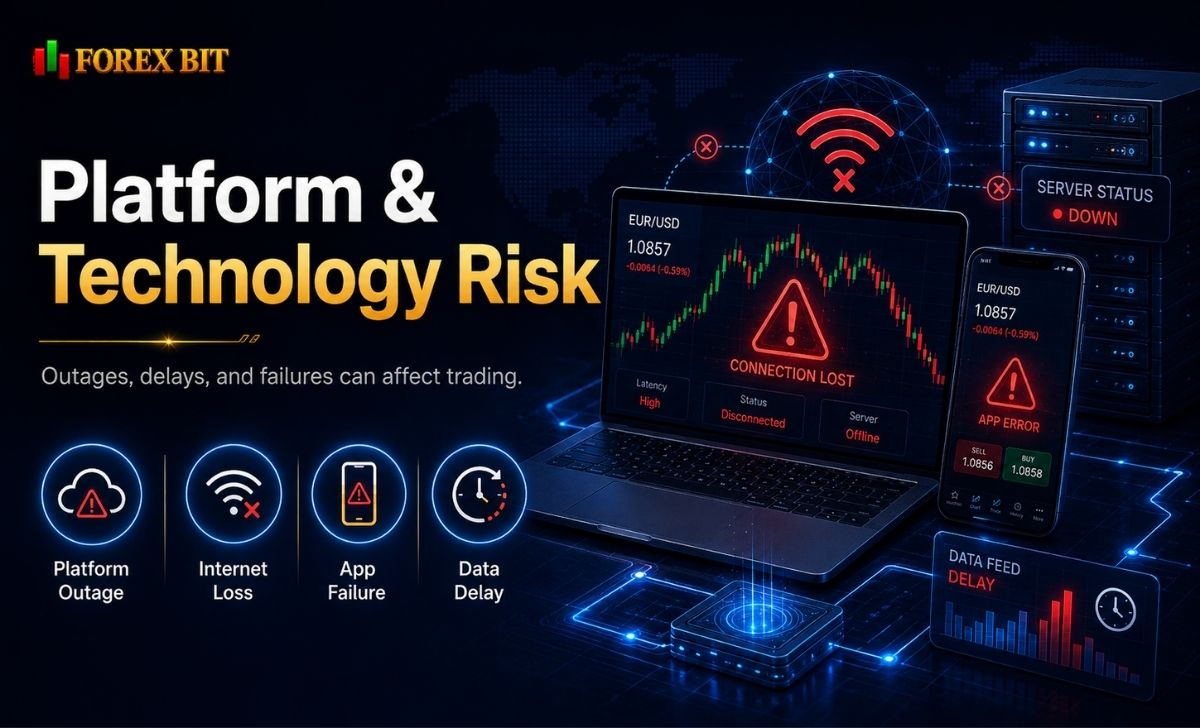
Possible Technical Problems
Technical risks may include:
- Internet outages
- Trading-platform outages
- App failures
- Broker server interruptions
- Device failures
- Delayed price feeds
- Login problems
A technical problem can become particularly significant when a trader has leveraged positions open during a fast-moving market.
Automated Trading Risk
Expert Advisors, bots, algorithms, and other automated trading systems introduce their own risks.
An automated system may:
- Contain coding errors
- Execute unintended trades
- Fail during connectivity problems
- Perform differently from backtested results
- Continue placing trades without immediate manual oversight
Automation removes neither market risk nor the need to understand how the trading system operates.
Mobile Trading Risk
Mobile trading can make markets easier to access, but it also creates practical risks.
These may include:
- Connectivity loss
- Errors caused by small-screen interfaces
- Incorrect order entry
- Delayed notifications
Users should verify order details carefully rather than assuming that mobile convenience eliminates operational risk.
Technology Does Not Guarantee Execution
Access to a modern trading platform does not guarantee:
- Continuous service
- Exact execution prices
- Successful order submission
- Error-free operation
Platform features and technical tools can assist traders, but they cannot eliminate the underlying uncertainty of financial markets.
Technical tools can help traders access markets, but no strategy, signal, or automated system can remove the underlying risk of loss.
Trading Strategies & Past Performance Are Not Guarantees
A strategy that performed successfully in previous market conditions may produce different results in the future. Historical performance, backtests, screenshots, signal records, or individual success stories should therefore not be interpreted as guarantees of future returns.
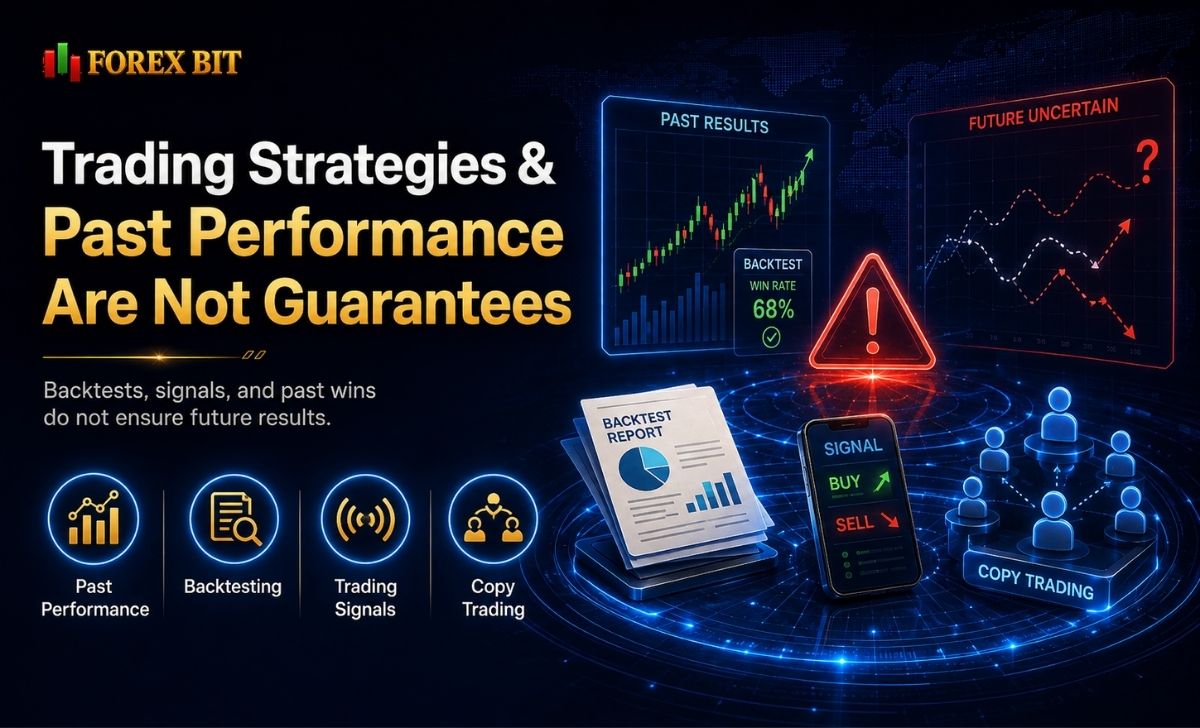
Past Performance
Past performance cannot guarantee:
- Future profits
- Similar market conditions
- Similar drawdowns
- Similar execution quality
Markets evolve, and relationships between currencies, economic variables, volatility, and liquidity can change.
Backtesting Limitations
Backtesting can help evaluate how a strategy might have behaved using historical data, but simulated results may not fully reproduce real trading conditions.
A backtest may fail to fully reflect:
- Slippage
- Changing spreads
- Available liquidity
- Execution delays
- Real trading psychology
The quality of the historical data and assumptions used can also affect the result.
Trading Signals
Trading signals are not guarantees.
Signals:
- Can be incorrect
- May arrive too late
- May not suit every trader
- Cannot eliminate market risk
A signal provider’s previous success does not ensure that future signals will perform similarly.
Copy Trading
Copy trading introduces similar uncertainty. Following another trader does not guarantee that the follower will achieve the same result or that the copied strategy is appropriate for the follower’s financial circumstances.
Copy trading cannot guarantee:
- Identical execution
- Profit
- Appropriate risk exposure
- Continued strategy performance
Differences in timing, account conditions, leverage, and market execution can also affect results.
Strategy risk is also affected by human behavior, as emotional decisions can increase exposure and losses.
Psychological & Behavioral Trading Risks
Trading decisions are influenced not only by market analysis but also by emotions, expectations, and individual behavior. Fear, greed, overconfidence, and attempts to recover losses can cause traders to take greater risks than they originally intended.
Common Behavioral Risks
Potential behavioral risks include:
- Overtrading
- Revenge trading after a loss
- Increasing leverage to recover losses
- Ignoring stop-loss or risk-management rules
- Fear of missing out
- Holding losing positions for too long
- Closing profitable positions prematurely
Emotional decisions can cause a trader to abandon a previously established trading plan.
Do Not Trade Money You Cannot Afford to Lose
Trading capital should be considered in the context of the trader’s broader financial obligations.
Using money required for essential expenses can increase both financial and psychological pressure. Examples may include:
- Emergency savings
- Rent or mortgage payments
- Essential household expenses
- Borrowed funds where losses cannot reasonably be absorbed
- Capital required for short-term obligations
A trading loss should not put essential financial commitments at risk.
Risk Tolerance Is Personal
There is no universal level of risk, leverage, or position size that is appropriate for every trader.
Personal circumstances can differ in areas such as:
- Income and assets
- Financial commitments
- Trading experience
- Ability to absorb losses
- Investment or trading objectives
- Emotional tolerance for volatility
What one trader considers manageable risk may be inappropriate for another.
Read more about Forex Bit Policy:
- About Us
- Corrections Policy
- Affiliate Disclosure
- Advertising Policy
- Review Methodology
- Editorial Policy
- Privacy Policy
- Terms and Conditions
- Cookie Policy
Because individual circumstances differ, Forex Bit content cannot determine whether trading or a specific broker is appropriate for a particular reader.
Forex Bit Content Is Not Financial Advice
Forex Bit publishes broker research, comparisons, guides, and industry information for informational and educational purposes. Our content does not take into account an individual reader’s income, assets, objectives, experience, knowledge, risk tolerance, or personal financial circumstances.
What Forex Bit Does Not Provide
Forex Bit does not:
- Provide personalized investment advice
- Provide personalized trading recommendations
- Manage investments
- Manage brokerage accounts
- Tell individuals exactly what they should trade
- Guarantee broker suitability
- Guarantee trading profits
Readers remain responsible for determining how, or whether, they act on information found on Forex Bit.
Broker Reviews Are Not Trading Recommendations
A favorable broker review or ranking should not be interpreted as an instruction to trade.
It does not mean that:
- A user should deposit funds
- A user should begin trading
- The broker is suitable in every jurisdiction
- A financial product fits every risk profile
- A profit should be expected
A broker can perform well under specific review criteria while trading through that broker still involves financial risk.
Educational Content Is Not a Guarantee
Forex Bit may publish educational information about topics such as:
- Trading platforms
- Brokerage accounts
- Trading concepts
- Broker selection
This material is intended to help readers understand relevant concepts and compare available information. It does not guarantee that applying the information will produce a particular financial result.
Seek Professional Advice Where Appropriate
Depending on individual circumstances and jurisdiction, readers may consider obtaining independent professional advice.
This could include consulting a:
- Licensed financial adviser
- Tax professional
- Legal professional
Professional advice may be particularly relevant where a decision has significant financial, tax, or legal consequences.
The informational nature of Forex Bit content also means that readers remain responsible for verifying broker conditions before acting.
Your Responsibility Before Trading
Readers remain responsible for deciding whether to open a brokerage account, deposit funds, use leverage, or place a trade. Before taking action, users should independently verify the product, broker, legal entity, terms, and protections applicable to their own account and jurisdiction.
Understand the Product
Before trading forex or CFDs, users should understand:
- How the product works
- How leverage affects exposure
- How margin works
- Which fees apply
- How margin calls and stop-outs operate
A trader should not rely solely on the availability of a product as evidence that the product is appropriate for them.
Verify the Broker
Users should independently check relevant broker information, including:
- Legal entity
- Regulatory status
- License details
- Official website
- Client agreement
- Applicable fees
- Jurisdiction
The exact entity providing the account can affect both trading conditions and available protections.
Read Broker Risk Disclosures
Brokers may provide documents explaining the specific risks and contractual terms associated with their products.
Depending on the broker and jurisdiction, these may include:
- Risk warnings
- Product disclosures
- Key information documents
- Client agreements
- Margin policies
Readers should review the documents relevant to their actual account rather than relying solely on third-party summaries.
Assess Personal Circumstances
Before trading, individuals should consider factors such as:
- Financial position
- Trading experience
- Risk tolerance
- Capacity to absorb losses
- Investment or trading objectives
If the potential loss would create financial hardship, the level of risk may not be appropriate for that person’s circumstances.
Readers should also understand that risk information itself can change when financial products, regulations, or broker conditions evolve.
Changes to This Risk Warning
Forex Bit may revise this Risk Warning when relevant financial products, risk considerations, or the scope of our website coverage changes. Readers should consider the current version together with the latest broker terms and regulatory information applicable to their jurisdiction and account.
What May Trigger an Update?
This Risk Warning may be reviewed or updated in response to:
- New financial products covered by Forex Bit
- Changes in leverage rules
- New broker product structures
- Regulatory developments
- Changes in the scope of Forex Bit content
- Improvements to the way material risks are explained
An update to this page does not imply that all risks can be listed or predicted in advance.
Last Updated
Forex Bit may display a date such as: Last Updated: [Date]
This helps readers identify when the current version received its latest substantive revision.
Current Version Applies
Unless otherwise stated:
The latest Risk Warning published on Forex Bit supersedes previous versions.
Readers should refer to the version currently available on Forex Bit rather than relying on an older copy when evaluating our risk disclosures.
If you have a question about this Risk Warning, you can contact Forex Bit, while broker-specific account issues should be directed to the relevant broker.
Contact Forex Bit About This Risk Warning
Readers can contact Forex Bit when they have questions about this Risk Warning or believe risk-related wording on our website requires clarification. Forex Bit cannot resolve trading, account, deposit, withdrawal, KYC, platform, or order-execution matters on behalf of third-party brokers.
You can contact Forex Bit through:
- Website:https://forex-bit.com
- Email:[email protected]
- Contact Page: https://forex-bit.com/about/contact
- Facebook:https://www.facebook.com/forexbit.global
- Instagram:https://www.instagram.com/forexbit.global
Contact Forex Bit for questions about published risk information, unclear risk wording, missing context, or concerns about how trading risks are described in our content.
Contact the relevant broker for account-specific matters such as margin calls, stop-outs, deposits and withdrawals, KYC, order execution, account restrictions, trading-platform issues, or other operational conditions
Conclusion
The risk warning Forex Bit highlights that forex, CFDs, leverage, market volatility, execution conditions, trading costs, technology, and human behavior can all expose traders to significant financial losses. Broker regulation, reviews, rankings, trading strategies, stop-loss orders, and technology may provide useful information or tools, but none can eliminate trading risk or guarantee future results.
Readers should understand the products they trade, verify the broker terms and protections that apply to them, and carefully consider their knowledge, financial circumstances, and capacity for loss before deciding whether to trade.