







Forex Bit Compare helps traders compare forex brokers side by side using practical factors such as trading costs, platforms, regulation, account conditions, execution, and payment options. The goal is to make meaningful differences between brokers easier to identify before opening or funding an account.
A broker should not be judged by one advertised spread, one platform, or the number of licences displayed on its website. Pricing can change by account and instrument, platform availability can vary by broker, and regulatory protection can depend on the legal entity that accepts a trader’s account.
Forex Bit brings these factors together so readers can compare brokers on a more consistent basis. Depending on the comparison, we examine spreads and commissions, MT4, MT5 and cTrader availability, account structures, regulatory entities, trading conditions, execution information, deposits and withdrawals, and trader protection features.
What Can You Compare Between Forex Brokers?
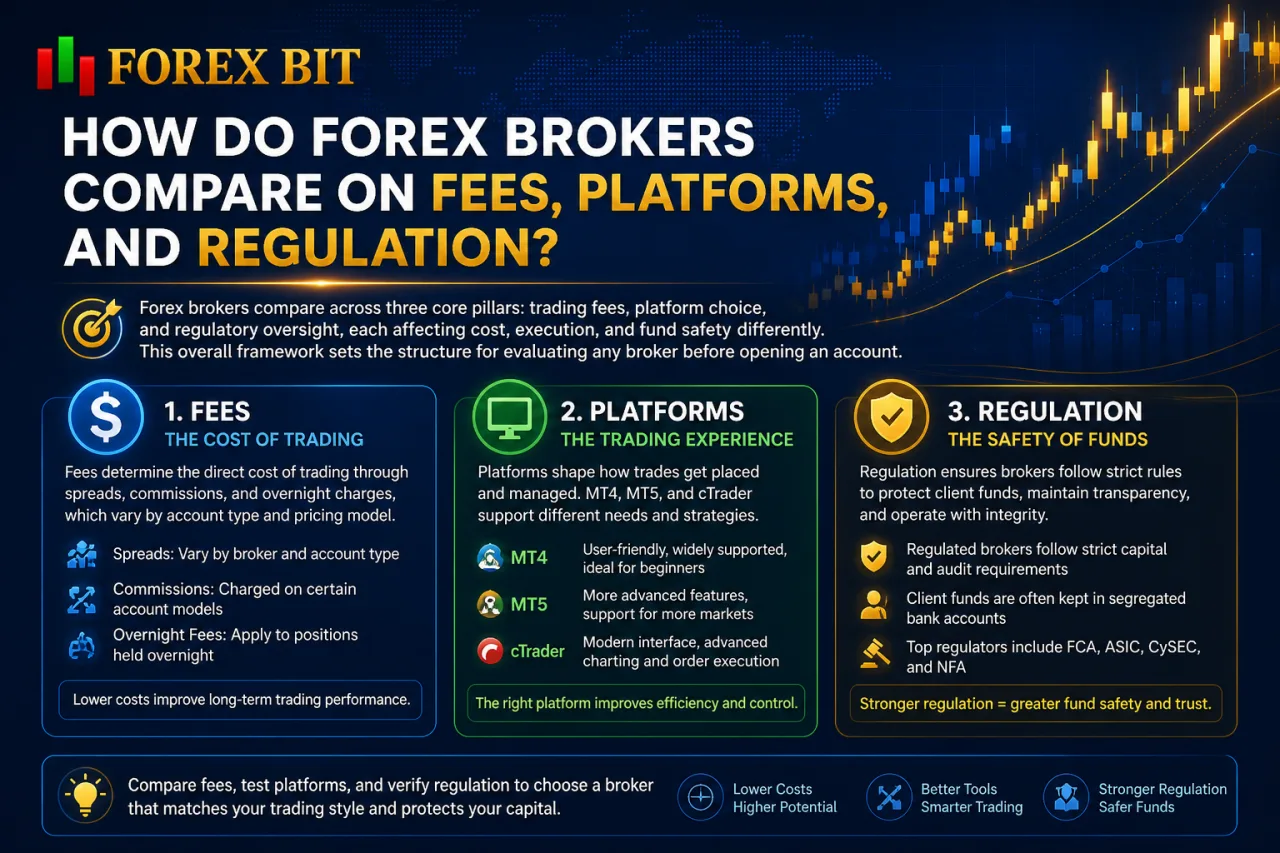
Forex brokers can be compared across several areas that affect the actual trading experience, rather than by a single headline feature. Forex Bit organizes these factors so readers can see where brokers are similar and where meaningful differences appear.
| Comparison Factor | What Forex Bit Looks At | Why It Matters |
|---|---|---|
| Trading Costs | Spreads, commissions, swaps and relevant non-trading fees | Determines the practical cost of trading |
| Trading Platforms | MT4, MT5, cTrader and broker-specific platforms | Affects trading tools, automation and accessibility |
| Regulation | Legal entities, regulators and licence status | Helps identify the regulatory framework applying to an account |
| Account Conditions | Pricing structure, minimum deposit, leverage and trade size | Determines whether an account suits a trading approach |
| Execution | Execution policy, slippage and order handling where disclosed | Can affect how orders are filled |
| Payments | Deposit and withdrawal methods, fees and conditions | Affects how traders fund and access their accounts |
| Markets | Forex pairs, CFDs and other available instruments | Determines what can be traded through the broker |
| Trader Protection | Measures such as negative balance protection where applicable | Helps assess account-level risk safeguards |
Not every factor carries the same importance for every trader. A short-term trader may focus heavily on spread, commission and execution, while someone holding positions for longer periods may give greater weight to swap costs. Platform requirements, regulation and payment availability can also change the suitability of a broker.
How Does Forex Bit Compare Forex Broker Trading Costs?
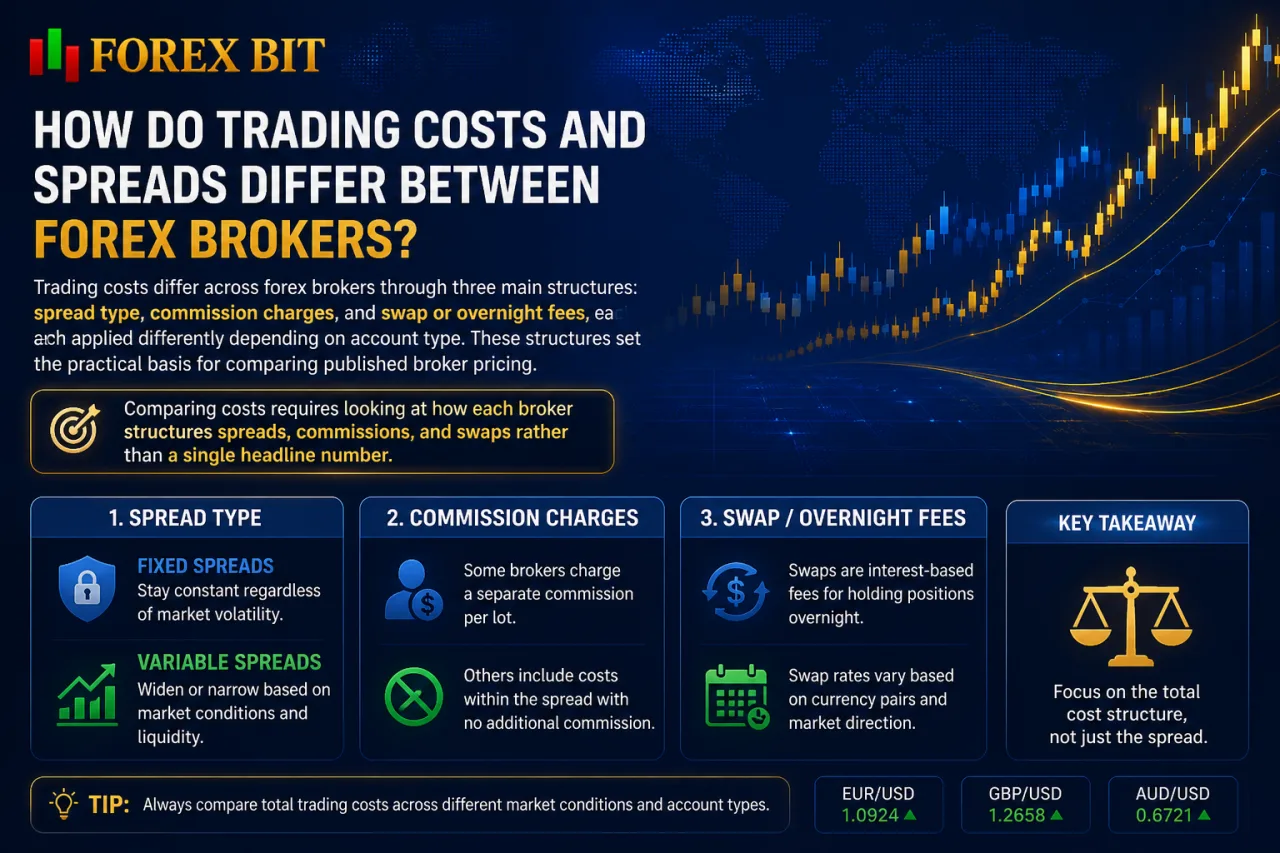
Forex Bit compares broker pricing by looking beyond the minimum spread advertised on a broker’s homepage. A narrow spread does not automatically mean that a broker is cheaper once commissions, overnight charges and account-specific conditions are considered.
Total Trading Cost Matters More Than Headline Spread
The most useful cost comparison places brokers under similar conditions. That means checking the same instrument, account structure, trade size and holding period wherever comparable information is available.
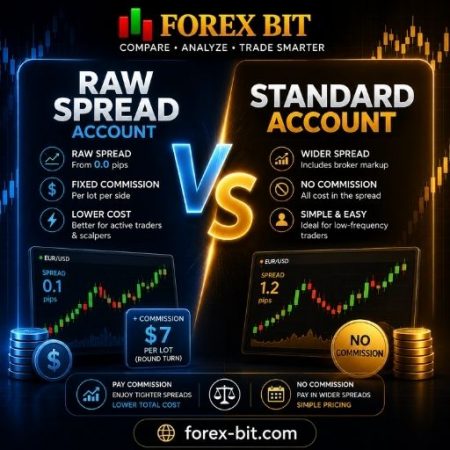
A raw-spread account, for example, may combine tighter spreads with a separate commission. A standard account may instead include more of the trading cost inside the spread. Neither pricing model is automatically cheaper in every situation.
Swap or overnight charges can become more important when positions are held for longer periods, while deposit, withdrawal or inactivity charges may also affect the overall cost of using an account.
Forex Bit therefore distinguishes between advertised pricing and practical total cost rather than ranking brokers only by the lowest spread displayed.
Compare Like With Like
A minimum spread from one broker should not be compared directly with an average spread from another without explaining the difference. The same applies when comparing Standard pricing with Raw pricing or account conditions that apply to different instruments.
Where broker data allows it, Forex Bit identifies the account and pricing model behind the figures being compared so readers can understand what each number actually represents.
How Does Forex Bit Compare Platforms, Accounts, and Trading Conditions?
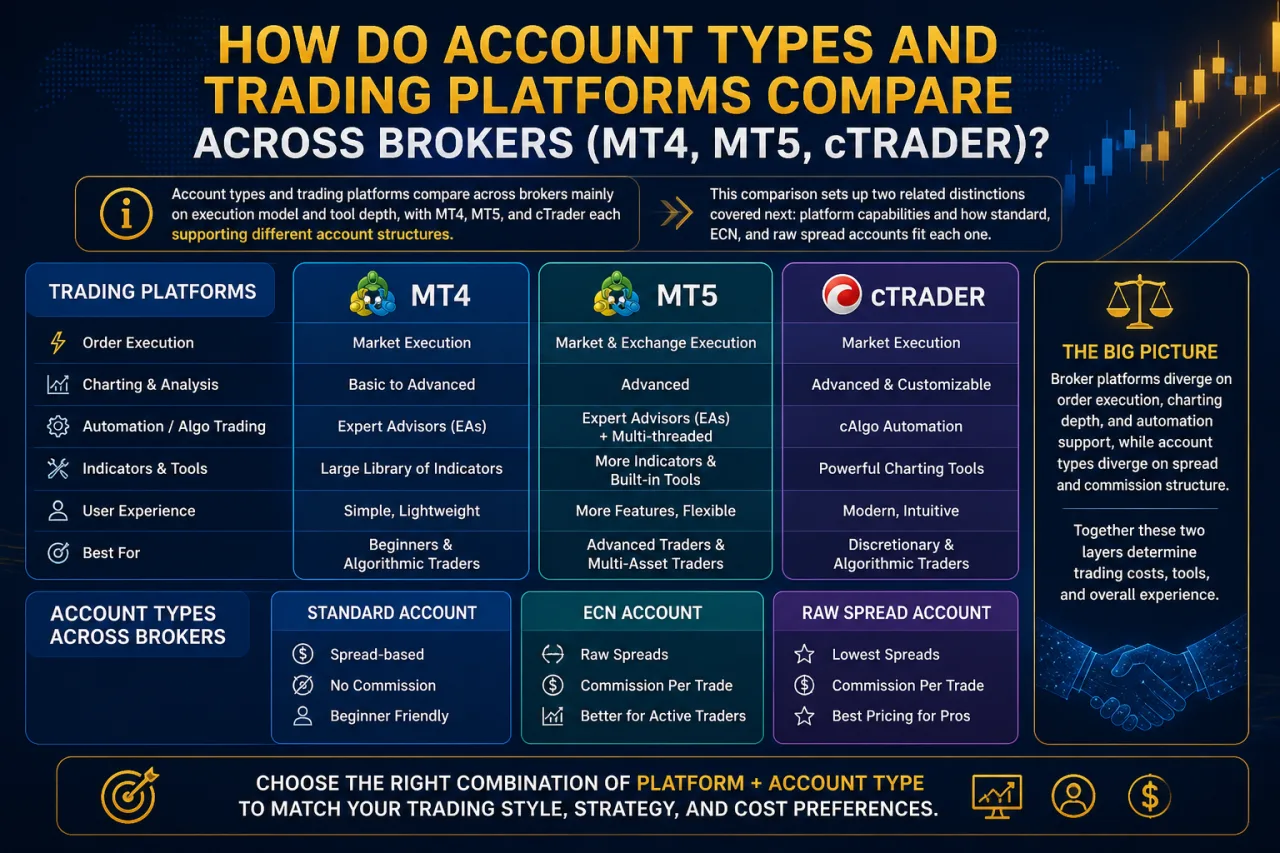
Platform availability alone does not make two brokers equivalent because brokers can offer different instruments, account structures and trading conditions through the same platform.
Trading Platforms and Tools
Forex Bit checks whether brokers provide common platforms such as MT4, MT5 and cTrader, as well as proprietary web, desktop or mobile platforms where relevant.
The comparison focuses on the trading experience available through the broker rather than explaining every technical feature of each platform. Factors may include platform availability, supported account types, automation options, charting and trading tools, mobile access and the markets available through each platform.
A trader looking specifically for MT5 or cTrader can therefore identify whether both brokers support the required platform before comparing their account conditions in more detail.
Accounts and Trading Conditions
Forex brokers use different names and structures for their accounts. Common examples include Standard, Raw or commission-based pricing and Swap-Free accounts, but the exact terms vary between providers.
Forex Bit compares the conditions behind the account name rather than assuming that similarly named accounts are identical.
Important differences can include pricing structure, minimum deposit, leverage, minimum trade size, available instruments and eligibility requirements. Swap-Free conditions may also differ between brokers and jurisdictions.
This approach makes it easier to compare what traders actually receive from an account rather than relying on marketing labels.
How Does Forex Bit Compare Regulation and Broker Safety?
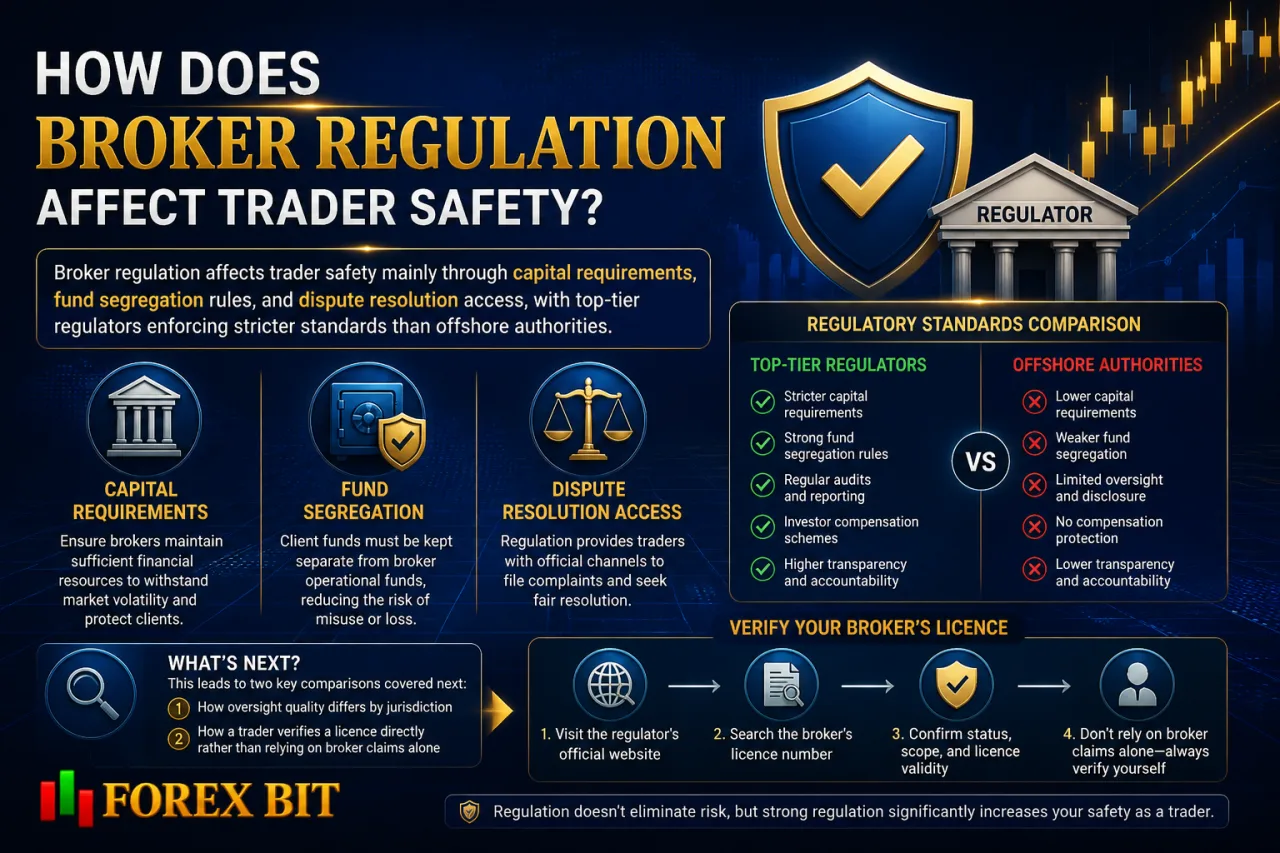
Forex Bit compares regulation by looking at the legal entities and regulatory licences connected to a broker rather than treating the broker brand as a single global entity.
Legal Entity and Regulatory Status
A broker group may operate through different legal entities. The entity available to a trader can depend on country, client classification and other eligibility conditions.
For that reason, a comparison should distinguish between the broker’s brand, the legal company providing the service and the regulator responsible for that company.
Where regulatory information is relevant to a comparison, Forex Bit looks for the legal entity, regulator, licence or registration details and current status that can be independently checked.
The aim is not to declare one broker safe merely because it displays more regulator logos. Instead, regulatory information is used to show which framework may apply to the account being compared.
Trader Protection Can Differ by Jurisdiction
Client-money requirements, complaint procedures, leverage restrictions, negative balance protection and other safeguards can vary according to regulator, jurisdiction, account entity and client classification.
A protection available under one entity of a global broker should therefore not automatically be presented as applying to every customer of that brand.
Forex Bit highlights these differences where they materially affect a broker comparison and encourages traders to confirm which legal entity would hold their account before making a decision.
What Other Factors Can Differentiate Forex Brokers?
Trading costs, platforms and regulation form the core of many comparisons, but they are not the only factors that can distinguish one broker from another.
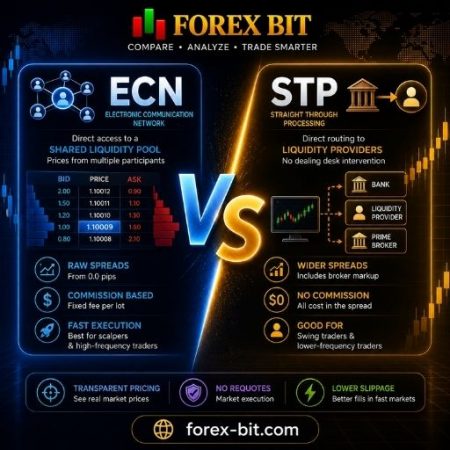
Execution information can be relevant for traders who care about slippage, requotes or how orders are handled. Forex Bit considers available execution policies and broker disclosures rather than assuming that labels such as ECN, STP or Market Maker automatically determine execution quality.
Deposits and withdrawals can also create important differences. Supported payment methods, currencies, processing conditions and broker-side fees can influence how convenient an account is for traders in different countries.
Market coverage matters when brokers provide different forex pairs, commodities, indices, shares or other products. Customer support, research tools and educational resources may also be included when they provide a useful distinction between the brokers being compared.
These additional criteria are used where relevant rather than forcing every broker comparison into exactly the same template.
What Types of Forex Broker Comparisons Can You Find on Forex Bit?
Forex Bit Compare covers different comparison intents so traders can narrow brokers by the factors most relevant to their needs.
Broker vs Broker Comparisons
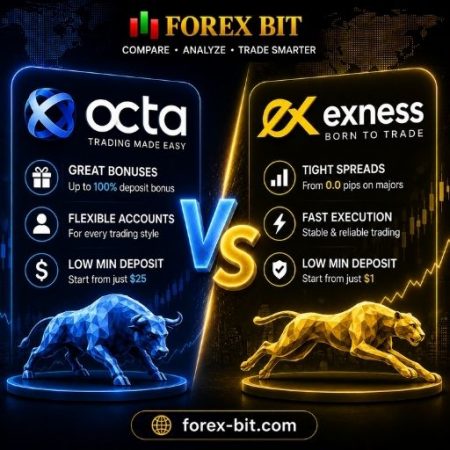
Direct broker comparisons place two providers side by side and examine meaningful differences in pricing, platforms, regulation, accounts and trading conditions.
Cost and Pricing Comparisons
Cost-focused comparisons examine factors such as spreads, commissions, Raw pricing and other fee structures where traders are primarily concerned with trading expenses.
Platform Comparisons
Platform-focused comparisons help readers evaluate brokers according to MT4, MT5, cTrader or other platform requirements.
Regulation and Trading Condition Comparisons
Other comparisons may focus on regulation, account conditions, execution requirements or specific trading needs where those factors provide a useful way to distinguish brokers.
Together, these comparison types allow the Compare section to act as a central starting point rather than forcing every trader to evaluate brokers using the same priority.
What Should You Look for When Comparing Forex Brokers?
A useful broker comparison should answer whether the conditions being compared actually apply to the trader, not simply which broker appears stronger on paper.
Before choosing between forex brokers, check:
- Whether both brokers are being compared using equivalent account and pricing conditions
- Whether spreads shown are minimum, typical or average figures
- Whether commission and swap costs are included where relevant
- Whether the required trading platform is available for the chosen account
- Which legal entity would actually provide the account
- Which regulator and regulatory protections apply to that entity
- Whether leverage, deposit requirements and available instruments match the trading strategy
- Whether deposit and withdrawal methods are practical for the trader’s country
- Whether broker conditions have changed since the comparison was published
Checking these points reduces the risk of choosing a broker based on a headline number that does not apply to the account a trader would actually use.
How Should Traders Use Forex Bit Broker Comparisons?
Forex broker comparisons are most useful as a decision-making tool, not as a universal ranking of which broker is best for everyone.
Different trading strategies create different priorities. A trader placing frequent short-term positions may pay more attention to spread, commission and execution conditions. Someone using automated strategies may place greater weight on platform compatibility and trading tools. A longer-term trader may need to examine swap costs more closely.
Location also matters. Platform availability, leverage, payment methods, promotions and regulatory protection can differ by country or legal entity.
Forex Bit comparisons are therefore designed to identify meaningful differences and trade-offs. Readers can then decide which factors carry the greatest weight for their own trading requirements.
Explore Forex Broker Comparisons
Use Forex Bit Compare to move from broad broker research to direct side-by-side evaluation. Start with the comparison factor most important to you, whether cost, platform, regulation, account conditions or another trading requirement, and then explore the relevant broker comparisons.
Broker terms can change over time, so important pricing, account and regulatory conditions should always be checked against current broker documentation before an account is opened.
Forex Bit Compare brings these differences into a consistent structure so traders can spend less time interpreting marketing claims and more time comparing the conditions that can actually affect their trading.