


- Regulated across multiple jurisdictions
- Segregated funds & negative balance protection
- Multiple account types for different traders
- Supports MT4, MT5 & HFM App
- No broker-side fees on most deposits
- Not available to US residents
- Protection varies by regulatory entity
- Weaker compensation coverage offshore
- Inactivity & withdrawal fees may apply
- Leverage limits vary by jurisdiction
HFM’s license status spans multiple jurisdictions, with regulatory oversight varying depending on the entity a trader registers with, so traders should verify the specific licenses applicable to their region before signing up. This multi-entity setup directly affects investor protection levels and deposit insurance eligibility.
HFM provides several account types, each designed to target different trading styles and capital sizes, so traders should check the broker’s official account page for the exact names and current specifications before choosing one. Spreads on commission-based accounts start at competitive, near-zero levels, while leverage limits depend on the trader’s region and the regulatory entity under which the account is opened. Traders should confirm the exact spread and leverage figures on HFM’s official website before opening an account.
HFM supports deposits and withdrawals through bank transfer, cards, and e-wallets, with a minimum deposit requirement that varies by account type, so traders should check the broker’s official website for the current figures before funding an account. Processing times and fees differ across payment channels and regions.
Forex Bit examines each of these areas in detail to help traders assess whether HFM fits their trading needs, starting with its legitimacy and regulatory standing in 2026.
Is HFM a Legitimate and Trustworthy Forex Broker in 2026?
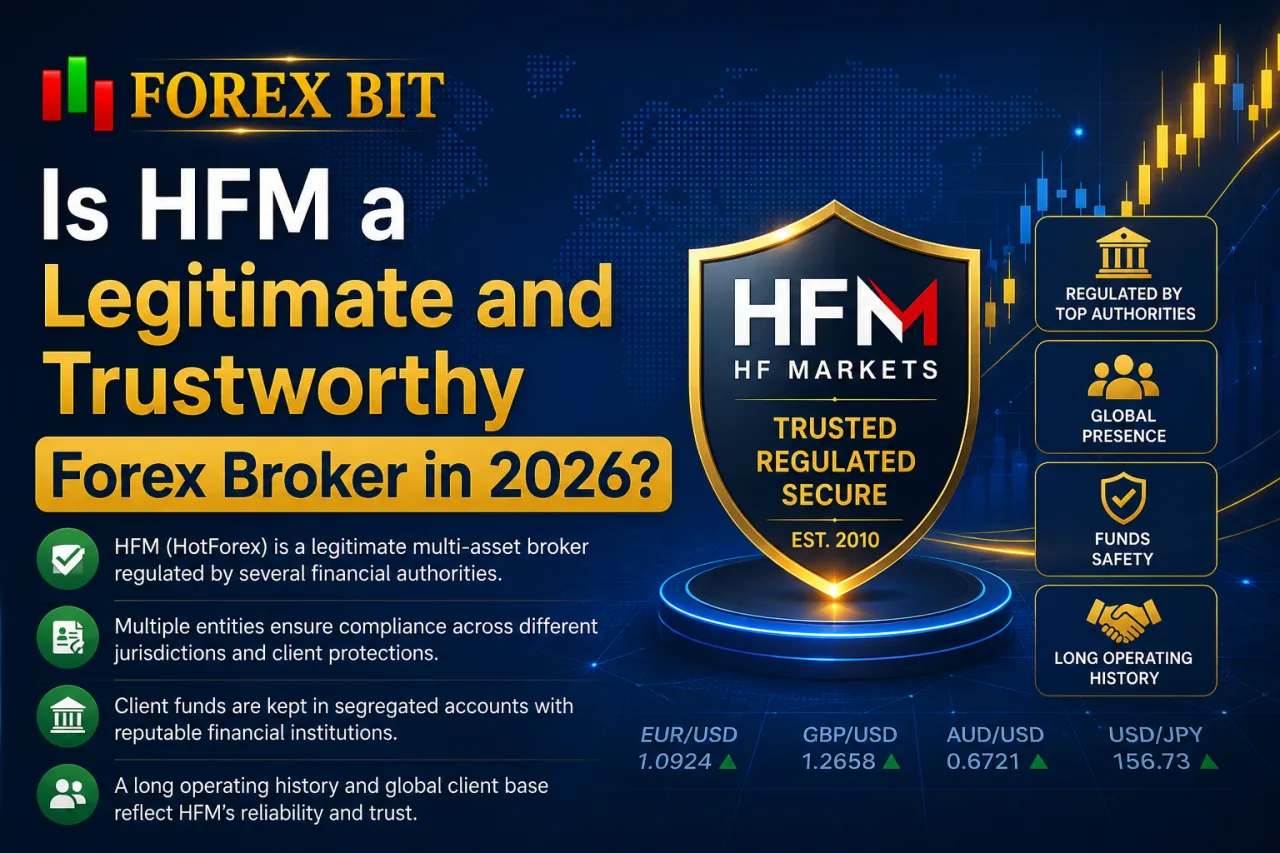
HFM (HotForex) operates as a legitimate multi-asset broker with regulatory oversight from several financial authorities, a long operating history, and a global client base across multiple entities. This overview addresses the core trust question before examining the specific regulatory, structural, and operational factors that support that assessment.
The sections below break down HFM’s licensing framework, entity structure, and fund safety measures to clarify how each element contributes to its overall trustworthiness in 2026.
What Regulatory Licenses Does HFM Hold?
HFM holds multiple regulatory licenses across different jurisdictions. Regulatory oversight comes from various tier-1 and offshore authorities, so traders should verify the specific license numbers applicable to their region on the broker’s official website before opening an account.
This licensing spread directly answers which authorities oversee HFM’s operations and clarifies why regulatory strength differs by client location.
Each regulator corresponds to a separate legal entity within the HFM group, and traders get onboarded under the entity matching their country of residence rather than choosing freely.
- Clients from the United Kingdom typically register under the FCA-regulated entity.
- Clients from the European Economic Area typically register under the CySEC-regulated entity.
- Clients from South Africa typically register under the FSCA-regulated entity.
- Clients from the Middle East region typically register under the DFSA-regulated entity.
- Clients from regions outside these zones typically register under the FSA Seychelles entity.
The specific entity assigned to a trader can determine the level of investor compensation coverage and the leverage limits applied to that account, so traders should confirm these details for their registered entity on the broker’s official website before opening an account.
Traders confirm their assigned entity during the account verification process on HFM’s official website before funding any account.
Is Client Fund Safety Ensured at HFM?
HFM (HotForex) applies client fund safety measures through segregated bank accounts, negative balance protection, and investor compensation schemes tied to specific regulated entities. This directly answers whether trader capital receives structural protection separate from the broker’s own operating funds.
These protections extend from the licensing framework already covered, since compensation eligibility and coverage limits depend on which HFM entity a trader is registered under.
- Segregated accounts hold client deposits at tier-1 banking institutions apart from HFM’s corporate funds, reducing exposure if the broker faces financial difficulty.
- Negative balance protection prevents client accounts from falling below zero during extreme market volatility, though its exact scope varies depending on the entity a trader is registered with, so traders confirm this detail for their specific account on the broker’s official website.
- Investor compensation schemes apply only to specific entities, such as the FCA-regulated entity offering coverage through the UK’s Financial Services Compensation Scheme and the CySEC-regulated entity offering coverage through the Investor Compensation Fund, so traders confirm the exact coverage limits for their registered entity on the broker’s official website before opening an account.
Traders registered under offshore entities such as FSA Seychelles generally do not receive the same compensation scheme coverage available to clients under FCA or CySEC entities.
Which Countries Are Restricted from Trading with HFM?
HFM (HotForex) restricts residents of the United States from opening trading accounts, alongside certain other jurisdictions flagged for regulatory or compliance reasons, so traders should check the broker’s official website for the current list of restricted countries before signing up.
This restriction list ties directly into the jurisdiction-based entity assignment described earlier, since a country’s regulatory status determines whether HFM can legally onboard clients from it at all.
- Prohibits account registration for residents of the United States due to strict domestic derivatives regulations.
- Excludes residents of certain sanctioned or high-risk jurisdictions flagged for regulatory or compliance reasons, so traders should check the broker’s official website for the current list of restricted countries before signing up.
- Applies restrictions that can shift over time as HFM updates its compliance policies across entities.
Traders outside these excluded zones still get routed to a specific regulated entity such as FCA, CySEC, FSCA, DFSA, or FSA Seychelles based on their declared country of residence, rather than restricted from trading altogether. Anyone uncertain about their country’s eligibility should confirm current restrictions directly on HFM’s official website before attempting to register.
What Account Types Does HFM Offer and How Do They Compare?
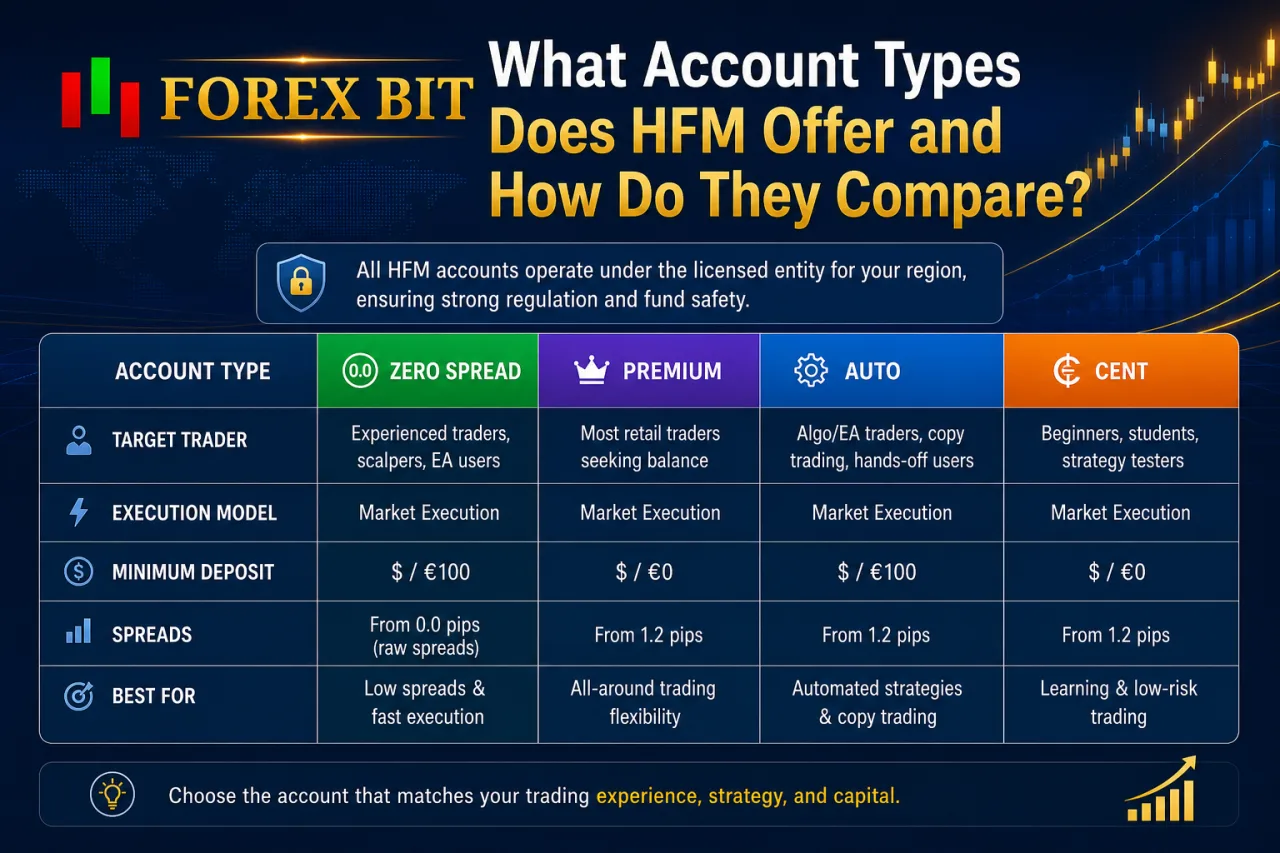
HFM (HotForex) groups its account lineup into distinct categories built around execution model and capital size, including Zero Spread, Premium, Auto, and Cent options. This account structure connects directly to the licensing and fund safety framework already covered, since the specific account a trader opens still operates under the entity assigned to their region.
The sections below compare each account type’s target trader profile, execution model, and minimum deposit to clarify which option fits different trading approaches.
What Is the Minimum Deposit Required for Each HFM Account?
HFM (HotForex) sets minimum deposit requirements that differ by account type, with entry thresholds generally lower on Cent and Micro-style accounts and higher on Zero Spread and Premium accounts, so traders should check the broker’s official website for the current figures before funding an account.
This deposit structure connects directly to the account lineup already outlined, since the capital required to open each account shapes which trading style it suits.
The exact figures also shift depending on the base currency selected and the regulated entity handling the account, since regional regulators impose different onboarding rules. HFM does not publish a single global minimum deposit table that applies uniformly across all entities, so the ranking below reflects the general tier order rather than fixed dollar amounts.
- Cent accounts sit at the lowest minimum deposit tier among HFM’s offerings, designed for traders starting with small capital.
- Premium accounts sit at a moderate minimum deposit tier above the Cent tier.
- Zero Spread accounts sit at a comparable or slightly higher minimum deposit tier than Premium, reflecting their tighter spread structure.
- Auto accounts follow a separate minimum deposit tier tied to algorithmic trading conditions rather than the standard manual-trading tiers.
Entity-specific rules can adjust the accepted base currencies and the exact minimum deposit figure applied. Traders should confirm these details for their registered entity directly on HFM’s official website before opening an account, since the precise dollar or currency-equivalent minimums vary by region and are subject to change without prior notice.
Which HFM Account Type Suits Beginners vs Experienced Traders?
Cent accounts suit beginners through smaller trade sizes and lower capital exposure, while Zero Spread accounts suit active or professional traders through tighter pricing and commission-based execution. This match between account features and experience level builds directly on the account lineup already outlined, since spreads, commissions, and execution model shift depending on the account chosen.
Beginners trading small position sizes benefit from the Cent account’s reduced monetary risk per trade, since values are denominated in cents rather than standard units. This structure allows new traders to practice strategy execution without committing significant capital.
Premium accounts fit intermediate traders seeking a balance between simplicity and standard market access without a separate commission structure.
Experienced and high-volume traders typically favor Zero Spread accounts for their near-zero spread pricing paired with a fixed commission per trade, a structure that rewards frequent execution and tighter cost control. Auto accounts fit traders running algorithmic or automated strategies that depend on consistent execution speed rather than manual order placement.
- Beginners generally start with Cent accounts for reduced risk exposure.
- Intermediate traders generally choose Premium accounts for straightforward market access.
- Active and professional traders generally select Zero Spread accounts for tighter spreads and commission-based execution.
- Algorithmic traders generally rely on Auto accounts for automated strategy execution.
Traders should confirm the exact spread, commission, and execution details for each account on HFM’s official website before selecting one, since conditions can vary by region and entity.
How Much Do Spreads, Commissions, and Leverage Cost at HFM?
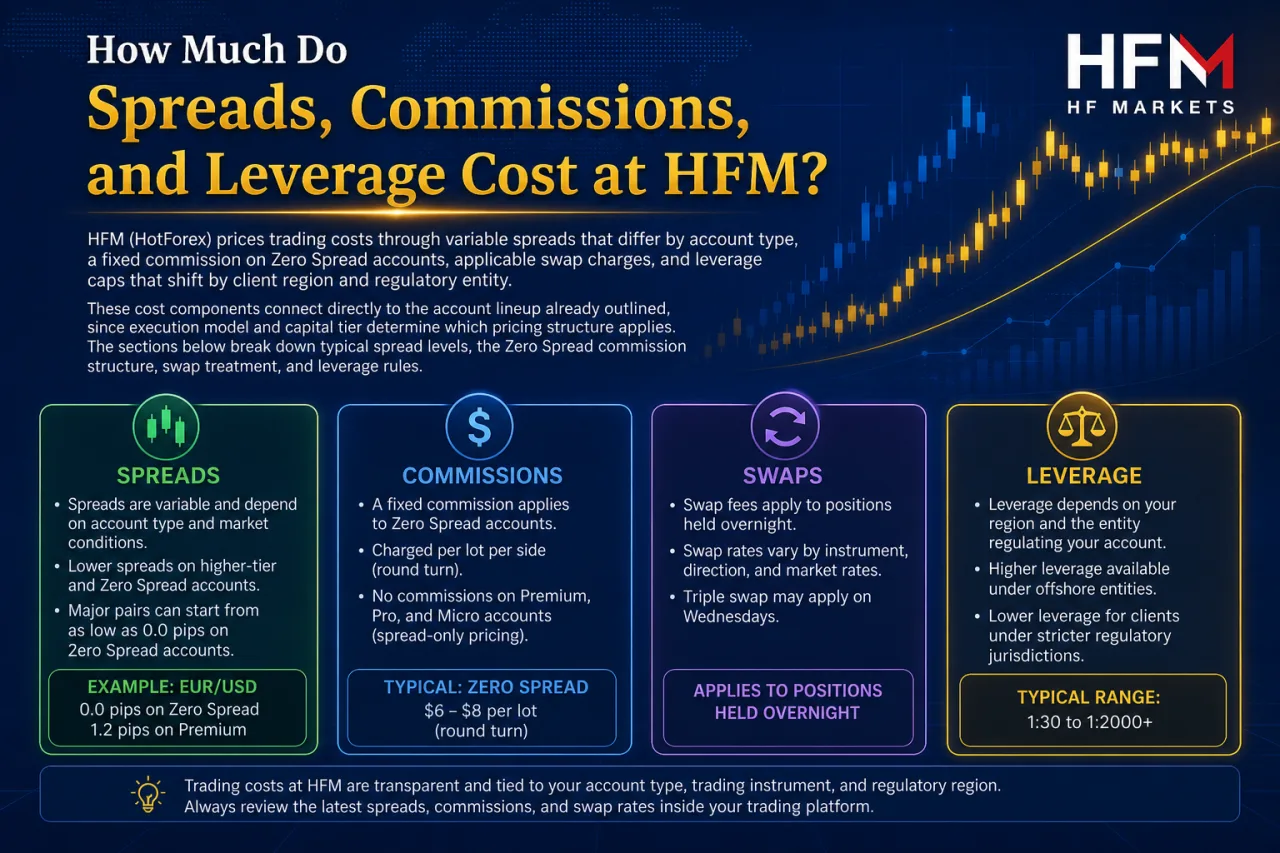
HFM (HotForex) prices trading costs through variable spreads that differ by account type, a fixed commission on Zero Spread accounts, applicable swap charges, and leverage caps that shift by client region and regulatory entity. These cost components connect directly to the account lineup already outlined, since execution model and capital tier determine which pricing structure applies. The sections below break down typical spread levels, the Zero Spread commission structure, swap treatment, and maximum leverage available across client categories.
What Is the Maximum Leverage Available at HFM?
The specific entity assigned to a trader determines the leverage limits applied to that account, with tighter ratios typically applied under FCA and CySEC oversight compared to offshore entities, so traders confirm the exact leverage cap for their registered entity on the broker’s official website before opening an account.
This leverage variation ties directly into the entity assignment already outlined, since the jurisdiction a trader registers under determines which regulatory leverage cap applies to that account.
- Clients under the FCA-regulated entity face leverage capped at 1:30 for major currency pairs, in line with UK retail-protection rules.
- Clients under the CySEC-regulated entity face leverage capped at 1:30 for major currency pairs, under ESMA-aligned retail restrictions.
- Clients under the FSCA-regulated entity access leverage of up to 1:500, reflecting the more flexible South African regulatory framework.
- Clients under the DFSA-regulated entity access leverage of up to 1:500, under Middle East regulatory standards.
- Clients under offshore entities such as FSA Seychelles access leverage of up to 1:2000, well above the ratios permitted for tier-1 regulated entities.
These figures represent the leverage ceilings published for each entity, though the exact cap applied to an individual account depends on account type and instrument traded. HFM may apply dynamic leverage adjustments on certain accounts, reducing the ratio as open position size or equity crosses set thresholds. Traders confirm the exact leverage cap and dynamic leverage thresholds for their registered entity on HFM’s official website before opening a position.
Are There Hidden Fees or Inactivity Charges at HFM?
HFM (HotForex) discloses non-trading fees covering inactivity, withdrawals, and currency conversion, though exact charges depend on the account and region a trader falls under. This fee transparency question connects directly to the spread, commission, and leverage structure already outlined, since non-trading costs add another layer to the total cost of holding an account.
- Charges an inactivity fee on dormant accounts after a set period without trading activity. The exact threshold and deducted amount vary by registered entity, so traders should confirm current figures on the broker’s official fee schedule rather than relying on a fixed number.
- Applies withdrawal fees that vary by payment method, with some channels absorbing processing costs while others pass fees to the trader. Since these amounts differ across entities and payment providers, traders should verify current charges per method before requesting a payout.
- Deducts currency conversion charges when the account base currency differs from the deposit or withdrawal currency. The applicable conversion rate is not fixed across entities, so traders should confirm it directly on the broker’s official website.
- Publishes its fee schedule through the official website and client portal rather than embedding charges within spread pricing alone.
Traders should review HFM’s official fee schedule for their registered entity before funding an account, since inactivity thresholds and withdrawal costs differ across regulated entities and are subject to change without prior notice.
How Do You Deposit and Withdraw Funds with HFM?
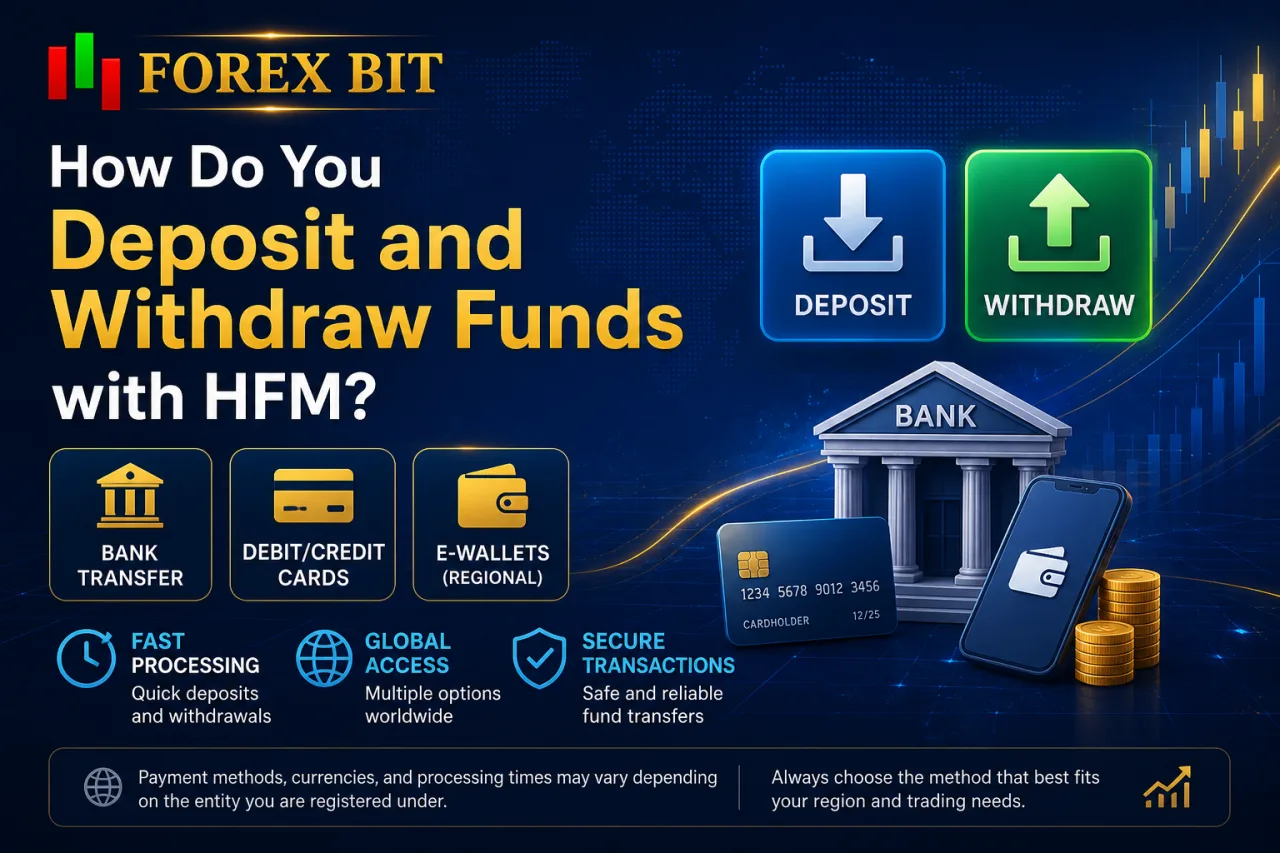
Traders fund and withdraw HFM accounts through bank transfer, debit/credit cards, and regional e-wallets, with the exact channels, currencies, and processing speeds depending on the entity a trader is registered under. This funding process builds directly on the account and fee structure already outlined, since deposit method and account currency affect the conversion charges covered earlier. The following breakdown walks through supported payment methods, processing times, and regional withdrawal restrictions traders should confirm before moving funds.
What Payment Methods Does HFM Support?
HFM (HotForex) organizes its funding options into three main payment categories: bank transfer, debit/credit cards, and regional e-wallets, though the specific options available depend on which entity a trader has opened an account with. This payment structure builds directly on the deposit and withdrawal channels already outlined, since currency support and processing speed differ across these three categories.
- Bank transfer covers standard wire deposits and withdrawals, with settlement times that depend on the receiving bank, so traders should confirm the current processing times on the broker’s official website before relying on this method.
- Card payments include Visa and Mastercard transactions, with deposits generally processed quickly while withdrawals return to the original card, so traders should confirm current processing times on the broker’s official website.
- E-wallets are among the supported funding methods and, depending on the provider and region, may offer faster settlement than bank transfer, so traders should check the broker’s official website for the current list of available e-wallets in their region.
- Local payment options appear for specific regions, including regional bank transfer networks and mobile-based methods, so traders should confirm availability for their country on the broker’s official website.
Traders should verify the exact processing and settlement times for their chosen method and registered entity directly on HFM’s official website before initiating a transaction, since these figures can shift by region without prior notice.
Are Deposits and Withdrawals Free at HFM?
Deposits at HFM (HotForex) generally incur no broker-side fee, while withdrawals depend on the payment method and whether a third party charges a processing cost. This transaction cost question builds directly on the payment methods already outlined, since bank transfer, card, and e-wallet channels each carry different fee treatment.
- Covers most deposit transactions across supported payment methods without charging an additional broker fee.
- Passes through certain third-party costs on withdrawals, such as intermediary bank charges on wire transfers, so traders should confirm current charges per method before requesting a payout.
- Applies a minimum withdrawal threshold that can vary by payment method and registered entity, so traders should confirm the exact figure on the broker’s official website before submitting a request.
- Adjusts fee treatment by region, since entity-specific banking partners and local payment providers influence whether a charge applies.
Traders should verify the exact deposit and withdrawal fee schedule, along with the current minimum withdrawal threshold for their registered entity, directly on HFM’s official website before moving funds.
What Additional Tools and Services Does HFM Provide Beyond Trading Accounts?
HFM (HotForex) extends its offering beyond trading accounts through multiple platform options, proprietary analytical tools, structured education, a loyalty rewards program, and multilingual customer support. These additional services connect directly to the account and cost structure already outlined, since platform choice and support access shift the overall trading experience regardless of which account a trader holds. The sections below cover each of these differentiators separately.
Which Trading Platforms Can You Use with HFM?
HFM (HotForex) supports three main platform options: MetaTrader 4, MetaTrader 5, and its proprietary HFM app, covering desktop, web, and mobile access. This platform lineup connects directly to the account structure already outlined, since platform availability and auto trading tools shift the execution experience across desktop, web, and mobile devices.
- MetaTrader 4 runs on desktop, web browser, and mobile devices, supporting expert advisors and custom indicators for automated strategy execution.
- MetaTrader 5 extends MetaTrader 4’s framework with additional order types, more timeframes, and access to a broader instrument list within the same multi-device setup.
- HFM app delivers proprietary mobile access with account management, deposit and withdrawal functions, and market analysis tools built into a single interface.
- Auto trading tools appear across MetaTrader 4 and MetaTrader 5 through expert advisor support, letting algorithmic traders automate entries and exits without manual order placement.
Traders should confirm platform availability for their registered entity and account type on HFM’s official website before selecting one, since access can vary by region.
Does HFM Offer Educational Resources and Promotions for Traders?
Yes, HFM (HotForex) offers educational resources and promotions, combining webinars, market analysis, and a loyalty rewards program alongside periodic bonus campaigns that carry regional eligibility limits. This educational and promotional layer builds directly on the platform and support features already outlined, since these tools sit alongside MetaTrader 4, MetaTrader 5, and the HFM app rather than requiring a separate account.
- Hosts webinars covering technical analysis, trading psychology, and platform tutorials for traders across experience levels.
- Publishes daily and weekly market analysis, including economic calendar updates and research commentary from in-house analysts.
- Rewards trading activity through the HFM Loyalty Program, which converts eligible trading volume into redeemable points.
- Runs promotional campaigns periodically, such as deposit bonuses or trading contests, though availability shifts by region and regulated entity.
HFM’s bonus and loyalty offers are generally unavailable to clients registered under certain regulated entities, as promotional incentives are often restricted in tighter-regulated jurisdictions, so traders should confirm the current availability of such offers for their registered entity on the broker’s official website. Traders should confirm current promotion eligibility and terms for their registered entity on HFM’s official website before participating.
Conclusion
HFM stands as a legitimate, multi-regulated broker whose licensing spread across FCA, CySEC, FSCA, DFSA, and FSA Seychelles determines fund protection, compensation eligibility, and leverage caps for each trader based on their assigned entity. Its Cent, Premium, Zero Spread, and Auto accounts cover beginners through algorithmic traders, backed by MetaTrader 4, MetaTrader 5, and the proprietary HFM app, plus segregated funds, negative balance protection, education, and a loyalty program.
Costs, minimum deposits, and promotional eligibility still shift by region and regulated entity, so traders confirm these specifics directly on HFM’s official website before opening an account, closing the legitimacy and suitability question raised at the outset.
Thomas Dite is the Best Forex Brokers Research Manager at Forex Bit, specializing in researching, comparing, and editing broker-related content for different trader needs. He focuses on evaluating trading platforms, costs, regulation, account conditions, and other key factors to help readers make more informed broker comparisons.
Email: [email protected]