
Learn how to verify a forex broker license step by step using official regulator registers before you deposit any funds.
How to Verify a Forex Broker License: Trader’s Guide

Verifying a forex broker’s license requires matching the broker’s registration details with the official record on its regulator’s public database. This confirms the license number, entity name, and status are active rather than expired, cloned, or fabricated.
A broker’s license status can typically be checked directly on official regulator registers, such as the searchable databases maintained by financial authorities like the FCA, CySEC, or ASIC. Each register lists the licensed legal entity and any restrictions tied to that specific license.
A legitimately regulated broker operates under a legal entity whose name and license number appear identically on the regulator’s register, while a scam broker often uses a mismatched entity, cloned license number, or unregulated offshore arm. Cross-checking the exact entity name against the trading terms is the fastest way to spot the difference.
A verified license typically guarantees client fund protections such as segregated bank accounts, negative balance protection, and access to a compensation scheme, though the exact terms depend on the regulator and legal entity, so traders should check the specific rules published by their broker’s regulator. Forex Bit breaks down each of these safeguards below, starting with the exact steps traders can follow to verify a broker’s license.
How Do You Verify a Forex Broker’s License Step by Step?
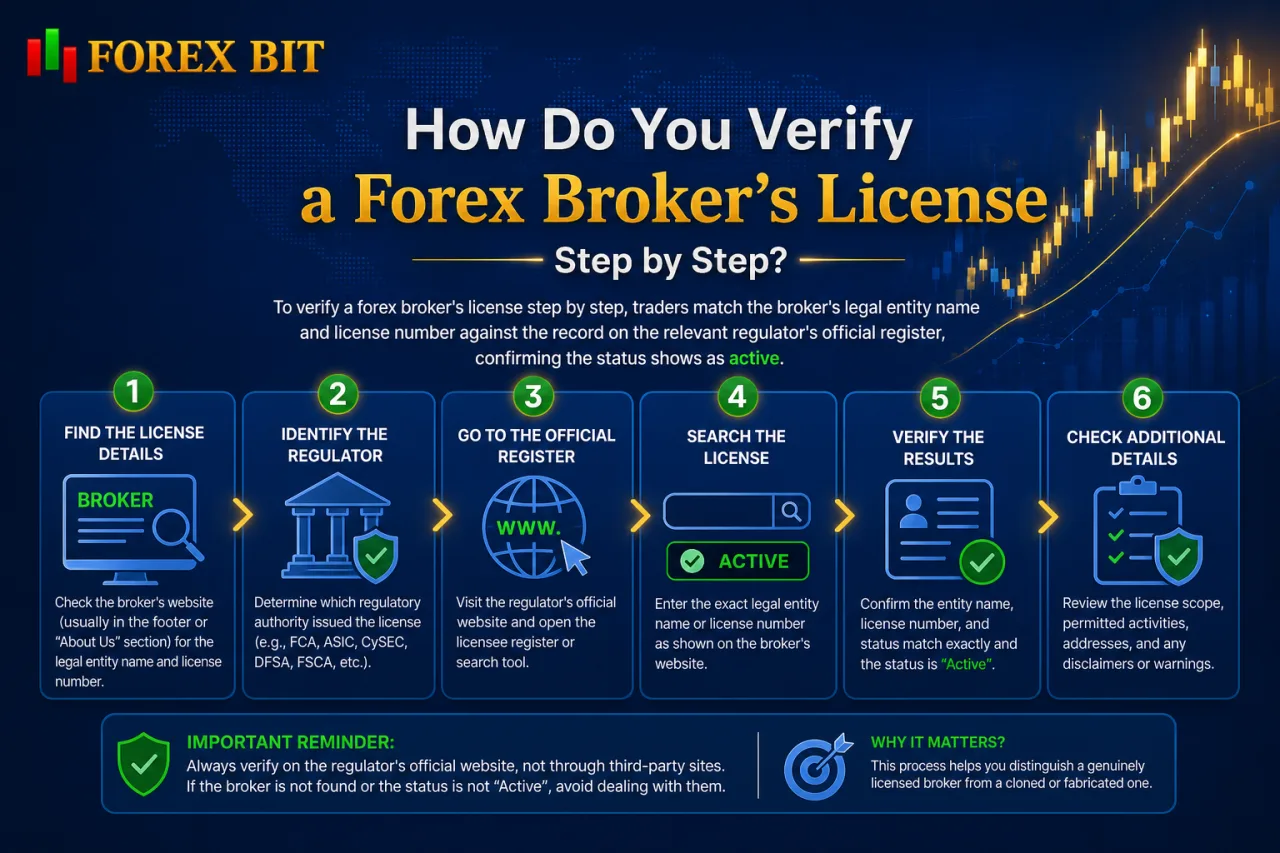
To verify a forex broker’s license step by step, traders match the broker’s legal entity name and license number against the record on the relevant regulator’s official register, confirming the status shows as active. This overarching process addresses the exact same problem raised at the start: telling a genuinely licensed entity apart from a cloned or fabricated one.
The workflow generally follows a short sequence covering where to find the license details, which register to search, and what fields to compare before trusting the result. The sections below break down each of these steps individually, from locating the entity name to reading the regulator’s full listing.
Where Do You Find a Broker’s License Number and Regulated Entity Name?
A broker’s license number and regulated entity name typically appear in the website footer, the “About Us” or “Regulation” page, and the legal documents section listing terms and account agreements. This directly addresses where traders locate the exact details needed for the verification process described above.
Most regulated brokers disclose this information in a few consistent places:
- Footer text near the copyright line, often stating the licensed entity and license number in small print.
- A dedicated “Regulation” or “Licenses” page summarizing each entity and its regulator.
- Legal or terms documents, including the client agreement or terms of business, which name the exact contracting entity.
- The account opening agreement, where the trader formally signs up with a specific legal entity.
Brokers commonly operate several legal entities under one global brand, so the entity a trader’s account actually opens under determines which regulator and protections apply, not the marketing brand name. For example, a client onboarded through an offshore entity does not receive the same regulatory coverage as one onboarded through the FCA-regulated arm, even if both use the identical brand name and website. Checking the entity name stated in the account agreement against the regulator’s register remains the most reliable confirmation step.
What Details Should You Cross-Check on the Regulator’s Register?
Cross-checking a broker’s register listing means comparing six specific fields: registered company name, license or reference number, license status, permitted activities, registered address, and trading name. This directly extends the entity-name matching described above by specifying exactly which data points confirm or contradict that match.
Each field serves a distinct verification purpose:
- Registered company name matches the exact legal entity stated in the broker’s terms or account agreement, not a shortened or altered version.
- License or reference number matches character-for-character, since cloned scams often reuse a real number under a fake company name.
- License status shows as authorized or active rather than suspended, revoked, or expired.
- Permitted activities confirm the regulator authorizes forex or CFD trading specifically, not an unrelated financial service.
- Registered address matches the address published on the broker’s own legal documents.
- Trading name confirms the marketing brand connects to the correct regulated entity.
Any mismatch across these fields, such as a matching license number attached to a different company name, signals a likely clone firm or unauthorized entity operating under a borrowed license. Regulators including the FCA publish specific warnings about this cloning tactic, where fraudsters copy a genuine firm’s details onto a fake website. Treating any inconsistency as a red flag rather than a minor discrepancy keeps the verification process reliable.
How Do You Check a Broker’s License Status on Official Regulator Registers Like FCA, CySEC, or ASIC?
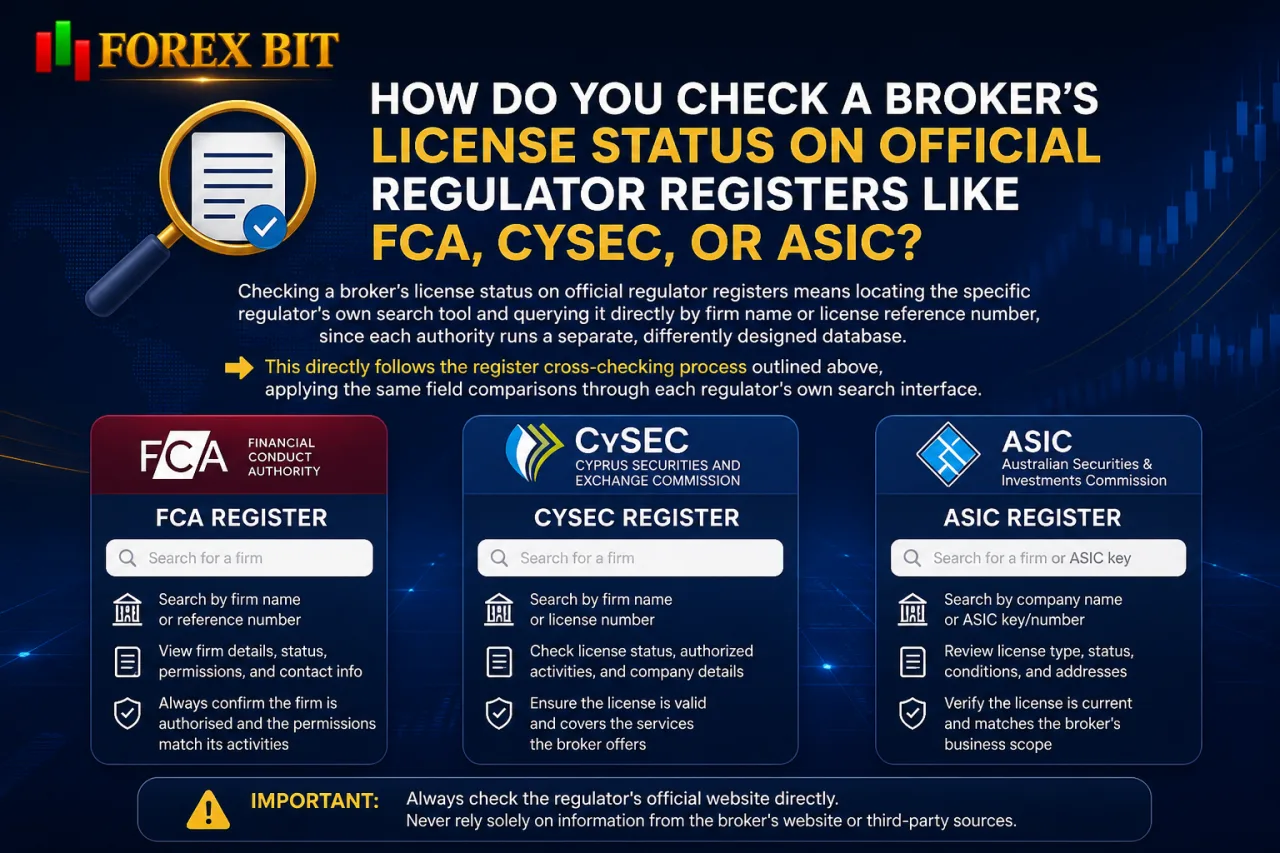
Checking a broker’s license status on official regulator registers means locating the specific regulator’s own search tool and querying it directly by firm name or license reference number, since each authority runs a separate, differently designed database. This directly follows the register cross-checking process outlined above, applying the same field comparisons through each regulator’s own search interface. The FCA, CySEC, and ASIC each publish a free public register, but the layout, required inputs, and terminology differ, so the general approach below covers what stays consistent across all of them before the entity-specific steps that follow.
How Do the FCA, CySEC, ASIC, and Other Major Registers Differ in How They Display License Information?
The FCA, CySEC, and ASIC registers display fundamentally different fields because each regulator structures license information around its own local framework, so no single register format applies across jurisdictions. This directly extends the register-checking process described above, since traders searching different regulators encounter different data layouts even when verifying the same broker group’s separate entities.
- The FCA register lists permissions granted to a firm and passporting details, showing which specific regulated activities an entity holds authorization for within the UK framework.
- The CySEC register lists license categories alongside investor compensation scheme membership, indicating which fund protection scheme a Cyprus-regulated entity belongs to.
- The ASIC register lists Australian Financial Services license conditions, outlining the specific terms and restrictions attached to that AFS license.
- Other regulators structure their own registers around comparable but non-identical categories, using different terminology for status, scope, and authorized activities.
Exact fields displayed vary by jurisdiction, so traders should read each register’s own glossary or explanation of status terms before assuming a listing means the same thing across regulators.
Why Might a Broker’s Name on the Register Not Match the Brand Name You See Online?
Yes, a broker’s registered name often differs from its marketing brand, and this alone does not confirm fraud since a single legal entity legitimately trades under a separate consumer-facing name. This scenario extends the entity-matching check described above, where the specific name tied to a trading account carries more weight than the logo displayed on the homepage.
At least three reasons explain this gap between register listings and marketing brands:
- Group structures registering the operating company under a formal legal name while marketing exclusively through a shorter, memorable trading name.
- Multiple brands sharing a single regulated entity, with each brand disclosed as a trading name on that entity’s register listing.
- Rebranding history leaving an older legal name on file even after the public-facing brand changes.
Traders confirm legitimacy by matching the account agreement’s stated legal entity, not the homepage brand, against the “trading name” field on the regulator’s register. A mismatch between the two, where no trading name link exists between the brand and the licensed entity, indicates the broker services accounts through an unregulated arm rather than the disclosed licensed company.
How Can You Tell the Difference Between a Legitimately Regulated Broker and an Unregulated or Scam Broker?
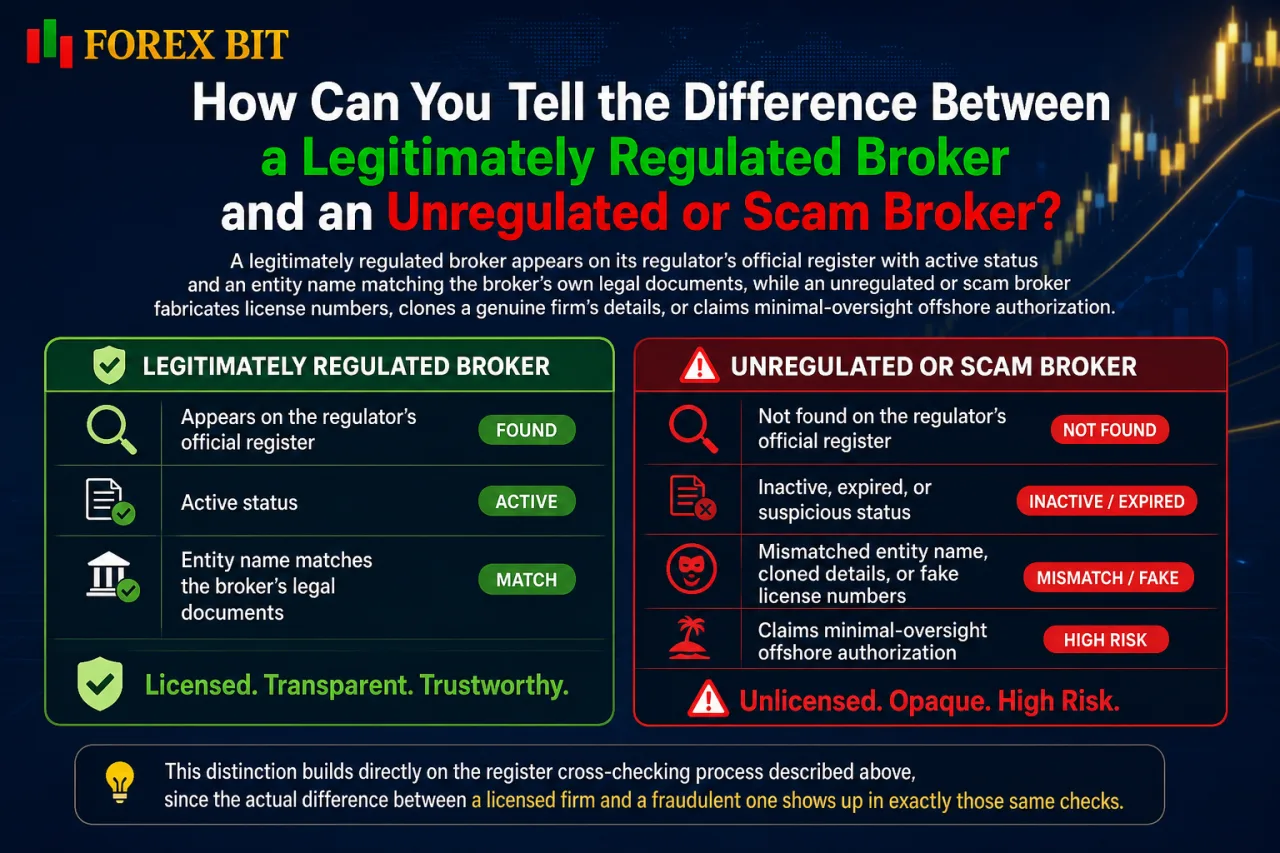
A legitimately regulated broker appears on its regulator’s official register with active status and an entity name matching the broker’s own legal documents, while an unregulated or scam broker fabricates license numbers, clones a genuine firm’s details, or claims minimal-oversight offshore authorization. This distinction builds directly on the register cross-checking process described above, since the actual difference between a licensed firm and a fraudulent one shows up in exactly those same fields once a trader compares them side by side.
Two specific patterns separate genuine firms from problematic ones, covered individually below: how a scam operation typically presents fabricated or cloned credentials, and how checking regulator warning lists confirms whether a specific firm has already been flagged. Regulators including the FCA, CySEC, and ASIC each maintain public warning lists naming firms found operating without authorization or impersonating licensed companies. Cross-referencing a broker’s name against these warning lists, alongside the register itself, catches cases a standard license search alone might miss.
What Are the Common Warning Signs of a Fake or Cloned Broker License?
Common warning signs of a fake or cloned broker license fall into five categories: mismatched contact details, a real license number attached to a different company name, absence from the register despite claims of authorization, unsolicited outreach, and pressure to deposit quickly. This extends the register cross-checking process described above, since clone scams specifically exploit gaps between what a firm claims and what the register actually shows.
Each category signals a distinct type of deception:
- Mismatched contact details showing a phone number, email domain, or address that differs from the genuine authorized firm’s published details.
- Cloned license numbers pairing a real regulator reference number with a company name that does not match the authentic firm on record.
- Missing register entries despite the broker openly claiming regulation, with no matching listing found under any spelling of the stated entity name.
- Unsolicited contact through cold calls, social media messages, or unexpected emails inviting a trader to open an account.
- High-pressure tactics pushing a rapid deposit before a trader has time to complete verification checks.
Regulators including the FCA and CySEC publish dedicated clone firm warning lists identifying specific unauthorized entities impersonating genuine license holders. Checking a broker’s name against these published warning lists catches impersonation cases a standard register search alone might not reveal.
Are Offshore-Licensed Brokers Automatically Unsafe or Illegitimate?
No, offshore-licensed brokers are not automatically unsafe or illegitimate, since a genuine offshore license still means a registered legal entity operating under actual regulatory oversight, just with lighter requirements than tier-1 jurisdictions. This question extends the register cross-checking process described above, since an offshore license appearing correctly on its issuing regulator’s own database confirms the entity exists and holds valid authorization, even though that authorization covers less ground.
Offshore licenses issued from smaller jurisdictions typically differ from FCA, CySEC, or ASIC licenses in a few specific ways:
- Oversight applies fewer capital, reporting, and conduct requirements compared to tier-1 regulators.
- Disclosure obligations require less public reporting of financial statements and business practices.
- Compensation coverage often excludes any investor protection scheme entirely, leaving no fallback fund if the broker fails.
- Enforcement powers of the offshore regulator itself may carry less practical weight in cross-border disputes.
An offshore license does not by default signal fraud, but it does shift more verification responsibility onto the trader, who confirms exactly what that specific license actually authorizes and protects rather than assuming either safety or danger. Reading the offshore regulator’s own scope of coverage remains the only reliable way to know what protections, if any, apply to that entity.
What Client Fund Protections Does a Verified Forex Broker License Actually Guarantee?
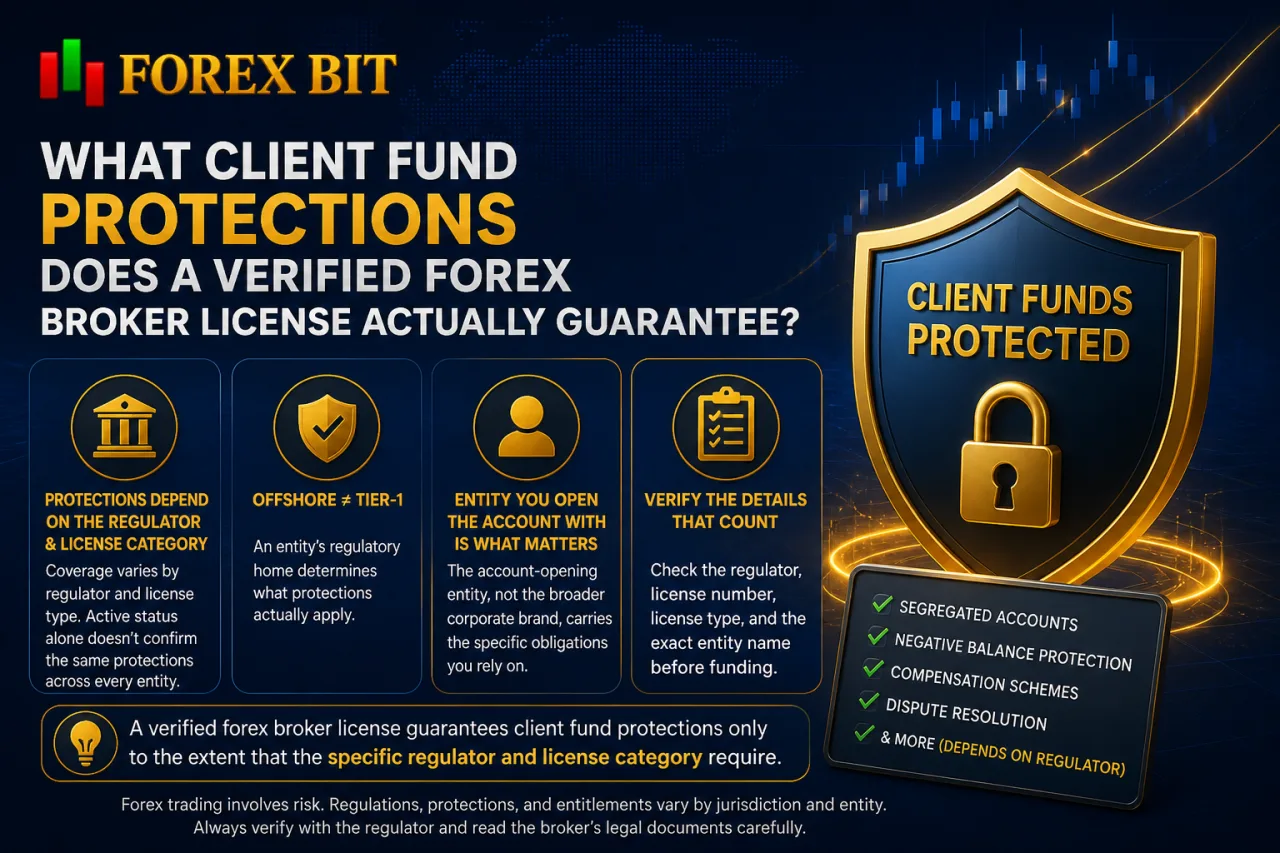
A verified forex broker license guarantees client fund protections only to the extent that the specific regulator and license category require, since active status alone does not confirm the same coverage across every entity. This point extends directly from the offshore-versus-tier-1 distinction covered above, where an entity’s regulatory home determines what actually applies to it. The account-opening entity, not the broader corporate brand, carries the specific obligations a trader relies on. Three core protection types generally define this coverage: fund segregation, negative balance protection, and compensation scheme access, each varying by regulator and license terms.
What Is Segregation of Client Funds and How Do You Confirm a Broker Follows It?
Segregation of client funds means holding trader deposits in bank accounts kept separate from the broker’s own operating capital, typically at approved third-party banks. This prevents client money from being used to cover the broker’s business expenses or losses, and it directly protects the fund safety question raised above.
The strictness of this requirement varies by regulator rather than applying identically everywhere. Some authorities mandate daily reconciliation and independent audits of segregated accounts, while others impose lighter or less frequently checked obligations, and offshore regulators may not enforce segregation at all.
Traders confirm whether a specific broker follows segregation by checking a few concrete sources:
- Reading the client agreement or terms of business for a stated segregation clause naming the custodian bank arrangement.
- Reviewing the regulator’s own disclosure requirements for that license category, since segregation rules attach to the regulator, not the brand.
- Looking for mention of segregation in the broker’s regulatory disclosures or annual regulatory filings, where these exist publicly.
Segregation does not apply universally across every entity within a broker group, so a trader confirms the specific account-opening entity’s own terms rather than assuming a group-wide policy.
What Is Negative Balance Protection and Does Every Regulated Broker Provide It?
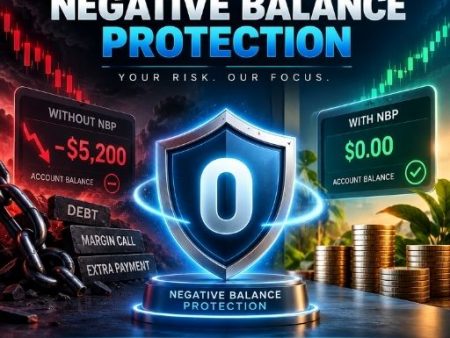
Negative balance protection guarantees that a retail client cannot lose more than the funds held in their trading account, even during extreme market volatility that pushes an account into deficit. This directly extends the fund protection question raised above, since it addresses what happens after a loss occurs rather than how deposits are held day to day.
Not every regulated broker provides this guarantee, since the requirement depends entirely on the specific jurisdiction and client classification tied to the account-opening entity.
- Mandated coverage applies to retail clients under certain EU and UK retail conduct rules, requiring brokers to reset any negative balance to zero.
- Optional coverage applies where some offshore or non-EU/UK regulators leave negative balance protection as a discretionary broker policy rather than a legal requirement.
- Excluded coverage applies to professional or institutional client classifications, which typically fall outside these mandated protections even under otherwise strict regulators.
Traders confirm this protection by reading the specific account-opening entity’s terms of business rather than assuming a brand-wide policy applies.
What Investor Compensation Schemes Exist and How Much Coverage Do They Provide?
Investor compensation schemes exist as regulator-backed funds that reimburse a set portion of client funds if a regulated firm fails financially, though their existence, eligibility rules, and coverage limits differ by regulator and license type. This point follows directly from the negative balance protection distinction above, since compensation coverage forms a separate safeguard tied specifically to the failure of the broker itself rather than to market losses.
Coverage terms vary considerably depending on jurisdiction:
- Tier-1 regulators in the EU and UK typically operate a national compensation scheme covering eligible retail clients up to a defined monetary limit per firm. Compensation scheme names and coverage limits vary by regulator and change over time, so traders should check the current figures published directly by their broker’s regulator, such as the FSCS in the UK, rather than relying on secondhand summaries.
- CySEC-regulated entities carry membership in Cyprus’s investor compensation fund, with eligibility and payout caps set by that fund’s own rules. Compensation scheme names and coverage limits vary by regulator and change over time, so traders should check the current investor compensation fund limit published directly by CySEC rather than relying on secondhand summaries.
- Many offshore licenses carry no compensation scheme at all, leaving no fallback fund if the broker becomes insolvent.
- Professional or non-retail client classifications often fall outside compensation scheme eligibility even under regulators that offer one.
Traders confirm the applicable scheme by checking the specific compensation fund tied to their account’s exact regulated entity, since coverage does not extend across a broker’s entire corporate group.
Why Do Regulatory Protections Differ Depending on Which Broker Entity or Region You Are Registered Under?
Regulatory protections differ by broker entity or region because multinational brokers commonly register separate legal entities across jurisdictions, each holding its own license, capital requirements, and compensation eligibility rather than one unified global standard. This distinction extends directly from the account-opening entity issue raised throughout the compensation and negative balance discussion above, since the entity a trader signs with, not the parent brand, determines which specific rules apply. A trader visiting a regional version of a broker’s website may onboard under an offshore or lightly regulated arm even while the same brand advertises a stronger tier-1 license elsewhere. The distinctions below cover how this entity split works and what checking the account-opening entity actually confirms before funding an account.
How Do You Identify If You Are Being Onboarded Under a Weaker-Protection Offshore Entity Instead of the Main Regulated Entity?
To identify onboarding under a weaker-protection offshore entity, traders check the exact contracting entity named in the account opening agreement against the entity listed on the primary regulator’s register before funding the account. This directly extends the entity-routing risk raised above, since the website brand and the actual signing entity often diverge at the account creation step itself.
A few concrete checks confirm which entity governs a specific account:
- Reading the account opening agreement or terms document for the full legal entity name and its stated jurisdiction of incorporation.
- Comparing that jurisdiction field against the tier-1 jurisdiction advertised on the broker’s homepage or marketing pages.
- Searching that exact entity name on the primary regulator’s own register to confirm whether it appears there at all.
- Contacting support directly to ask which specific entity and license number governs the account before any deposit occurs.
A mismatch between the advertised jurisdiction and the signing entity’s actual registered jurisdiction confirms onboarding under a separate, offshore arm rather than the primary regulated company. Requesting written confirmation of the entity name from support before funding closes this verification gap.
Conclusion
Genuine license verification comes down to one consistent habit: matching the exact legal entity name and license number stated in a broker’s account agreement against the live listing on its regulator’s official register, then reading that register’s own status, permitted activities, and trading name fields rather than trusting a homepage badge.
This single process exposes cloned credentials, offshore rerouting, and unauthorized entities alike, while also revealing which specific protections, fund segregation, negative balance rules, and compensation scheme access, actually attach to that entity. Because these safeguards live with the account-opening company rather than the parent brand, repeating this check for every new entity remains the most reliable way traders confirm real regulatory coverage before funding an account.
As a Financial Blogger with 5 years of experience, I focus on delivering in-depth market insights, investment strategies, and personal finance advice. My content has helped a diverse audience navigate the complexities of financial planning and stay informed about the latest trends in the financial world.
Email: [email protected]

Best Brokers

Trade with the world’s largest retail broker and benefit from better - than - market conditions.

We offer a superior trading environment that puts traders in the best position to profit.

Trade with the best trading conditions. WIN THE BEST TRADING ACCOUNT AWARD.

Trade global markets with Interactive Brokers – a highly regulated multi-asset broker built for active and professional investors.






Forex Bit provides in-depth analysis of commodities, forex, and stock markets to help traders make informed investment decisions.
Best Brokers
Metatrader 5 Brokers
Metatrader 4 Brokers
Lowest Spread Forex Broker
Regulated Forex Brokers
Forex Copy Trading
Ctrader Brokers
Best Forex Broker For Beginners