
Deposit not showing up at Forex-bit.com? See common causes, processing times, KYC checks, and steps to get your funds credited fast.
Forex Deposit Not Credited: Checks and Escalation

A forex deposit not credited usually occurs because of a pending bank transfer, mismatched payment details, an unfinished verification step, or a delay from the bank or payment provider. Even when funds have already left the sender’s account, the broker may not be able to credit the trading balance until the transaction has been confirmed.
Deposit processing time depends on the funding method, with card and e-wallet transactions often processing faster than bank wire transfers. Bank cut-off times, intermediary institutions, card authorization procedures, and payment-provider checks can all add extra time.
Incomplete KYC or verification checks can also delay a deposit. Some forex brokers require identity, address, or payment ownership verification before funds become available in the trading account.
If the expected processing time has passed, contacting the broker’s support team with the transaction reference and proof of payment is generally the most practical way to request a status check.
Forex Bit provides this guide to explain the common causes of a forex deposit not credited, the checks traders can perform, and when a delayed deposit should be escalated to the broker or payment provider.
Why Is Your Forex Deposit Not Credited to Your Trading Account?

A forex deposit not credited generally means the payment has been initiated or has left the sender’s account but has not yet appeared as available balance in the forex trading account.
This is different from a failed deposit, where the payment is rejected, cancelled, or returned.
Common reasons include processing delays related to the funding method, incomplete account verification, mismatched payment information, or a hold from the bank or payment provider.
The sections below break down these causes and explain how traders can identify where the delay may have occurred.
What Are the Most Common Causes of a Delayed or Missing Deposit?
Six recurring issues can contribute to a delayed or missing forex deposit:
- Incomplete KYC verification
- Incorrect payment reference
- Bank processing delays
- Currency mismatch
- Technical or system errors
- Deposit limits
These issues can generally be grouped into account-related checks, payment-detail mismatches, and external processing delays.
Account-related issues can prevent a deposit from being credited even after the transaction has been initiated:
- Incomplete KYC verification may place a deposit on hold until identity or address documents are approved.
- Exceeding deposit limits may trigger additional review when the transaction exceeds a broker’s permitted or verified threshold.
Payment-related mismatches can occur when the transfer information does not correspond with the trading account:
- Incorrect payment reference can prevent the broker or payment processor from matching the transfer with the correct trading account.
- Currency mismatch between the sending account and the trading account’s base currency may require conversion or additional reconciliation.
Processing delays can also occur outside the broker’s direct control:
- Bank processing delays may occur when transfers pass through intermediary banks.
- Technical or system errors at a bank or payment provider can interrupt or delay transaction confirmation.
Is the Deposit Delay Caused by the Broker or the Payment Provider?
A deposit delay can occur either during the broker’s internal processing or while the transaction is being handled by a bank, card issuer, e-wallet, or other payment provider.
Broker-side processing can include:
- Checking account verification status
- Matching the payment reference with the trading account
- Reviewing applicable deposit limits
- Crediting funds after receiving transaction confirmation
The payment provider’s side can include:
- Bank settlement and intermediary routing
- Card authorization and clearing
- E-wallet transaction verification
- Currency conversion or payment screening
If the payment provider still shows the transaction as pending, the delay may be occurring before the broker receives confirmation.
If the provider shows the transaction as completed but the trading account still has no corresponding deposit, traders may need to contact the broker to determine whether additional account or payment checks are pending.
How to Fix a Forex Deposit That Wasn’t Credited?
Resolving a forex deposit not credited can generally follow five steps:
- Check the transaction status in the broker’s client portal or account history.
- Confirm that the payment method and account details are correct.
- Review the trading account’s KYC or verification status.
- Allow the normal processing period for the payment method to pass.
- Contact broker support with proof of payment if the deposit remains missing.
The transaction log may show whether the deposit is pending, processing, completed, or rejected.
Traders should also confirm that the card, bank account, or e-wallet used for the transaction belongs to the trading account holder and matches the information registered with the broker.
If verification is incomplete, missing identity or address documents may need to be submitted before the deposit can be released.
If all information is correct and the expected processing time has passed, the trader can escalate the issue by providing the transaction reference, payment date, amount, payment method, and supporting payment evidence.
How Long Does It Take for a Forex Deposit to Be Processed?
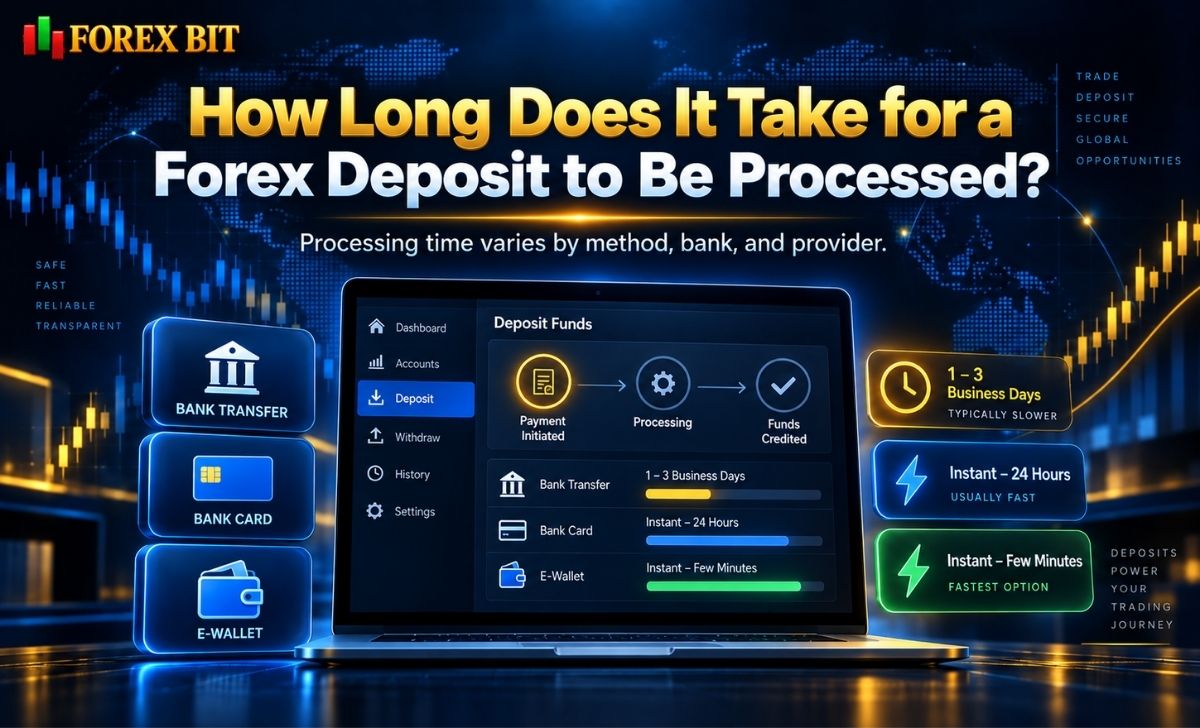
Forex deposit processing time varies according to the deposit method, broker, bank, and payment provider involved.
The broker’s internal confirmation time should also be distinguished from the additional settlement time required by banks or payment providers.
| Deposit Method | Typical Broker Processing Stage | Possible Additional Provider Time |
| Bank transfer | Credited after funds are received and confirmed | Intermediary bank routing may extend settlement |
| Bank cards | Credited after authorization and confirmation | Card issuer clearing checks may apply |
| E-wallets | Credited after provider confirmation | Internal e-wallet verification may apply |
Exact processing times vary between brokers and payment services. Traders should therefore check the deposit conditions published by their specific broker rather than rely on a single timeframe for all forex accounts.
Card and e-wallet deposits are often processed more quickly because they may involve fewer settlement stages than traditional bank wire transfers.
Bank transfers can take longer when intermediary banks or international payment networks are involved.
What Is the Difference Between Broker Processing Time and Bank/Payment Provider Delay?
Broker processing time refers to the internal stage in which the broker receives payment confirmation and posts the deposit to the trading balance.
Bank or payment provider delay refers to the external authorization, settlement, verification, or clearing stages that occur before the broker receives that confirmation.
For example, a bank statement may show that a transfer has been sent while the receiving payment system has not yet completed settlement.
Bank transfers can pass through intermediary institutions, while card payments depend on issuer authorization and clearing. E-wallets may also perform their own transaction verification before notifying the broker.
Comparing the payment provider’s transaction status with the broker’s transaction history can help traders determine which side of the process may still be pending.
Do Processing Times Vary by Deposit Method or Currency?
Yes. Processing times can vary depending on the payment method and deposit currency.
Bank wire transfers rely on banking settlement schedules and may involve intermediary institutions.
Card payments depend on authorization and clearing by the card issuer.
E-wallet transactions depend on the provider’s own verification and processing system.
Currency differences can introduce another step. If a deposit is made in a currency different from the trading account’s base currency, the transaction may require conversion before the final amount can be credited.
Exchange rates, conversion charges, and settlement procedures vary between banks, payment providers, and brokers, so traders should check the applicable terms before depositing.
Can KYC or Verification Issues Delay or Block a Forex Deposit?
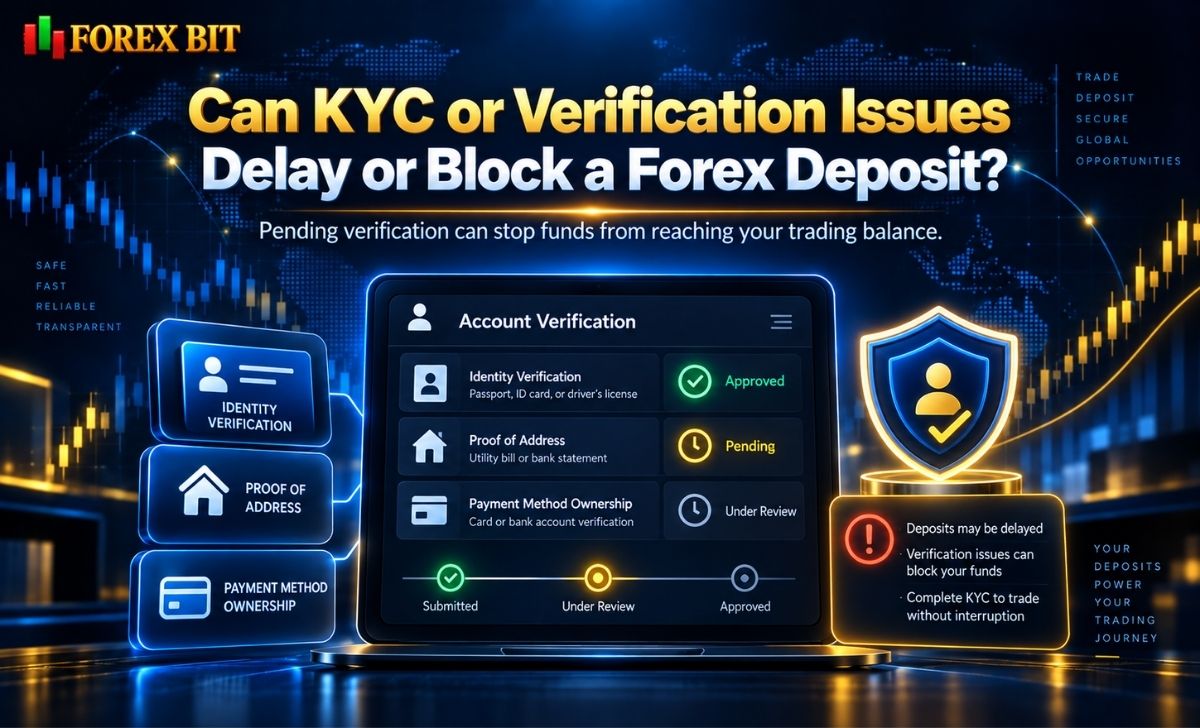
Yes. Incomplete or pending KYC and account verification may delay or block a forex deposit with brokers that require verification before funds can be fully credited or used.
Potential verification issues include:
- Unapproved identity documents
- Missing proof of address
- Unverified payment method ownership
- Pending source-of-funds checks
Requirements differ between brokers, account types, payment methods, and jurisdictions.
What Documents May Be Required for Identity and Address Verification?
Forex brokers commonly request two main categories of documentation: proof of identity and proof of address.
Proof of identity may include:
- Passport showing a valid photo page and expiration date
- National ID card issued by a government authority
- Driver’s license where accepted by the broker
Proof of address may include:
- Utility bill
- Bank statement
- Other official document showing the account holder’s residential address
The name and personal information shown on these documents generally need to correspond with the information registered on the trading account.
Exact accepted documents and validity periods vary by broker. Traders should check the broker’s current verification requirements before submitting documents.
How to Check or Complete Your Verification Status Before Depositing Again?
Before attempting another deposit, traders can log in to their broker’s client area and review the account verification or KYC section.
The general process involves:
- Checking whether verification is approved, pending, or rejected.
- Identifying any missing or rejected documents.
- Uploading a clearer copy or another accepted document where required.
- Waiting for confirmation that verification has been completed.
- Retrying the deposit only after any account-related issue has been resolved.
Checking verification status before making another deposit can reduce the risk of the new transaction being delayed for the same reason.
Traders using a new payment method may also need to verify ownership of that payment source depending on the broker’s policies.
How to Contact Broker Support to Check Deposit Status?
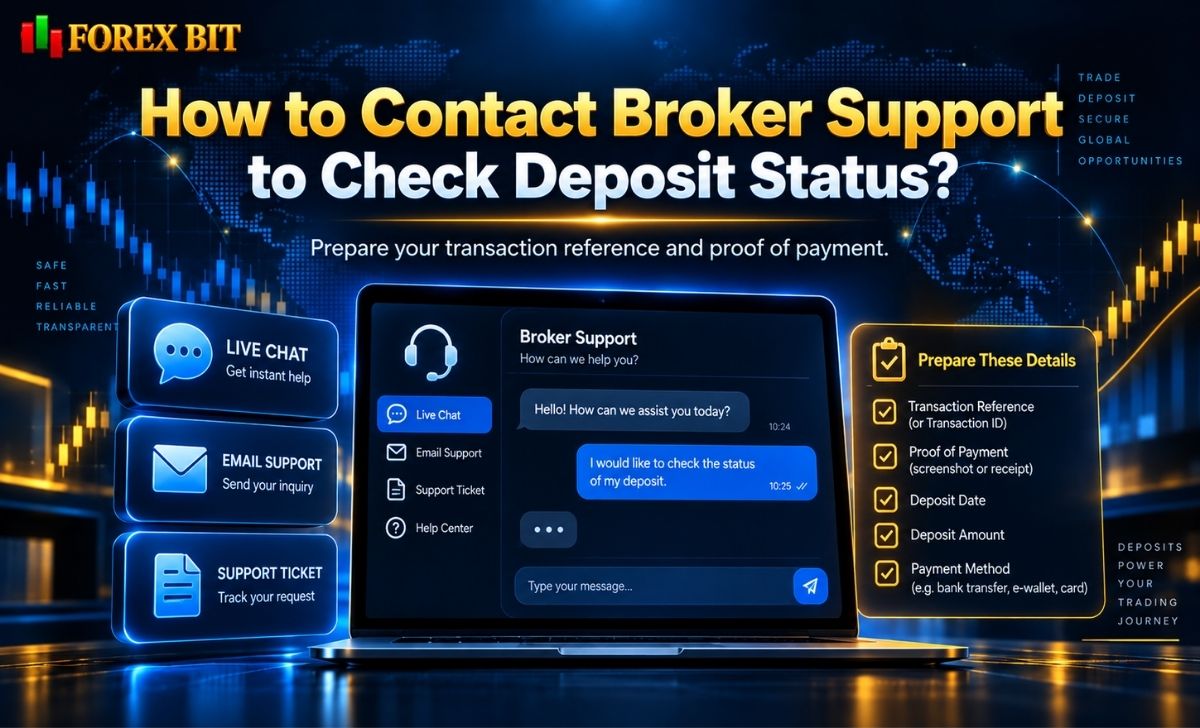
If a deposit remains missing after the normal processing period, traders can contact their forex broker to request an investigation.
A typical escalation process involves gathering the transaction reference and proof of payment, contacting the broker through its available support channel, and providing enough information for the payment team to trace the transaction.
Available channels may include:
- Live chat
- Support ticket
- Other official support channels provided by the broker
Response times vary depending on the broker, communication channel, and complexity of the case.
What Information Should You Provide When Reporting a Missing Deposit?
When reporting a forex deposit not credited, traders should generally prepare five important pieces of information:
- Transaction reference number
- Payment receipt or screenshot
- Date and time of payment
- Exact amount sent
- Payment method used
The transaction reference helps the broker locate the transfer within its payment records.
A receipt, screenshot, bank statement, or e-wallet transaction record can provide evidence that the payment was initiated or completed.
The remaining information helps narrow the investigation:
- Date and time indicate whether the transaction is still within the expected processing period.
- Amount sent allows the broker to compare the incoming payment with the expected deposit.
- Payment method identifies which bank, card processor, e-wallet, or payment provider should be checked.
Providing these details together can reduce unnecessary back-and-forth during the investigation.
What Rare Edge-Case Issues Can Prevent a Forex Deposit From Being Credited?
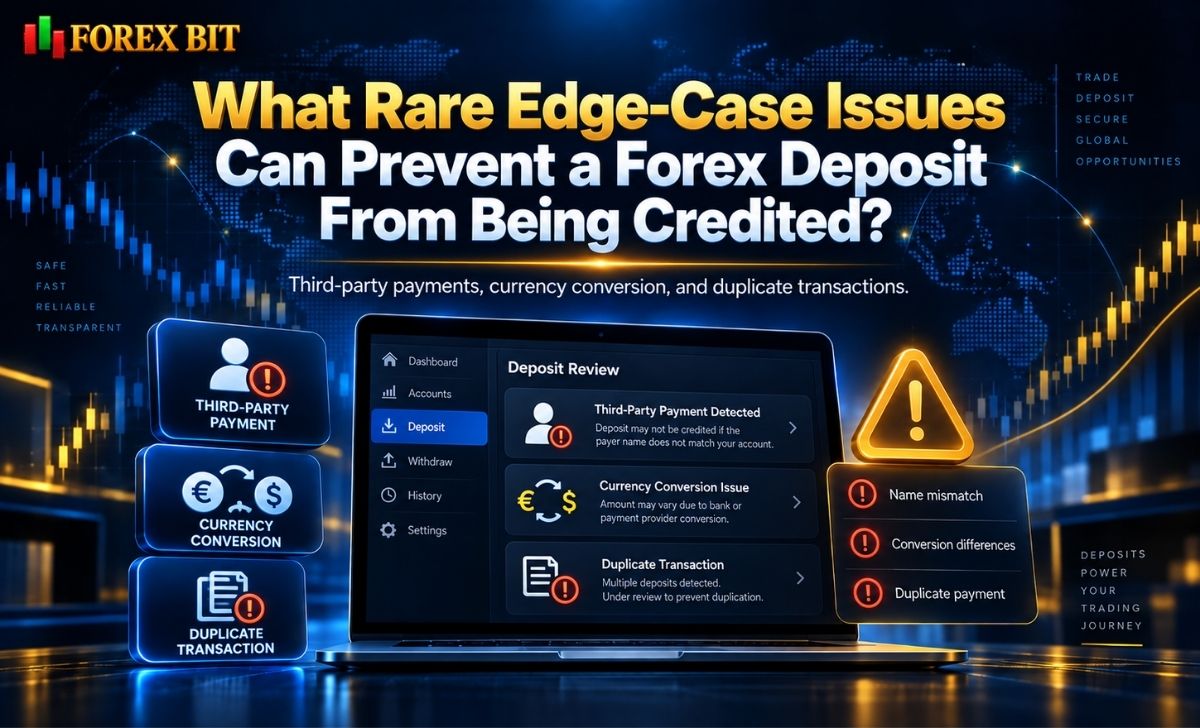
In addition to common processing delays, several less frequent issues can prevent a deposit from being credited automatically.
These can include:
- Third-party payment source restrictions
- Currency conversion discrepancies
- Duplicate transaction holds
Such cases may require manual review because the broker’s or payment provider’s automated system cannot reconcile the transaction immediately.
For example, a repeated bank transfer or duplicate card payment may be placed under review until the payment team determines which transaction should be processed.
Why Might a Broker Reject a Deposit Made From a Third-Party Account?
Some forex brokers restrict or reject deposits made from payment methods that do not belong to the registered trading account holder.
For example, a deposit made using another person’s:
- Bank card
- Bank account
- E-wallet
may fail the broker’s payment ownership checks.
This type of restriction is commonly associated with anti-fraud, KYC, and anti-money-laundering procedures designed to maintain a clear link between the trading account holder and the source of funds.
If the payer’s identity does not match the verified trader, the transaction may be placed under manual review, rejected, or returned to the original payment source depending on the broker’s policy.
How Does Currency Conversion Affect the Credited Deposit Amount?
Currency conversion can affect both deposit processing and the final amount credited when the sending currency differs from the trading account’s base currency.
The payment provider or bank may apply:
- An exchange rate
- A currency conversion fee
- Other transaction charges
As a result, the amount received by the broker may differ from the amount originally sent.
The difference can arise from:
- Exchange-rate changes between payment initiation and conversion
- Conversion fees charged by the sending bank or payment provider
In some cases, a difference between the expected and received amount may require manual reconciliation before the deposit is credited.
Because exchange rates and fees vary between providers, traders should check the relevant payment and currency-conversion terms before initiating a cross-currency deposit.
Conclusion
A forex deposit not credited can usually be traced to several common areas: unfinished KYC verification, incorrect or mismatched payment information, third-party payment restrictions, currency conversion differences, or settlement delays involving the bank or payment provider.
The practical resolution process is straightforward: check the transaction status, confirm that the payment method and account information match, review KYC status, allow the normal processing period to pass, and then escalate the issue to the broker with the transaction reference and proof of payment.
William Johnson is a Forex & Broker News Analyst at Forex Bit, focusing on broker updates, regulatory developments, payment changes, and security-related news. His work helps readers stay informed about important industry developments and understand how these changes may affect broker services and trading conditions.
Email: [email protected]



Best Brokers

Trade with the world’s largest retail broker and benefit from better - than - market conditions.

We offer a superior trading environment that puts traders in the best position to profit.

Trade with the best trading conditions. WIN THE BEST TRADING ACCOUNT AWARD.

Trade global markets with Interactive Brokers – a highly regulated multi-asset broker built for active and professional investors.






Forex Bit provides independent forex broker reviews, comparisons, guides, and industry news to help traders make informed decisions.
Best Brokers
Metatrader 5 Brokers
Metatrader 4 Brokers
Lowest Spread Forex Broker
Regulated Forex Brokers
Forex Copy Trading
Ctrader Brokers
Best Forex Broker For Beginners