
See how Forex-bit applies the original payment method withdrawal rule, limits, fees, and exceptions before you request a withdrawal.
Original Payment Method Withdrawal Rule: A Forex Guide

The Original Payment Method Withdrawal Rule generally requires traders to return funds to the same account, card, or e-wallet used for the original deposit rather than withdrawing them to an unrelated payment destination. Many forex brokers apply this rule as part of their anti-fraud, payment security, and compliance procedures.
This policy exists primarily to help prevent money laundering and unauthorized third-party transfers. It also allows brokers to verify that the person requesting a withdrawal is connected to the same payment method used to fund the trading account.
Withdrawal methods and limits vary depending on the broker and payment channel involved. Bank cards, e-wallets, and bank transfers may each follow different processing rules, limits, fees, and settlement times, so traders should check the specific withdrawal conditions of their broker before submitting a request.
When the original payment method is unavailable, closed, or restricted, traders typically need to contact their broker’s customer support to arrange an alternative verified withdrawal method. Additional documents may be required to confirm ownership of the original payment account.
Forex Bit provides this guide to explain how the Original Payment Method Withdrawal Rule commonly works in forex trading, why brokers apply it, and how it may affect different withdrawal methods.
What Is the Original Payment Method Withdrawal Rule?
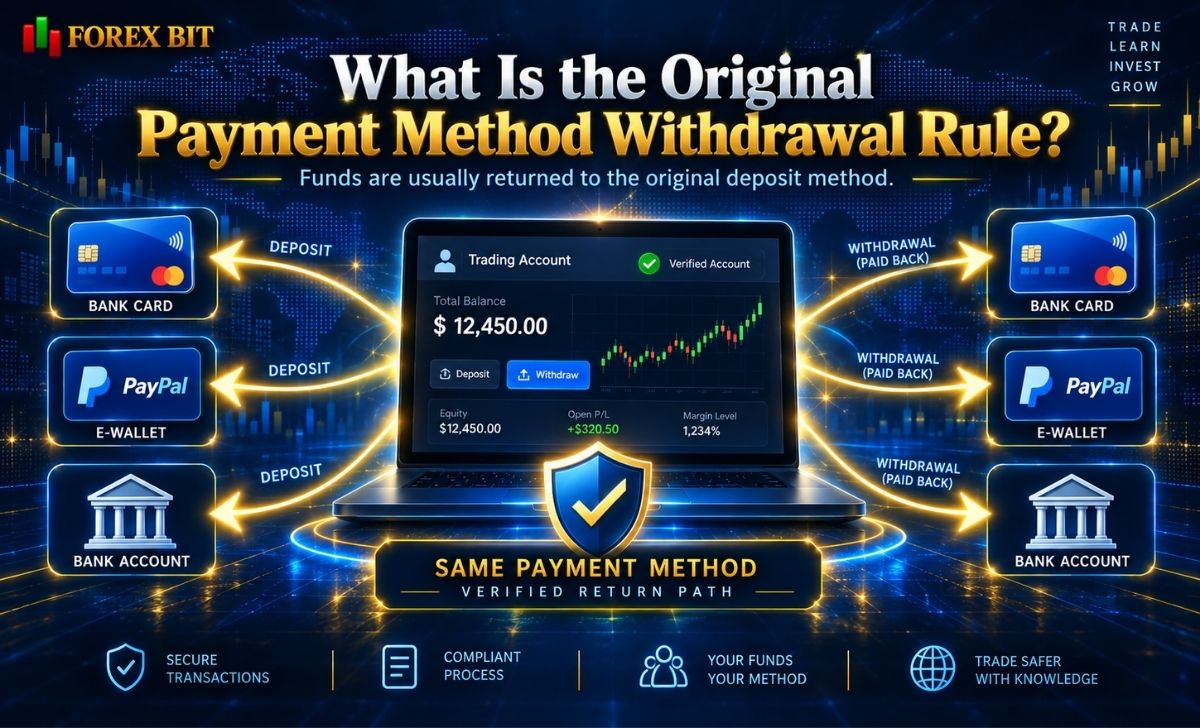
The Original Payment Method Withdrawal Rule requires funds to be returned, where applicable, to the same bank card, e-wallet, or bank account originally used to fund a forex trading account. This principle is commonly included in broker withdrawal policies and payment procedures.
The rule directly affects how withdrawal requests may be processed after a trader submits them.
In practice, this can involve:
- Reviewing the deposit source linked to a withdrawal request before approval
- Matching the withdrawal amount, up to the deposited sum, with the original card, wallet, or bank account
- Processing profits or balances above the original deposit according to the broker’s available withdrawal methods
- Requiring an alternative verified payment method when the original channel can no longer process the return
This structure helps keep the deposit and withdrawal process connected to a verified payment identity and reduces the risk of funds being redirected to unrelated third parties.
Why Do Forex Brokers Require Withdrawals to Return to the Original Payment Method?
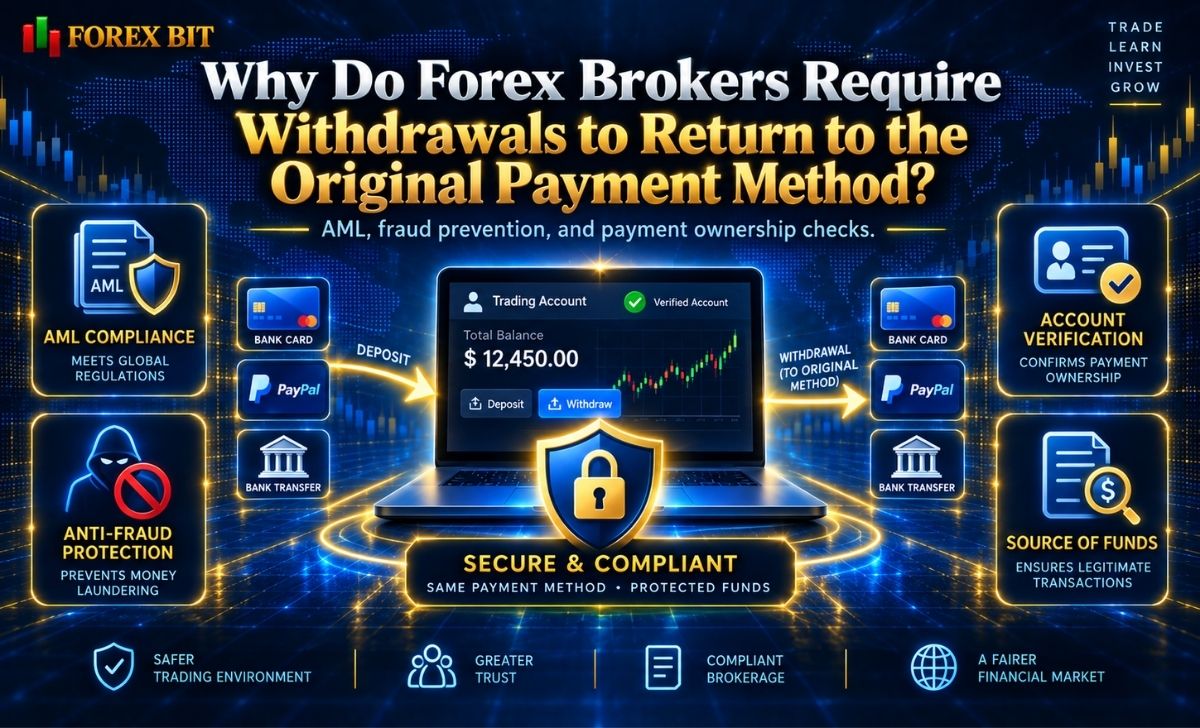
Many forex brokers apply the Original Payment Method Withdrawal Rule as part of their compliance, security, and anti-money-laundering procedures rather than simply as a payment preference.
Three main factors support this type of policy:
- Preventing funds from being routed through unrelated third-party accounts or cards
- Confirming that the person requesting the withdrawal matches the identity associated with the original deposit
- Supporting source-of-funds and payment ownership checks during the account verification process
Within the broader forex industry, payment controls of this type are commonly used to reduce fraud, unauthorized transfers, and potential misuse of trading accounts.
Returning funds through the original payment source can also help brokers maintain consistency between the client’s verified identity, deposit records, and withdrawal activity.
However, the exact rules can differ between brokers, regulatory jurisdictions, and payment providers. Traders should therefore review the withdrawal policy of the broker they use rather than assume that every broker follows exactly the same procedure.
Which Withdrawal Methods Can Be Affected by the Original Method Rule?
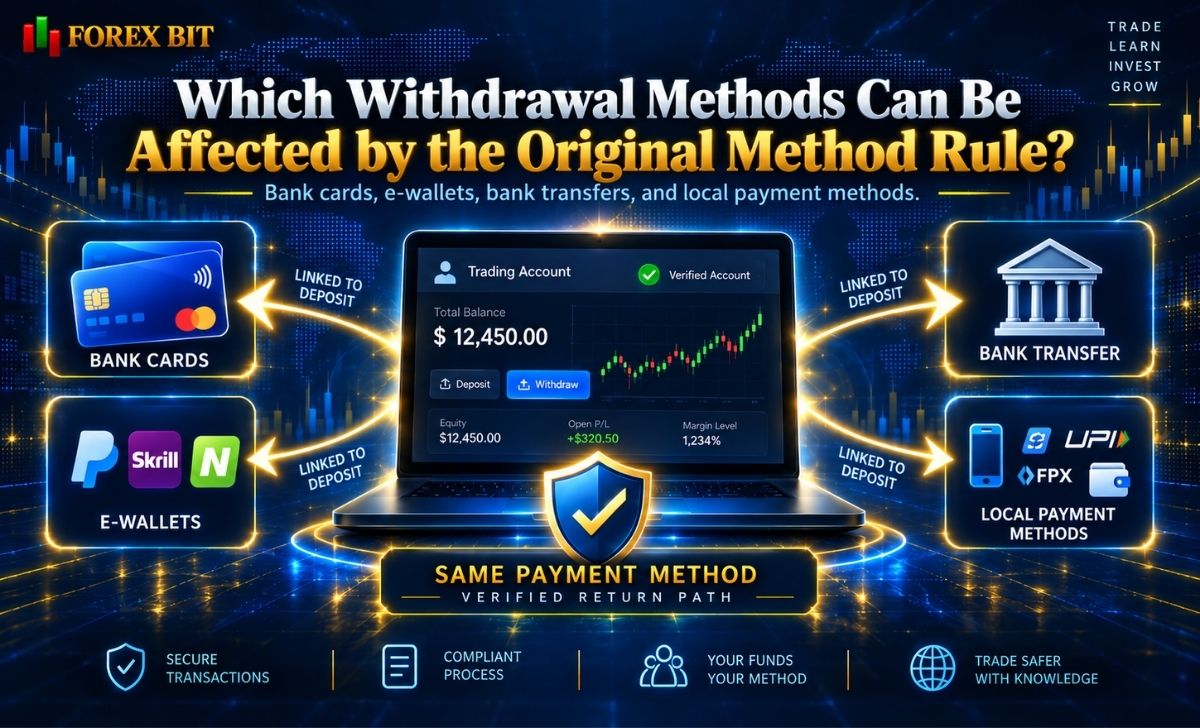
The Original Payment Method Withdrawal Rule can apply to several common forex withdrawal channels, including bank cards, e-wallets, bank transfers, and certain local payment methods.
Local payment methods may include region-specific payment services that do not fall under standard bank cards, e-wallets, or traditional bank transfers. Where an original-method policy applies, withdrawals may need to be processed through the same local payment channel used for the deposit.
The table below summarizes the general characteristics of these withdrawal channels.
| Withdrawal Channel | Min / Max Limit | Fees | Supported Currencies | Processing Time |
|---|---|---|---|---|
| Bank Cards | Varies by broker and card issuer | Depends on broker and card provider | Major currencies supported by the card network | Depends on broker and card processor |
| E-Wallets | Varies by broker and wallet provider | Depends on broker and wallet provider | Currencies supported by the e-wallet | Often faster than traditional bank channels |
| Bank Transfer | Varies by broker and bank | Depends on broker, intermediary, and receiving bank | Currencies supported by the relevant banks | Standard bank transfer timeframe |
| Local Payment Methods | Varies by region and provider | Depends on local provider | Region-specific currencies and payment options | Varies by provider |
The figures above are presented as general information rather than fixed conditions because minimum and maximum withdrawal limits, fees, supported currencies, and processing times depend on the individual broker, payment provider, region, and account type.
Traders should confirm the current withdrawal conditions directly with their broker before initiating a transaction.
How Does the Rule Apply to Bank Card Withdrawals?
When a broker applies the Original Payment Method Withdrawal Rule, card withdrawals may need to return to the same bank card originally used for the deposit, particularly for amounts corresponding to the deposited principal.
Card withdrawals can involve several additional conditions:
- Refund cap: Some card networks or brokers may limit card refunds to the amount originally deposited. Profits above that amount may need to be withdrawn through another verified method.
- Minimum and maximum amounts: Withdrawal thresholds may be set by both the broker and the card issuer.
- Fees: Card withdrawals may involve processing fees charged by the broker, payment processor, or card provider.
Rules regarding card refund limits and the withdrawal of profits vary between brokers. Traders should therefore confirm the applicable policy before requesting a withdrawal.
Processing time can also involve two stages. First, the broker reviews and processes the withdrawal request. The card issuer or payment processor may then require additional time before the funds appear on the cardholder’s account.
How Does the Rule Apply to E-Wallet Withdrawals?
When the original deposit was made through an e-wallet such as Skrill or Neteller, a broker may require the corresponding withdrawal to return to the same verified e-wallet account.
Common conditions can include:
- Matching: The receiving e-wallet should generally belong to the same verified account holder.
- Refund cap: Some brokers may return the deposited principal to the original e-wallet while processing profits according to separate withdrawal rules.
- Fees: Withdrawal charges may be determined by the broker, e-wallet provider, or both.
- Limits: Minimum and maximum withdrawal amounts can depend on the broker and the e-wallet service.
Whether profits must also be withdrawn to the original e-wallet or can be sent through another verified payment method depends on the broker’s individual policy.
Processing normally includes the broker’s internal review followed by the e-wallet provider’s own crediting process.
How Does the Rule Apply to Bank Transfer Withdrawals?
For bank transfer deposits, brokers applying the Original Payment Method Withdrawal Rule may require withdrawals to return to the same bank account or another verified bank account held in the trader’s name.
Common conditions include:
- Matching: The receiving bank account should generally belong to the verified trading account holder.
- Third-party restrictions: Withdrawals to unrelated third-party bank accounts are commonly restricted.
- Limits: Minimum and maximum withdrawal amounts depend on the broker and banking provider.
- Fees: Charges may come from the broker, intermediary bank, or receiving bank.
The treatment of profits above the original deposited amount can vary. Some brokers may allow the full balance to be withdrawn through the verified bank account, while others may apply separate payment-routing rules.
Bank transfer processing generally includes the broker’s internal approval process followed by the banking system’s clearing and settlement period.
What Happens If the Original Payment Method Is Unavailable, Closed, or Has a Withdrawal Limit?
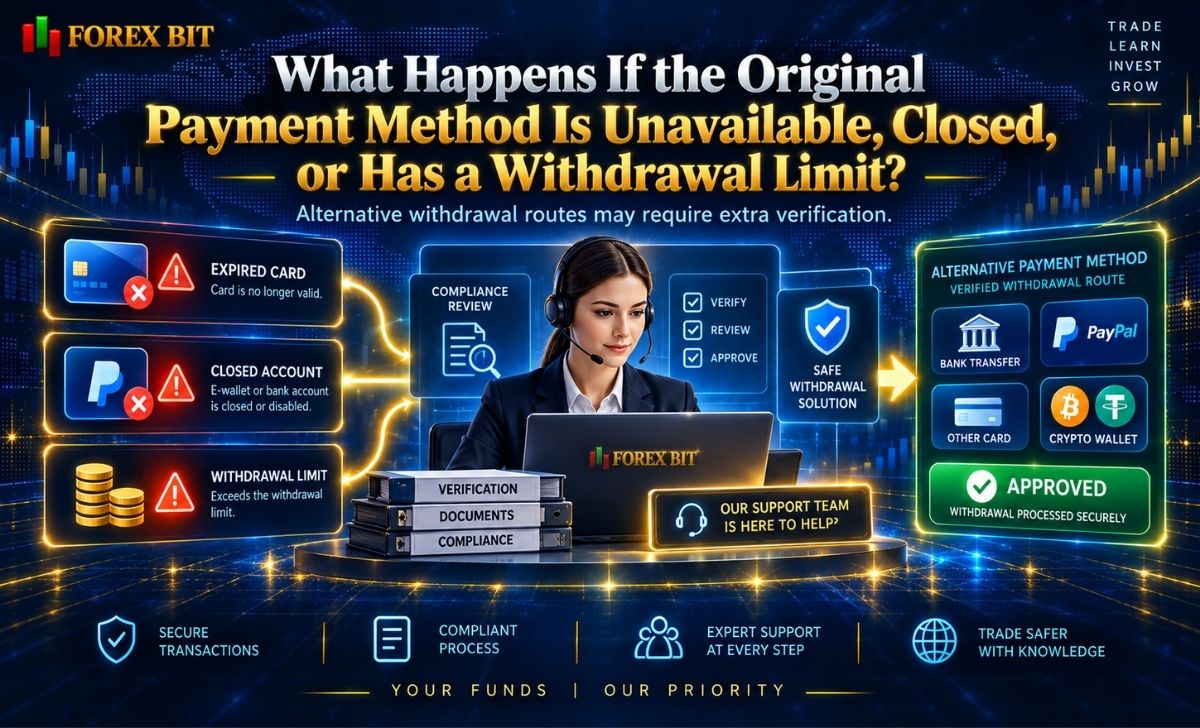
When the original bank card, e-wallet, or bank account is no longer available or cannot receive the full withdrawal amount, traders may need to complete an additional verification process before using another payment method.
Several situations can trigger this process:
- Expiration: A bank card used for the original deposit has expired or has been replaced.
- Closure: An e-wallet or bank account associated with the deposit has been closed or deactivated.
- Limit mismatch: The payment provider’s transaction limit is lower than the requested withdrawal amount.
In these situations, brokers may request supporting documents before approving an alternative withdrawal route.
Examples can include a bank letter confirming that an account has been closed, evidence that a card has expired, or a screenshot showing that an e-wallet or payment method is no longer available.
Once the situation has been verified, the broker may allow the remaining funds to be withdrawn through another payment method registered under the trader’s verified identity.
Because these procedures vary between brokers, traders should contact their broker’s customer support to confirm which documents and alternative payment methods are accepted.
What KYC and Verification Steps May Be Required Before Withdrawal Approval?
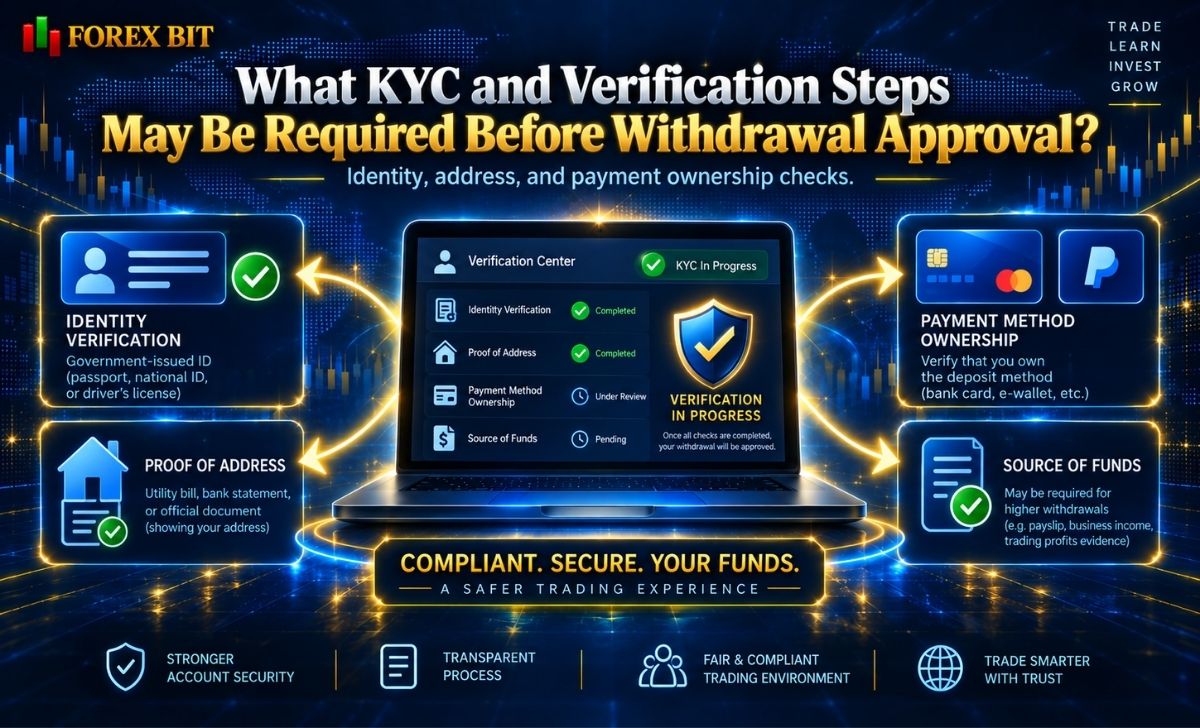
Forex brokers commonly require traders to complete identity verification before processing certain withdrawal requests. These checks may include proof of identity, proof of address, and evidence that the payment method belongs to the account holder.
Common verification documents can include:
- Government-issued identification, such as a passport or national identity card
- Proof of address, such as a utility bill or bank statement
- Proof of payment method ownership, such as a partially masked bank card image or an e-wallet account screenshot
These checks can help brokers verify that the person requesting a withdrawal is the same person who owns and funded the trading account.
Verification processing times vary depending on the broker and the documents submitted.
Large or unusual withdrawal requests may also trigger additional source-of-funds or compliance checks. Depending on the broker’s requirements, traders may be asked to provide documents such as bank statements or other evidence showing the origin of their funds.
These additional checks can operate alongside the Original Payment Method Withdrawal Rule rather than replacing it.
How Does the Original Payment Method Rule Compare to Third-Party and Regional Payment Restrictions?
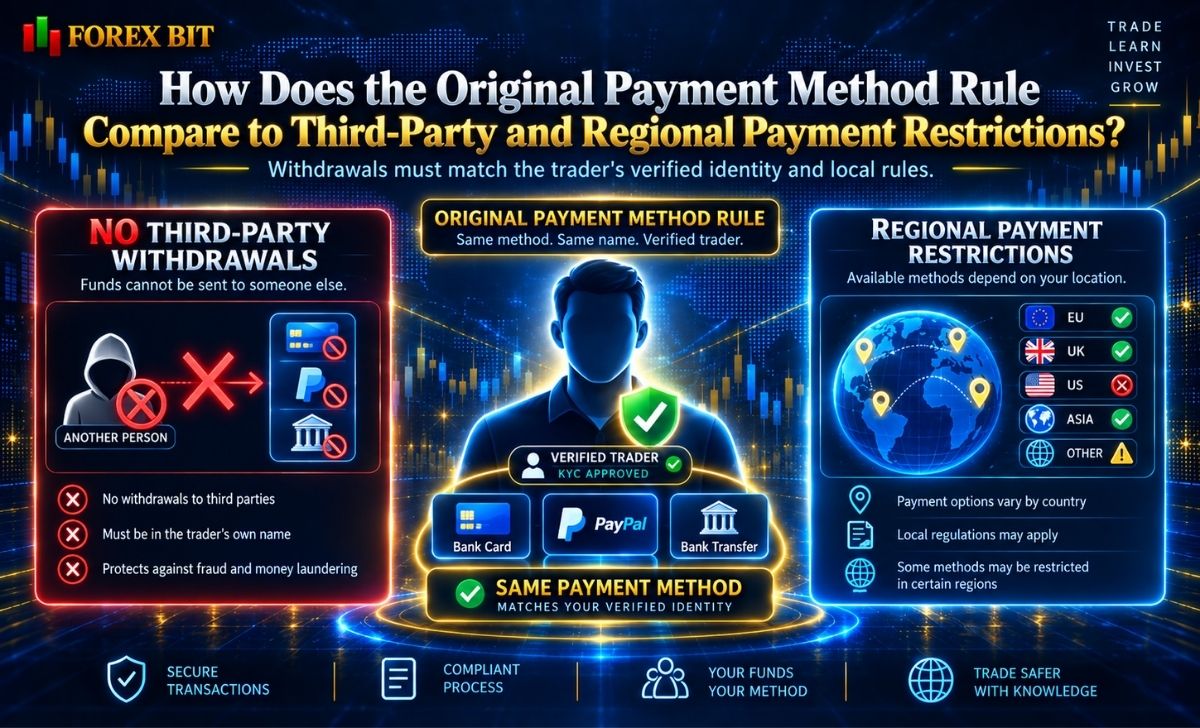
The Original Payment Method Withdrawal Rule is closely related to broader restrictions on third-party payments.
Many forex brokers do not allow withdrawals to an account, card, or e-wallet belonging to another person because payment methods are generally expected to correspond with the identity verified on the trading account.
Regional regulations and broker policies can also affect how these rules are applied.
Are Third-Party Payments or Withdrawals to Another Person’s Account Allowed?
Many forex brokers restrict or prohibit withdrawals to payment accounts belonging to another person.
This restriction generally supports three objectives:
- Preventing money laundering through payments to unrelated third parties
- Confirming that the withdrawal recipient matches the account holder verified through KYC
- Preventing funds from being redirected away from the legitimate owner of the trading account
If a withdrawal request names a recipient who does not match the verified account holder, the broker may reject the transaction or request an alternative payment method belonging to the trader.
Even when a card or bank account is shared with a family member or business partner, additional verification may be required depending on the broker’s policy.
Do KYC and Withdrawal Rules Differ by Region or Regulatory Entity?
Yes. KYC requirements, withdrawal procedures, available payment methods, and the application of the Original Payment Method Withdrawal Rule can vary depending on the broker, regulatory entity, and country in which the trading account is registered.
Three factors commonly contribute to these differences:
- Jurisdiction: Different regulatory environments can impose different requirements regarding identity verification and payment controls.
- Documentation: Some regions or brokers may require additional proof-of-address documents, identification, or payment verification.
- Availability: Certain e-wallets, local transfer systems, banking networks, or card services may only be available in specific countries.
Traders should check which regulatory entity governs their trading account and review the broker’s withdrawal and verification requirements before making a deposit.
Understanding these conditions beforehand can help reduce problems when withdrawing funds later.
Conclusion
The Original Payment Method Withdrawal Rule is a common payment and security procedure used by many forex brokers to keep withdrawals connected to the payment method and verified identity associated with the original deposit.
The rule helps reduce unauthorized third-party transfers and supports anti-fraud, KYC, and anti-money-laundering controls. Depending on the broker and payment method, deposited funds may need to return to the original bank card, e-wallet, or bank account before other withdrawal options become available.
However, exact requirements for card refunds, profit withdrawals, limits, fees, processing times, alternative payment methods, and verification can vary significantly between brokers and regions.
Forex Bit provides educational information about these practices to help traders better understand how forex withdrawal procedures may work. Before depositing or requesting a withdrawal, traders should always review the current payment and withdrawal policies directly with the forex broker they use.
William Johnson is a Forex & Broker News Analyst at Forex Bit, focusing on broker updates, regulatory developments, payment changes, and security-related news. His work helps readers stay informed about important industry developments and understand how these changes may affect broker services and trading conditions.
Email: [email protected]



Best Brokers

Trade with the world’s largest retail broker and benefit from better - than - market conditions.

We offer a superior trading environment that puts traders in the best position to profit.

Trade with the best trading conditions. WIN THE BEST TRADING ACCOUNT AWARD.

Trade global markets with Interactive Brokers – a highly regulated multi-asset broker built for active and professional investors.






Forex Bit provides independent forex broker reviews, comparisons, guides, and industry news to help traders make informed decisions.
Best Brokers
Metatrader 5 Brokers
Metatrader 4 Brokers
Lowest Spread Forex Broker
Regulated Forex Brokers
Forex Copy Trading
Ctrader Brokers
Best Forex Broker For Beginners