
Explore the full IC Markets cTrader Copy fees structure – commissions, spreads & performance costs traders need to know before copying strategies.
IC Markets cTrader Copy Fees: Full Cost Breakdown

IC Markets cTrader Copy typically involves multiple cost layers, including broker-side spreads/commissions, platform copy fees, and strategy provider performance fees. Each layer is deducted independently, meaning a copier’s net return depends on the combined effect of all three rather than a single flat fee.
Strategy providers set their performance fee individually as a percentage of the profit generated for each copier, so the rate and charging schedule vary from one provider to another. Using cTrader Copy also requires an eligible cTrader account, and specific deposit and leverage conditions may apply on top of these fees. Forex Bit breaks down this full fee structure below, starting with what makes up the total cost of using IC Markets cTrader Copy.
What Is the Complete Fee Structure of IC Markets cTrader Copy?
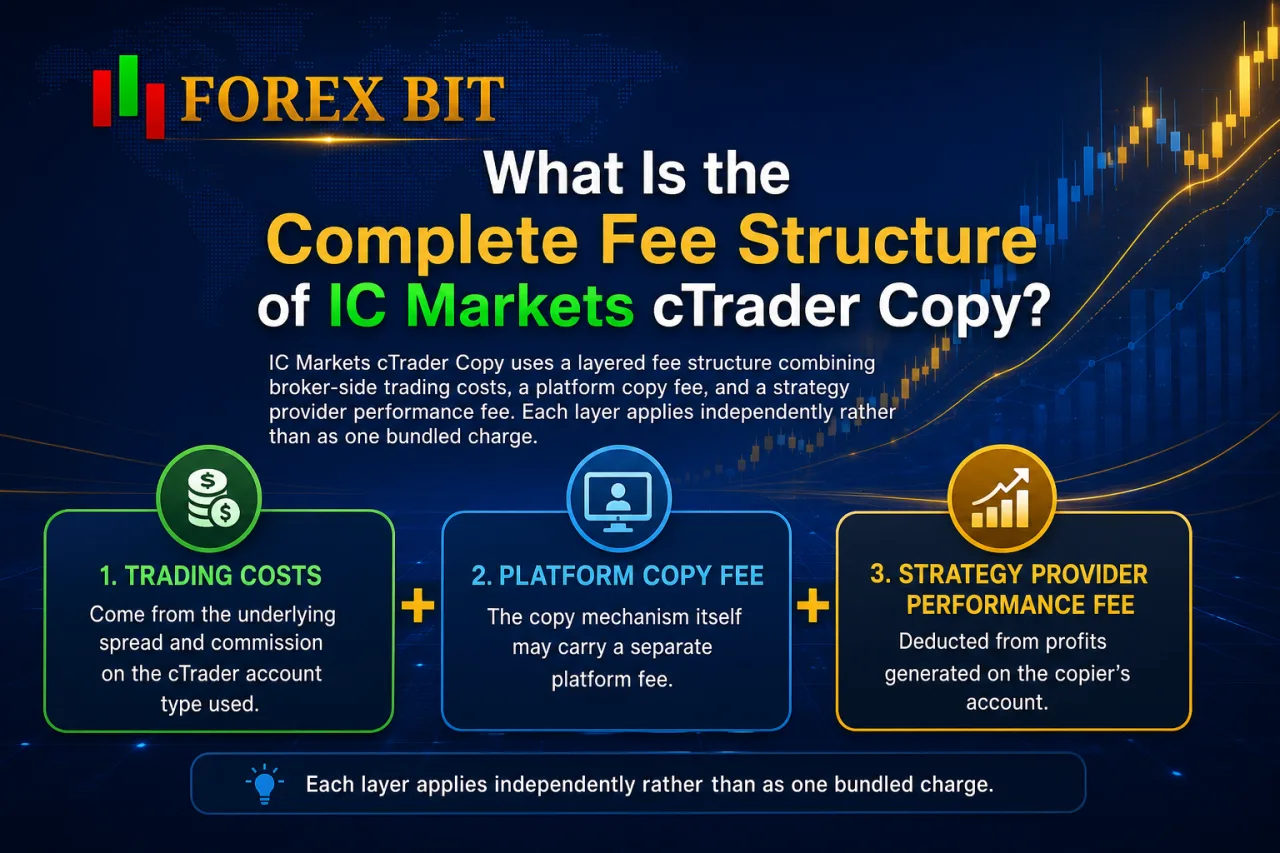
IC Markets cTrader Copy uses a layered fee structure combining broker-side trading costs, a platform copy fee, and a strategy provider performance fee. Each layer applies independently rather than as one bundled charge. Trading costs come from the underlying spread and commission on the cTrader account type used, the copy mechanism itself may carry a separate platform fee, and the strategy provider’s performance fee is deducted from profits generated on the copier’s account.
The following sections break down each of these components individually. They cover how spreads and commissions apply, how the platform fee is structured, and how performance fees are calculated and charged by providers.
What Types of Costs Are Included When Using cTrader Copy?
Using cTrader Copy on IC Markets involves three cost categories: broker-side trading costs, strategy provider performance fees, and a platform copy fee where applicable. These layers apply at different stages of a copied trade rather than as a single combined charge.
- Trading costs: come from the spread and commission tied to the underlying cTrader account type, applied automatically on every position opened through the copy relationship.
- Performance fees: charged by the strategy provider on the profit generated for the copier, with rates set individually per provider.
- Platform copy fee: may apply depending on how the copy service structures its charges.
Each category is reviewed in detail in the sections that address spreads and commissions, performance fee calculation, and platform-level charges specifically.
How Are These Fees Calculated and Charged to Copiers?
These fees are calculated and deducted automatically at three different points: per trade, per settlement period, and per profit event, depending on the fee layer involved. No single deduction schedule covers all three cost components together.
Returning to the fee structure already outlined, the calculation mechanism follows the sequence in which costs arise for a copier. Spread and commission costs deduct in real time whenever a copied position opens or closes on the underlying cTrader account, since these are standard trading costs rather than separate charges.
Performance fees calculate against the profit a strategy generates for the copier and settle according to the provider’s defined schedule rather than on every single trade. Platform-level copy fees, where applicable, follow their own charging cycle set by the copy service itself.
Because each layer runs on a distinct trigger, a copier’s account can show deductions from trading costs immediately, while performance-based charges only apply once profit exists to calculate against. The precise formulas behind commission rates and performance fee percentages depend on account type and individual provider terms.
How Does IC Markets cTrader Copy Compare to Other Copy Trading Platforms in Terms of Fees?
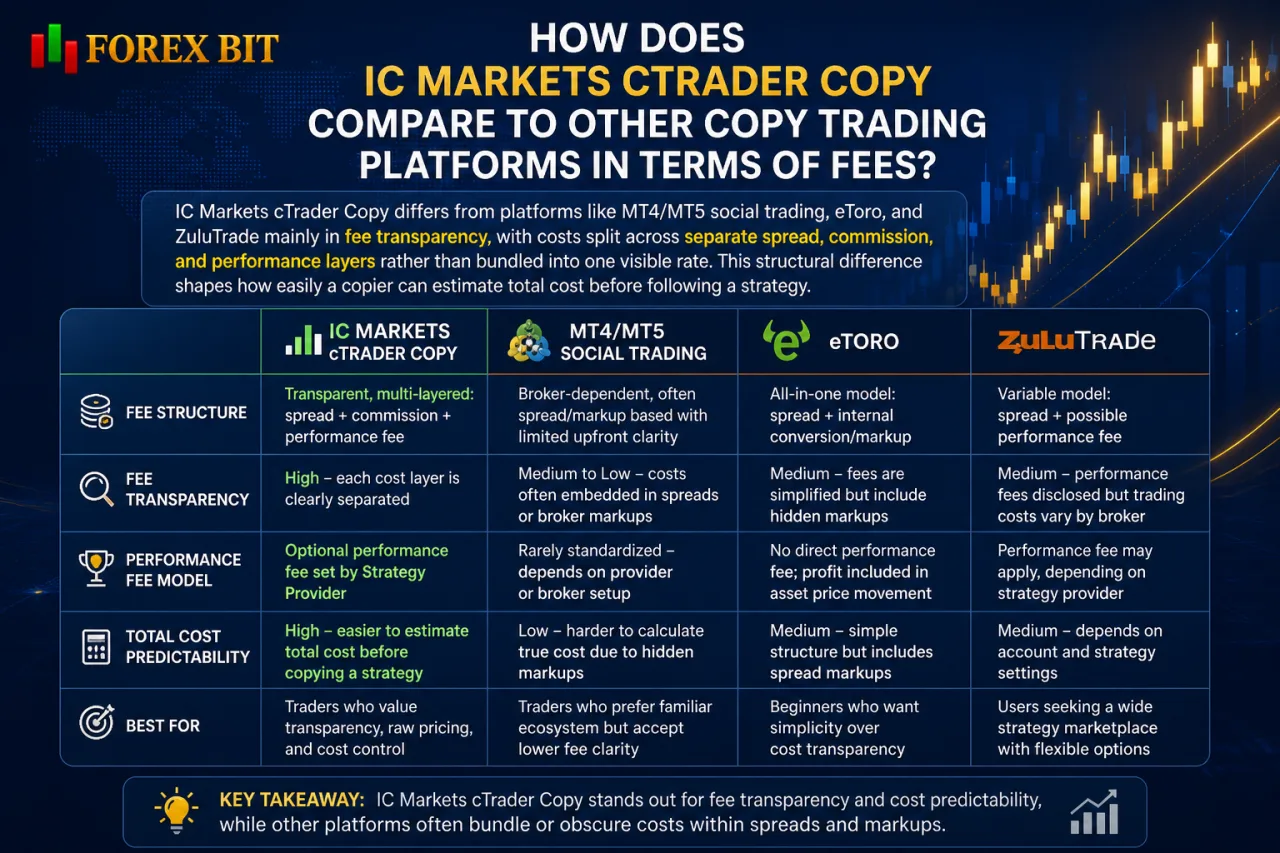
IC Markets cTrader Copy differs from platforms like MT4/MT5 social trading, eToro, and ZuluTrade mainly in fee transparency, with costs split across separate spread, commission, and performance layers rather than bundled into one visible rate. This structural difference shapes how easily a copier can estimate total cost before following a strategy.
Coming back to the comparison itself, each platform model handles disclosure differently:
- MT4/MT5-based social trading tools: generally rely on broker-set spreads plus a signal provider fee structured similarly to IC Markets.
- eToro: often presents a single headline fee or subscription-style cost that appears simpler on the surface.
- ZuluTrade: follows a comparable approach, bundling costs into a more consolidated presentation rather than separate line items.
The transparency gap comes from whether performance fees are shown as a standalone percentage or folded into wider account charges, and this varies across copy trading platforms.
No universal rate applies across these platforms since each provider or broker sets its own charging logic independently. The following sections address transparency and provider-level cost variation in more specific terms.
What Makes cTrader Copy’s Fee Model Different from Traditional Copy Trading Services?
cTrader Copy’s fee model differs from traditional copy trading services mainly through broker-side integration, where spread, commission, and performance fee data run within the same IC Markets account infrastructure rather than through a separate third-party layer. This structural distinction affects both transparency and fee control compared to independent copy trading services.
Traditional third-party copy services typically route trades through an external system layered on top of a broker account, adding a separate fee schedule or subscription cost that sits outside the broker’s own reporting. cTrader Copy instead keeps trading costs, platform mechanics, and performance fee deductions visible within the broker’s native platform environment.
This integration gives copiers direct visibility into which layer a charge originates from. Spread and commission apply as standard cTrader account costs, while performance fees remain a distinct, provider-set deduction. A full breakdown of which cost types apply under this structure is covered in the “What Types of Costs Are Included” section above. Independent third-party services often bundle these elements into a single displayed rate, making it harder to isolate what portion of a cost comes from the broker versus the copy service itself.
Fee control also differs in practice: a broker-integrated model ties charges to account-level settings a trader already manages, whereas third-party services depend on external platform rules that sit outside the broker relationship.
How Do Strategy Provider Performance Fees and Profit-Sharing Work on IC Markets cTrader Copy?
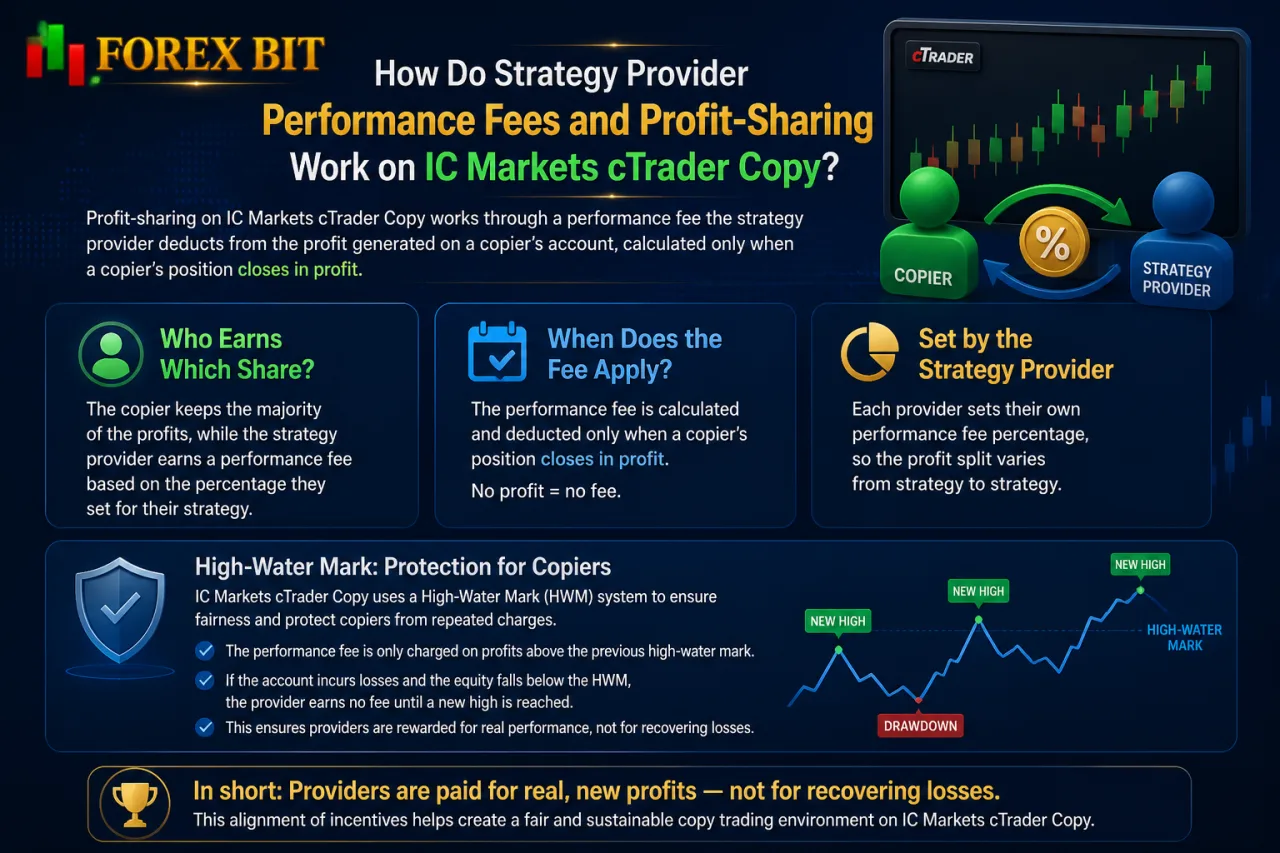
Profit-sharing on IC Markets cTrader Copy works through a performance fee the strategy provider deducts from the profit generated on a copier’s account, calculated only when a copier’s position closes in profit. The provider sets the percentage individually, so the split between what the copier keeps and what the provider earns differs from strategy to strategy. This section covers who earns which share, when the fee applies, and how the high-water mark concept protects copiers from repeated charges on the same gains, with the exact calculation formula addressed separately.
At a general level, the strategy provider receives a set percentage of realized profit while the copier retains the remainder, and no fee applies when a copied position closes at a loss. Charging typically ties to a settlement point rather than every individual trade, meaning profit is assessed cumulatively before a fee is deducted. The high-water mark concept ensures a provider only earns a fee on new profit above the copier’s previous peak account value, preventing repeated charges on gains that were already fee-assessed in an earlier period.
Who Sets the Performance Fee Rate and Can It Be Changed?
Yes, the strategy provider sets the performance fee rate on IC Markets cTrader Copy, and this rate can change over time at the provider’s discretion. Returning to the fee-setting authority behind this structure, the rate is not fixed by IC Markets or standardized across the platform.
Each provider determines their own percentage when listing a strategy, which explains why profit-sharing terms differ from one strategy to another rather than following a single broker-wide rule. Because the rate sits under provider control, adjustments to that percentage remain possible as the provider updates their strategy terms, though any change applies going forward rather than retroactively against profit already assessed under the high-water mark.
Copiers reviewing a strategy before following it typically check the current listed rate directly on the provider’s profile, since this figure reflects the terms in effect at that moment rather than a rate guaranteed to stay static for the duration of the copy relationship.
What Is the Difference Between Provider Fees and Broker-Level Trading Costs?
Provider fees and broker-level trading costs differ by origin: performance fees come from the strategy provider on profit generated, while spreads and commissions come from IC Markets on every trade executed. Returning to this fee-source distinction, the two layers apply through entirely separate mechanisms and serve different purposes within the copy relationship.
Broker-level trading costs (spread and commission) attach to the underlying cTrader account and deduct automatically whenever a copied position opens or closes, regardless of whether that trade ends in profit or loss. These costs exist independently of the copy relationship itself, since any trader using that cTrader account type incurs them.
Provider fees, by contrast, apply only when a copied position closes in profit, and the rate is set individually by each strategy provider rather than by IC Markets. No performance fee applies on a losing trade, which separates it structurally from spread and commission costs that charge on every executed trade regardless of outcome.
This distinction matters for a copier trying to isolate where a specific deduction originated, since a loss-making period still carries broker-side trading costs while showing no performance fee activity at all.
What Account Types and Conditions Apply When Using cTrader Copy on IC Markets?
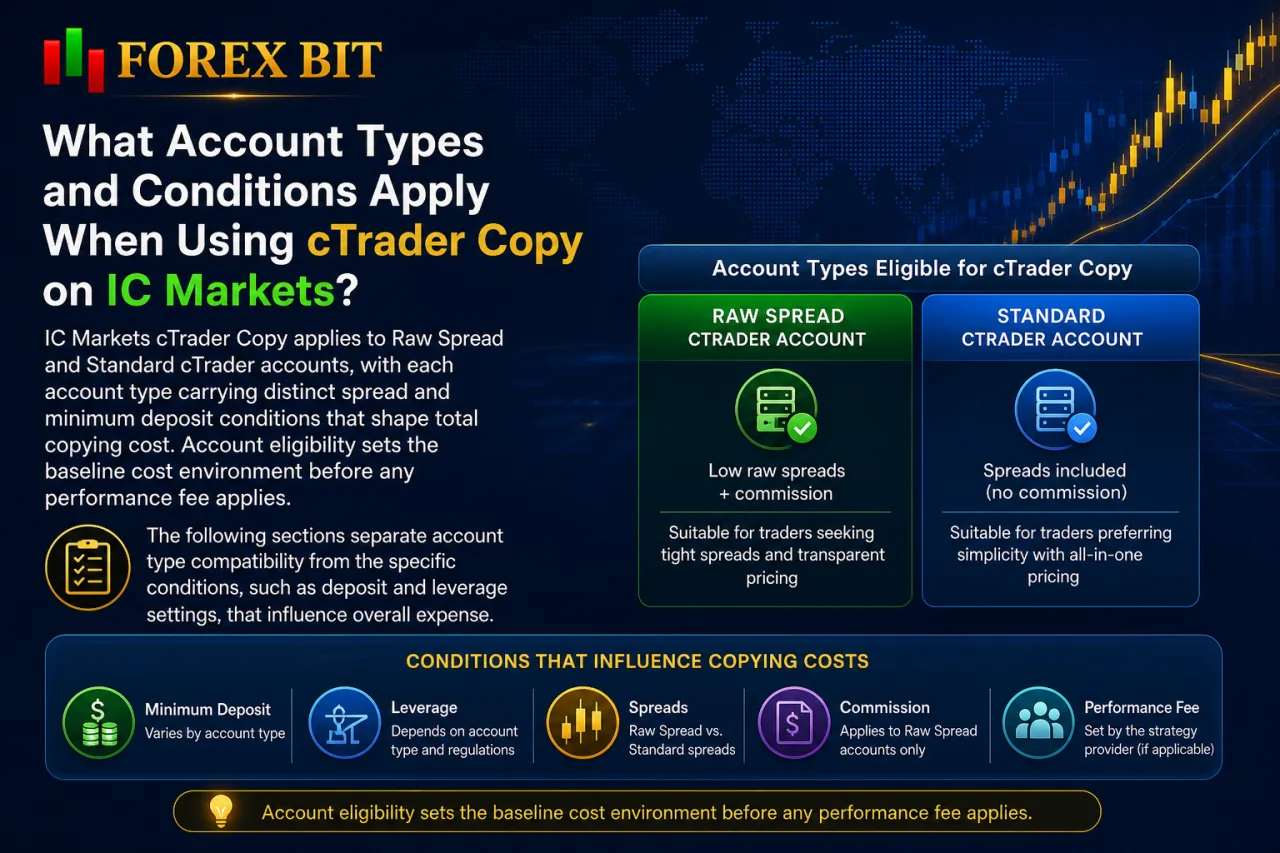
IC Markets cTrader Copy applies to Raw Spread and Standard cTrader accounts, with each account type carrying distinct spread and minimum deposit conditions that shape total copying cost. Account eligibility sets the baseline cost environment before any performance fee applies. The following sections separate account type compatibility from the specific conditions, such as deposit and leverage settings, that influence overall expense.
Are There Minimum Deposit or Balance Requirements to Use cTrader Copy?
Yes, IC Markets cTrader Copy applies minimum requirements, though the exact figures depend on account type and provider terms rather than a single fixed threshold. Returning to this eligibility question, the requirement structure differs depending on whether a trader acts as a copier or a strategy provider.
For copiers, the relevant baseline ties to the minimum deposit condition of the underlying Raw Spread or Standard cTrader account used to fund the copy relationship, since no separate deposit tier exists specifically for the copy function itself. IC Markets requires a minimum deposit to open a cTrader account, and this requirement applies before any copy trading activity begins. The exact deposit figure is subject to change and traders should verify the current minimum deposit amount directly on the official IC Markets website before funding an account.
For strategy providers, balance conditions may factor into eligibility to list a strategy, since a provider account typically needs sufficient equity to support the position sizes being copied across multiple follower accounts. Beyond the account-opening deposit, no additional standalone balance requirement applies purely for enabling the copy feature on an eligible cTrader account.
What Are Some Lesser-Known Factors That Can Affect Total Copy Trading Costs on cTrader Copy?
Several lesser-known factors affect total copy trading costs on cTrader Copy beyond spreads, commissions, and performance fees: execution slippage, timing lag between provider and copier, separate swap charges, and market volatility impact. These hidden variables sit outside the standard fee layers already outlined and often go unnoticed until a copier reviews account statements closely.
Returning to these hidden cost drivers specifically, each factor originates from how a copied trade actually fills rather than from a disclosed fee schedule:
- Execution slippage occurs when a copier’s fill price differs from the strategy provider’s fill price, since order routing and liquidity conditions vary by account.
- Timing lag creates a gap between when a provider opens or closes a position and when the copier’s account replicates that action, which affects the exact entry or exit level received.
- Swap and overnight financing charges apply separately from spread, commission, and performance fees, based on positions held past the daily rollover cutoff.
- Market volatility widens the practical effect of slippage and timing lag, since fast-moving price conditions increase the gap between provider and copier execution.
None of these factors appear as a line-item fee, yet each one shapes the net cost a copier actually experiences on IC Markets cTrader Copy.
Can Currency Conversion or Multi-Asset Trading Add Extra Costs for Copiers?
Yes, currency conversion can add extra costs when a copier’s account currency differs from the instruments a strategy trades, and multi-asset exposure compounds this effect through swap and margin conversion adjustments. Returning to this hidden-cost question, the added expense stems from broker-level currency conversion mechanics rather than the copy fee structure itself.
A copier holding an account denominated in one currency incurs a conversion charge whenever a copied trade settles profit, loss, swap, or margin in a different currency, since IC Markets converts that value back to the account base currency at the prevailing rate. This conversion typically applies a markup over the interbank exchange rate.
Multi-asset strategies that trade instruments across several currency pairs or asset classes multiply this exposure, since each non-base-currency instrument copied triggers its own conversion event. This layer sits outside the standard spread, commission, and performance fee breakdown already covered, yet it directly affects the copier’s realized net return.
How Does Copy Trading Fee Transparency on IC Markets Compare to Regulatory Disclosure Standards?
Copy trading fee transparency on IC Markets cTrader Copy operates through account statement disclosure rather than a single upfront regulatory fee schedule, since neither ASIC nor CySEC mandates a standardized copy-fee format. This creates a gap between what regulators require and what the platform actually displays.
Coming back to this rare comparison point, ASIC and CySEC oversight of IC Markets focuses on broader conduct standards such as client fund segregation, order execution disclosure, and risk warnings, rather than a specific copy trading fee template. IC Markets identifies itself as a broker operating under ASIC and CySEC oversight, based on the license information published on its official website and regulator registers, and in general terms, this type of regulatory oversight tends to set broad trading cost disclosure obligations rather than rules addressing copy trading performance fees specifically.
This general pattern reflects how these regulators typically approach trading cost disclosure across the industry, rather than a confirmed rule specific to IC Markets. Traders looking to verify license status directly can check the ASIC and CySEC public registers alongside IC Markets’ own regulatory disclosures.
Because no regulator-specific copy-fee disclosure standard exists, cTrader Copy’s transparency relies on the platform showing spread, commission, and performance fee data within account history rather than a regulator-mandated pre-trade cost summary. This leaves cost verification largely dependent on a copier reviewing statements directly rather than a standardized regulatory disclosure document.
Conclusion
IC Markets cTrader Copy carries a layered cost structure built from broker-side spreads and commissions, provider-set performance fees on realized profit, and any applicable platform copy fee, each deducted through its own independent trigger rather than a single combined charge.
Total expense ultimately depends on the underlying account type chosen, the specific provider’s performance fee terms, and hidden variables like slippage, timing lag, swaps, and currency conversion. Verifying actual cost requires reviewing account statements directly, since no standardized regulatory disclosure format consolidates these layers into one upfront figure for traders evaluating a strategy.
William Johnson is a Forex & Broker News Analyst at Forex Bit, focusing on broker updates, regulatory developments, payment changes, and security-related news. His work helps readers stay informed about important industry developments and understand how these changes may affect broker services and trading conditions.
Email: [email protected]

Best Brokers

Trade with the world’s largest retail broker and benefit from better - than - market conditions.

We offer a superior trading environment that puts traders in the best position to profit.

Trade with the best trading conditions. WIN THE BEST TRADING ACCOUNT AWARD.

Trade global markets with Interactive Brokers – a highly regulated multi-asset broker built for active and professional investors.






Forex Bit provides in-depth analysis of commodities, forex, and stock markets to help traders make informed investment decisions.
Best Brokers
Metatrader 5 Brokers
Metatrader 4 Brokers
Lowest Spread Forex Broker
Regulated Forex Brokers
Forex Copy Trading
Ctrader Brokers
Best Forex Broker For Beginners