
Comparing Exness vs HFM? See how spreads, execution speed, and account conditions differ to find the better broker for your trading style.
Exness vs HFM: Spreads, Execution & Account Conditions

Exness is broadly positioned as offering tighter raw spreads on its Zero and Raw Spread accounts, while HFM is positioned as providing more balanced conditions across a wider range of standard account types. These are general market positioning statements rather than fixed figures, since actual spreads fluctuate with liquidity and market conditions. The right choice depends on whether a trader prioritizes ultra-low cost trading or flexible account structures.
Raw and zero spread accounts from Exness are marketed as starting near 0.0 pips with a separate commission, whereas HFM’s Zero account follows a similar model but with its own commission structure. Exact average spread values are not fixed and traders should verify current figures directly on each broker’s official website before comparing cost structures for high-frequency and scalping strategies.
Order execution quality on Exness is associated with its market execution model and low latency as described in its own materials, while HFM relies on a mix of market and instant execution depending on account type. Exness promotes fast execution speeds and a no-requotes policy on its market execution accounts, though independent, third-party execution benchmarks are not cited here.
Account conditions differ mainly in minimum deposit and leverage limits available across regions. Exness advertises unlimited leverage in select jurisdictions, while HFM caps leverage according to the regulatory entity a client falls under. Minimum deposit requirements also vary by account tier at both brokers, and exact figures should be confirmed on each broker’s official site.
Forex Bit breaks down these distinctions further below, starting with a direct comparison of how Exness and HFM perform across spreads, execution, and account conditions.
Exness vs HFM: Which Broker Offers Better Spreads, Execution, and Account Conditions?
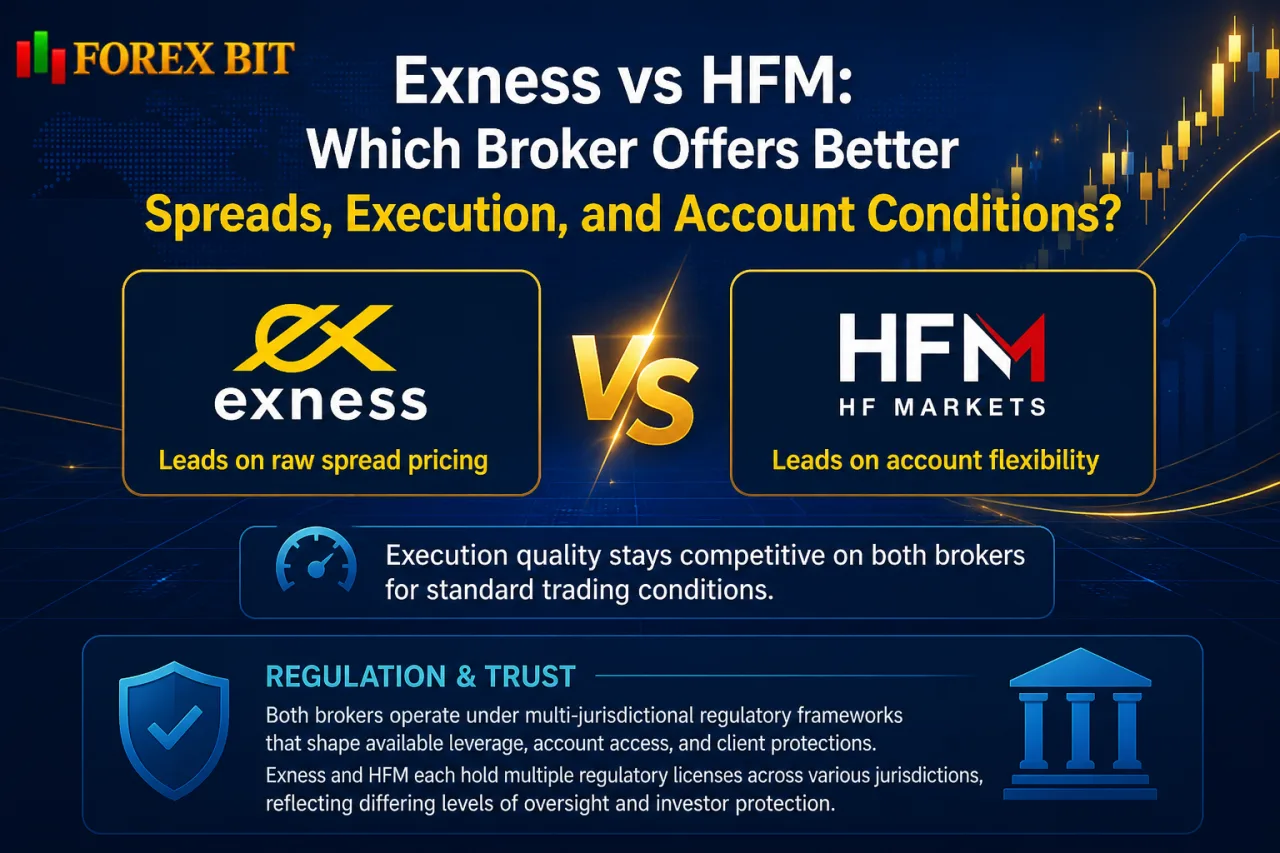
Exness leads on raw spread pricing while HFM leads on account flexibility, and execution quality stays competitive on both brokers for standard trading conditions. This section frames the two brokers before breaking down each factor in detail.
Both brokers operate under multi-jurisdictional regulatory frameworks that shape available leverage, account access, and client protections. Exness and HFM each hold multiple regulatory licenses across various jurisdictions, reflecting differing levels of oversight depending on the entity a client is registered under.
On spreads, Exness generally posts thinner raw pricing on its Zero and Raw Spread accounts, positioning it closer to a low-cost trading option. On execution, both brokers report fast processing under market conditions, though the account type selected influences whether trades run on instant or market execution. On account conditions, HFM spreads flexibility across a broader tier of standard account types, while Exness concentrates its offering around fewer, cost-focused account structures. Traders weighing Exness versus HFM typically decide based on whether raw pricing or account variety matters more.
How Do Spread Types and Trading Costs Compare Between Exness and HFM?
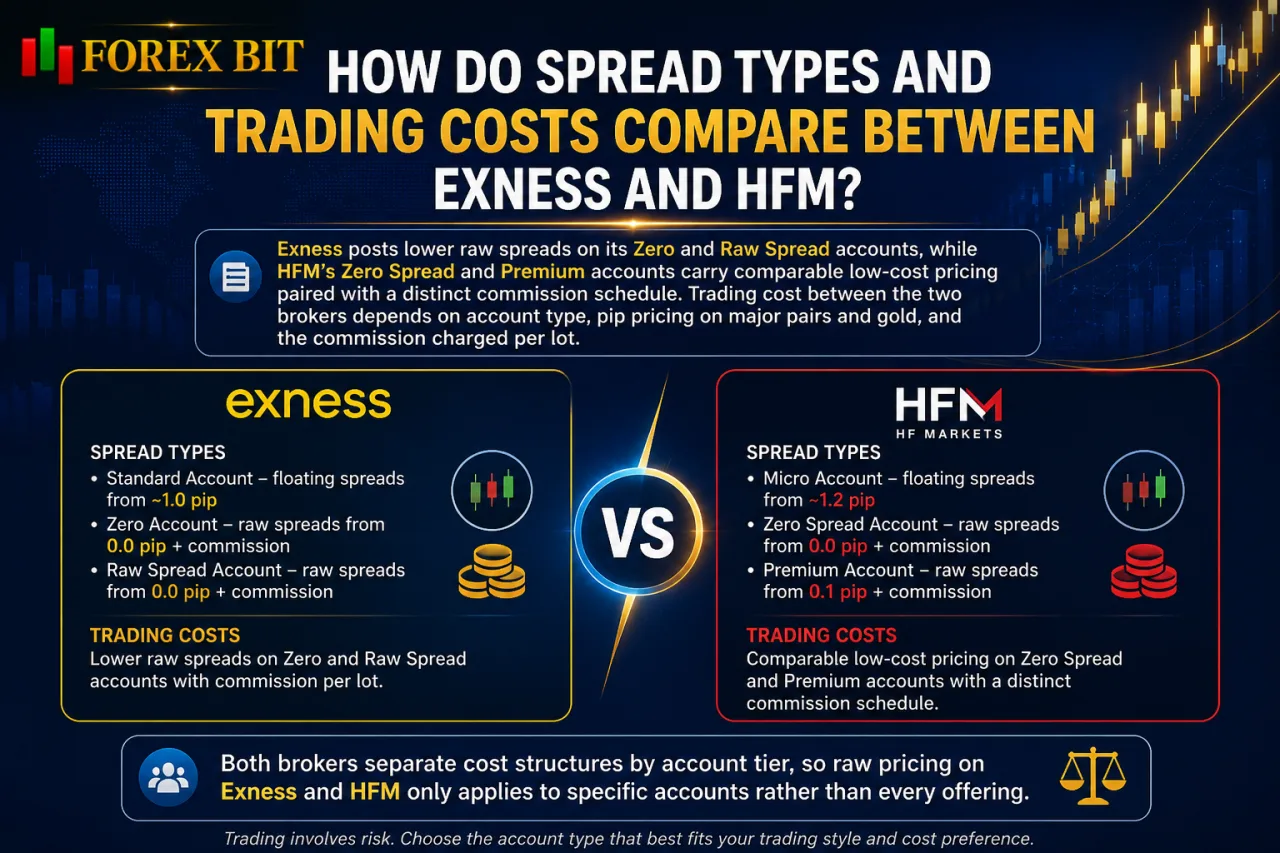
Exness posts lower raw spreads on its Zero and Raw Spread accounts, while HFM’s Zero Spread and Premium accounts carry comparable low-cost pricing. HFM pairs its low spreads with a distinct commission schedule, so overall trading cost depends on account type, pip pricing on major pairs and gold, and the commission charged per lot.
Both brokers separate cost structures by account tier, so raw pricing on Exness and HFM only applies to specific accounts rather than every offering. Average spreads on EUR/USD, GBP/USD, and gold move throughout the trading day and differ by account type, and traders comparing exact pip figures should check the live spread pages published on the official Exness and HFM websites rather than rely on a fixed number.
The sections below outline the commission charged per lot on raw accounts and how floating spreads on Exness standard accounts compare with HFM’s fixed and floating options.
What Commissions Apply on Exness vs HFM Raw/Zero Accounts?
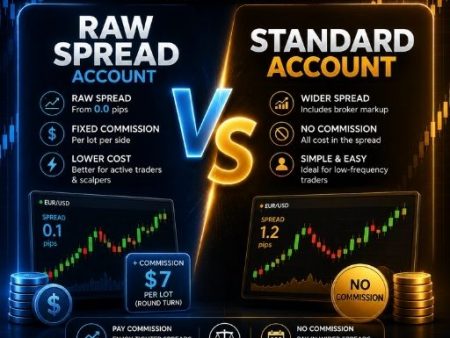
Exness charges a round-turn commission per lot on its Zero and Raw Spread accounts, while HFM applies its own per-lot commission on the Zero account, and total trading cost depends on adding that fee to the residual spread.
Commission structure directly shapes what a trader pays beyond the quoted spread, so comparing the fee alongside pricing matters more than looking at spreads alone.
On a standard 1-lot trade, total cost equals the spread paid at entry plus the fixed commission charged per round turn. Exness and HFM both disclose their commission schedules on their official account pages rather than bundling the fee invisibly into the spread.
For EUR/USD and similar majors, the commission portion tends to matter most when spreads compress near zero, since the fixed fee becomes the larger share of overall cost on raw-priced accounts. Traders running high lot volumes typically calculate the blended cost per trade rather than judging Exness or HFM on spread or commission in isolation.
Which Broker Has Lower Overall Trading Costs for Active Traders?
Exness Raw Spread and HFM Zero accounts both offer lower overall trading costs for active traders. Once spread and commission combine into a single per-trade figure, scalping and high-volume strategies amplify the impact of even fractional pip differences. This effective cost, not the headline spread alone, determines which broker suits frequent trading.
Effective cost breaks down into three components that active traders track separately:
- Spread: On EUR/USD, effective cost equals the near-zero raw spread offered on these account types.
- Commission: Both Exness and HFM charge a fixed commission per lot and disclose this figure per round turn rather than folding it invisibly into pricing. For scalpers executing dozens of trades per session, the commission portion becomes the dominant cost driver once spreads compress toward the low end of each broker’s range.
- Swap fees: These apply separately from spread and commission on positions held overnight, on both brokers.
Exness and HFM each publish swap rates by instrument on their official trading conditions pages, and these rates vary by currency pair and by long or short position direction.
High-volume traders typically calculate a blended cost per lot across spread, commission, and expected swap exposure rather than comparing Exness and HFM on any single metric in isolation.
Exness vs HFM: How Does Order Execution Quality Compare?
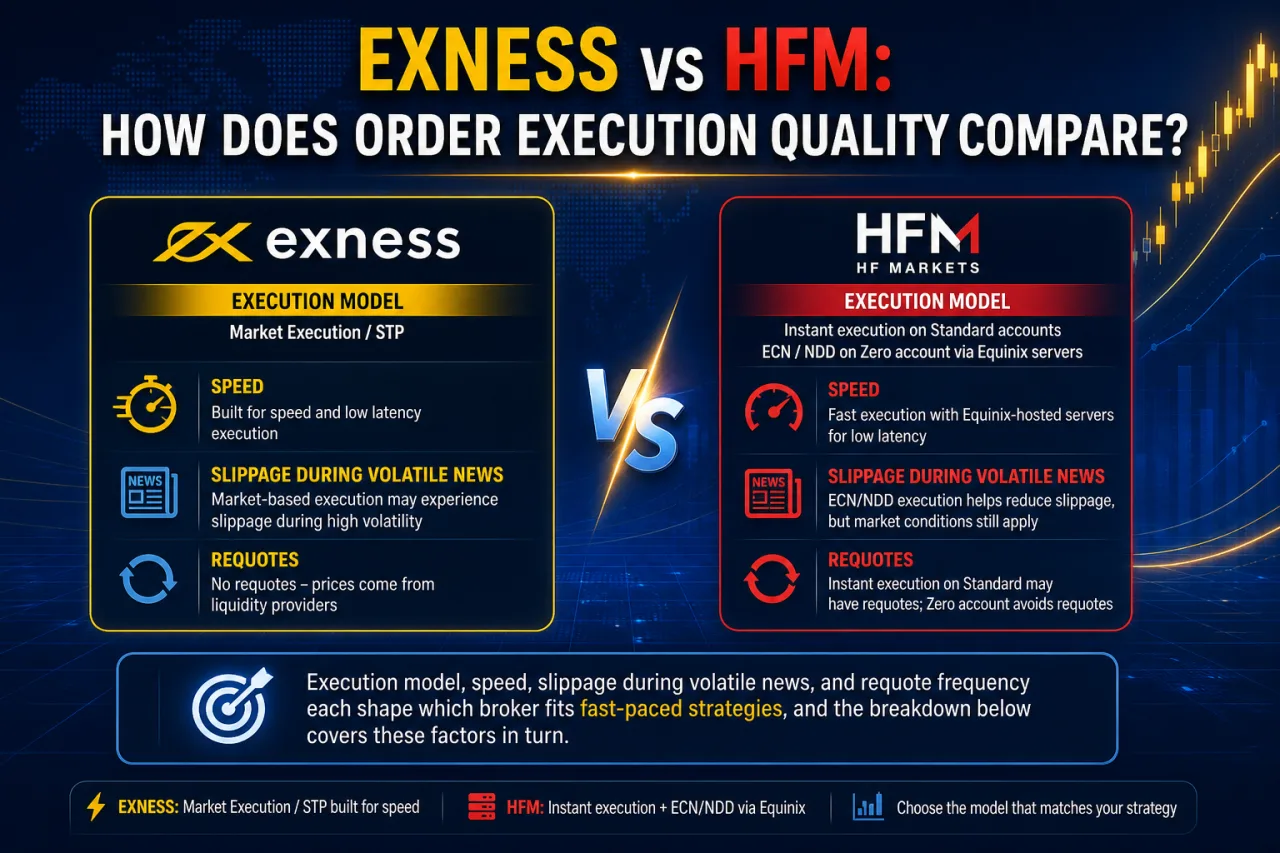
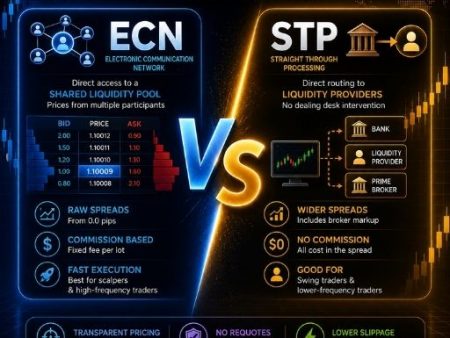
Exness runs on a Market Execution/STP model built for speed, while HFM combines instant execution on standard accounts with ECN/NDD routing on its Zero account through Equinix-hosted servers. Execution model, speed, slippage during volatile news, and requote frequency each shape which broker fits fast-paced strategies, and the breakdown below covers these factors in turn.
Does Exness or HFM Have Faster Order Execution Speed?
Exness delivers faster order execution on its Zero and Raw Spread accounts compared to HFM’s Zero account, based on server proximity and infrastructure design rather than a single fixed figure. Execution speed on both brokers connects directly to server location and account type.
Exness operates servers positioned close to major liquidity providers and promotes fast execution speeds on its market execution accounts.
HFM operates its trading infrastructure through Equinix-hosted data centers designed to reduce latency between client orders and liquidity pools, though its ECN/NDD routing introduces an additional processing step that Exness’s direct market execution setup avoids.
Both brokers support VPS hosting for clients running expert advisors, which keeps execution paths closer to the broker’s servers and reduces latency caused by unstable home internet connections. Scalpers and EA users on Exness or HFM typically pair a low-latency account type with VPS hosting rather than relying on execution speed claims alone.
Is Slippage or Requoting More Common on Exness or HFM During High Volatility?
Slippage during high-impact news occurs more frequently on HFM’s instant execution accounts than on Exness or HFM’s ECN/NDD Zero account. Requoting stays rare on both brokers under normal market execution. This gap ties directly to the execution model each account type runs on rather than the broker as a whole.
Price gaps during volatile events widen the bid-ask spread temporarily on both Exness and HFM, and orders on market execution or ECN/NDD accounts fill at the next available price without a broker-side requote. Instant execution accounts, by contrast, carry a built-in requote mechanism that rejects or reprices orders when the quoted price moves before confirmation, a design that affects HFM’s standard account type more than its Zero account.
Exness promotes a no-requotes policy across its market execution accounts, meaning orders are intended to fill at the prevailing market price even during fast-moving news releases.
On slippage direction, both brokers apply a symmetrical policy, filling orders at either a better or worse price depending on which way the market moves at the moment of execution. Traders running EA strategies or news-based entries on Exness or HFM typically favor ECN/NDD or market execution accounts specifically to avoid the requote risk tied to instant execution during volatility.
What Account Types, Minimum Deposits, and Leverage Does Each Broker Offer?
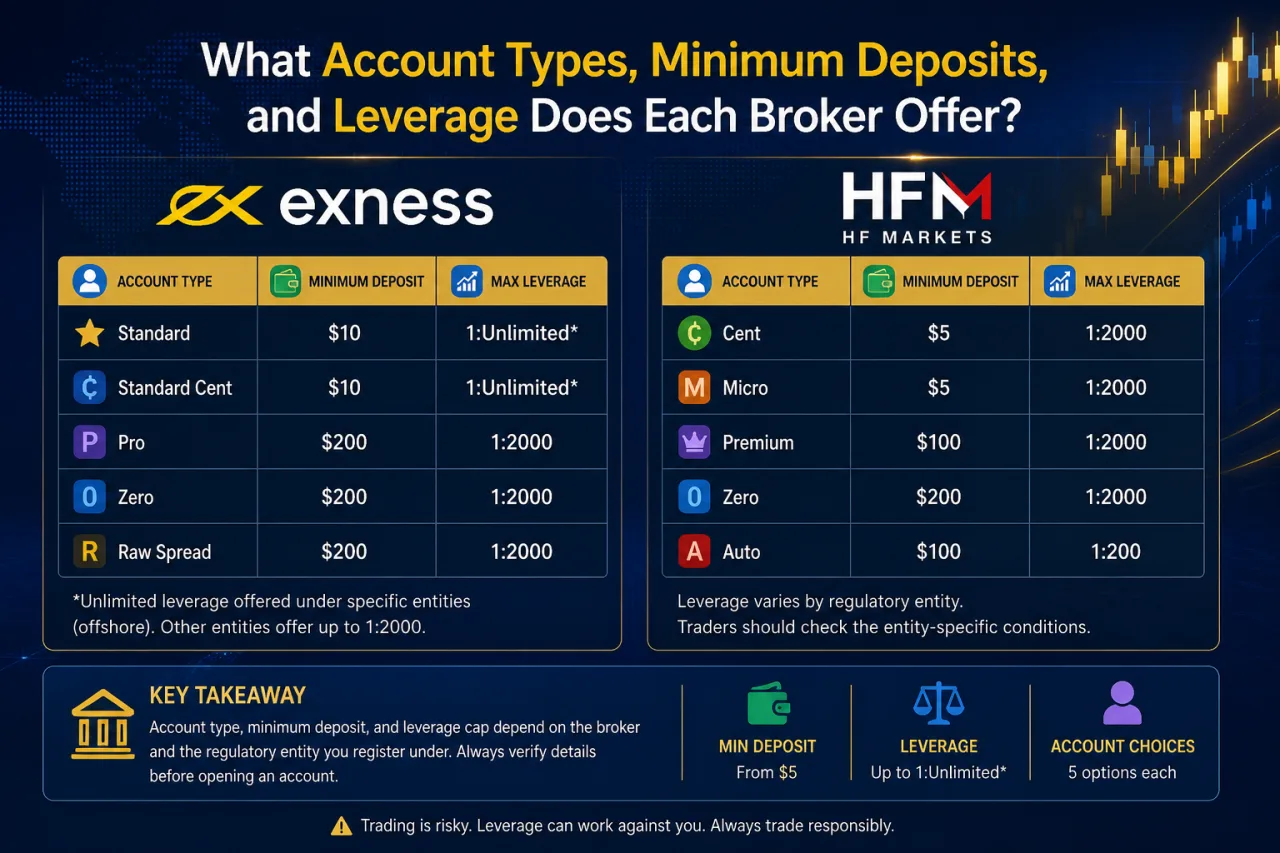
Exness structures its lineup around Standard, Standard Cent, Pro, Zero, and Raw Spread accounts, while HFM spreads its offering across Cent, Micro, Premium, Zero, and Auto accounts, with minimum deposit and maximum leverage varying by tier and regulatory entity. Account type, deposit requirement, and leverage cap connect directly to which entity a trader registers under at either broker. The comparison below breaks these variables down account by account before covering deposit thresholds and leverage limits in detail.
Which Broker Offers Higher Maximum Leverage in 2026?
Exness offers higher effective maximum leverage for eligible offshore clients. This advantage comes through its dynamic leverage model, while HFM caps leverage at fixed tiers that shrink under FCA or CySEC entities. Leverage ceiling on both brokers ties directly to the regulatory entity a trader registers under rather than a single flat figure applying globally.
Exness offers unlimited leverage in select jurisdictions, while HFM caps leverage according to the regulatory entity a client falls under.
HFM structures leverage around fixed tiers selectable at account opening, with the maximum ratio dropping for clients under FCA or CySEC oversight compared to its offshore entities.
Traders registered under EU or UK entities at either broker face lower leverage ceilings due to regulatory margin requirements, regardless of account type or trading volume. Clients under offshore entities at Exness and HFM access higher ratios, though Exness’s dynamic model adjusts downward automatically as position size grows, while HFM’s tiered leverage stays fixed once selected at account opening.
Which Broker Has a Lower Minimum Deposit Requirement?
HFM sets a lower entry-level minimum deposit on its Micro account than Exness requires on its Standard account, though both brokers allow smaller first deposits than their Zero or Raw Spread tiers demand. Deposit thresholds tie directly to account type and the regulatory entity a trader registers under.
HFM’s Micro account generally opens with a lower minimum deposit requirement than Exness’s Standard account.
Currency and regional variations affect the exact figure at both brokers. Exness and HFM each display minimum deposit amounts in multiple base currencies depending on which regulated entity a client signs up under.
Zero and Raw Spread accounts on Exness, along with the Zero account on HFM, generally require a higher opening balance than entry-level tiers. Traders opening a Cent, Micro, or Standard account face a lower barrier to entry than those funding a raw-pricing account at either broker.
What Unique Account Features Set Exness and HFM Apart Beyond Standard Conditions?
Exness and HFM separate themselves through rarer, less commonly compared features: Exness’s Instant Withdrawal system and unlimited leverage eligibility criteria, alongside HFM’s HFcopy conditions, swap-free account availability, and its HF Rewards+ loyalty program. These features sit outside standard spread, execution, or account-type comparisons already covered above. The sections below break down how each of these distinctive tools functions and which trader profile they fit.
How Do Exness Instant Withdrawals Compare to HFM’s Withdrawal Processing?
Exness promotes fast withdrawal processing across most supported payment methods, while HFM states standard processing timeframes that vary by method and can extend beyond same-day completion. This gap in withdrawal speed sets these two brokers apart on a rarely compared operational detail.
Exness applies its Instant Withdrawal system to e-wallets and select payment channels, with funds typically reaching client accounts without the manual processing delay some brokers impose. HFM processes withdrawal requests within its own stated internal timeframe before funds move on to the payment provider, and bank transfers generally take longer to complete than e-wallet options.
Fee structure also differs by method rather than by broker as a whole. Exness states that it does not charge withdrawal fees on most supported methods, while HFM’s fee policy depends on the payment channel and any charges applied by intermediary banks or providers. Traders prioritizing withdrawal speed at Exness or HFM typically select e-wallet methods over bank transfers to minimize processing delays.
Is Copy Trading Available on Both Exness and HFM?
Yes, both brokers run copy trading, with Exness offering Social Trading and HFM running its own HFcopy program, though each sets separate requirements for signal providers and followers. This rare feature separates the two brokers beyond standard spread and account comparisons already covered above.
Exness Social Trading lets a client link an account as a follower or apply as a strategy provider once minimum trading history and account criteria are met. Exness sets eligibility requirements for traders who want to become strategy providers on its Social Trading platform.
HFM’s HFcopy program follows a similar provider-follower structure, with its own qualifying conditions for signal providers. HFM sets eligibility requirements for traders seeking to register as a signal provider on HFcopy.
Fee structure on both platforms ties to spread and commission on the underlying account rather than a separate copy trading charge, though Some signal providers on Exness Social Trading and HFM HFcopy may apply a performance fee or profit share on followed trades, so copiers should review each provider’s terms before subscribing.
Conclusion
The spreads, execution, and account conditions comparison places Exness ahead for raw pricing and speed, with tighter Zero and Raw Spread costs, market execution built for scalping, and a no-requotes policy that suits EA users and news traders. HFM counters with broader account variety across Cent, Micro, Premium, Zero, and Auto tiers, a lower entry-level minimum deposit, and ECN/NDD routing on its Zero account that keeps slippage in check during volatile sessions. Cost-focused scalpers and high-frequency traders fit Exness better, while beginners and traders wanting flexible account structures find HFM’s tiered lineup more accommodating.
Michael Smith is a Forex Broker Comparison Specialist at Forex Bit, focusing on comparing brokers, trading platforms, account types, fees, spreads, commissions, and trading conditions. His work helps readers understand the key differences between providers so they can evaluate brokers based on their own trading needs and preferences.
Email: [email protected]
Best Brokers

Trade with the world’s largest retail broker and benefit from better - than - market conditions.

We offer a superior trading environment that puts traders in the best position to profit.

Trade with the best trading conditions. WIN THE BEST TRADING ACCOUNT AWARD.

Trade global markets with Interactive Brokers – a highly regulated multi-asset broker built for active and professional investors.






Forex Bit provides in-depth analysis of commodities, forex, and stock markets to help traders make informed investment decisions.
Best Brokers
Metatrader 5 Brokers
Metatrader 4 Brokers
Lowest Spread Forex Broker
Regulated Forex Brokers
Forex Copy Trading
Ctrader Brokers
Best Forex Broker For Beginners