
Exness vs XM: compare spreads, regulation, platforms, and account types to find which broker fits your trading style best in 2026. Read the full breakdown.
Exness vs XM: Which Broker Wins for Traders in 2026?

Exness vs XM comes down to differences in trading costs, regulation, and platform features that suit different trader profiles in 2026. Exness and XM differ in leverage limits and account structures, with Exness generally offering higher leverage options on select accounts and XM focusing on fixed-structure accounts with bonus promotions. Both brokers remain popular among retail traders comparing low-cost execution against beginner-friendly account setups.
Spreads and commissions separate these two brokers most clearly for cost-conscious traders. Exness generally provides tighter raw spreads on its Pro and Zero accounts, while XM applies a fixed commission structure on its Zero account with relatively wider floating spreads. This cost gap becomes significant for high-volume and scalping strategies.
Regulation and fund safety differ in the number of licenses each broker holds across jurisdictions. Exness operates under multiple tier-one and offshore regulators, while XM holds licenses across several jurisdictions as well. Traders prioritizing deposit protection weigh these regulatory frameworks before opening an account.
Beginners, scalpers, and copy traders each benefit from different features between these two brokers. XM tends to suit beginners through its educational tools and promotional bonus offers, while Exness tends to fit scalpers and copy traders due to its fast execution speeds and social trading integrations. Matching trader type to broker strengths determines long-term trading efficiency.
Forex Bit breaks down these distinctions further starting with the direct question of overall performance between the two brokers. The following section, Exness vs XM: Which Broker Is Better Overall in 2026?, examines core account features before comparing regulation and safety standards in detail.
Exness vs XM: Which Broker Is Better Overall in 2026?
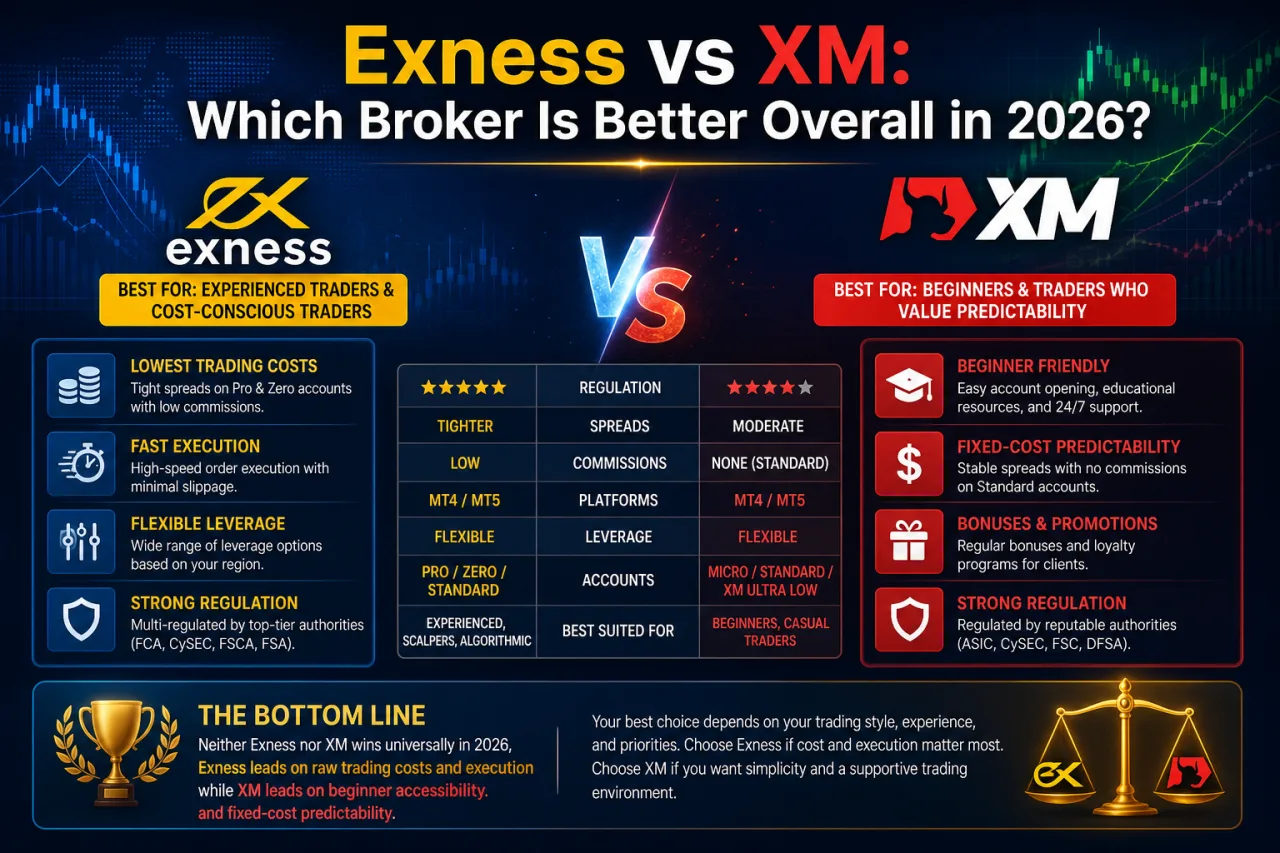
Neither Exness nor XM wins universally in 2026, as Exness leads on raw trading costs and execution while XM leads on beginner accessibility and fixed-cost predictability. This comparison spans regulation, spreads, commissions, platform selection, account structures, and trader-type suitability to establish which broker fits which profile. Exness operates as a multi-regulated broker known for tight spreads on Pro and Zero accounts, fast order execution, and flexible leverage tiers. XM operates as a globally licensed broker built around fixed-spread accounts, welcome bonuses, and structured educational resources for newer traders. The overall verdict depends on trading style rather than a single dominant broker.
Cost-focused and high-volume traders generally align better with Exness given its raw spread environment. Beginners and traders who value promotional incentives and simplified account tiers generally align better with XM. The sections below break down regulation and safety, spreads and commissions, platforms, account types, and trader-type recommendations to clarify these distinctions further.
What Are Exness and XM?
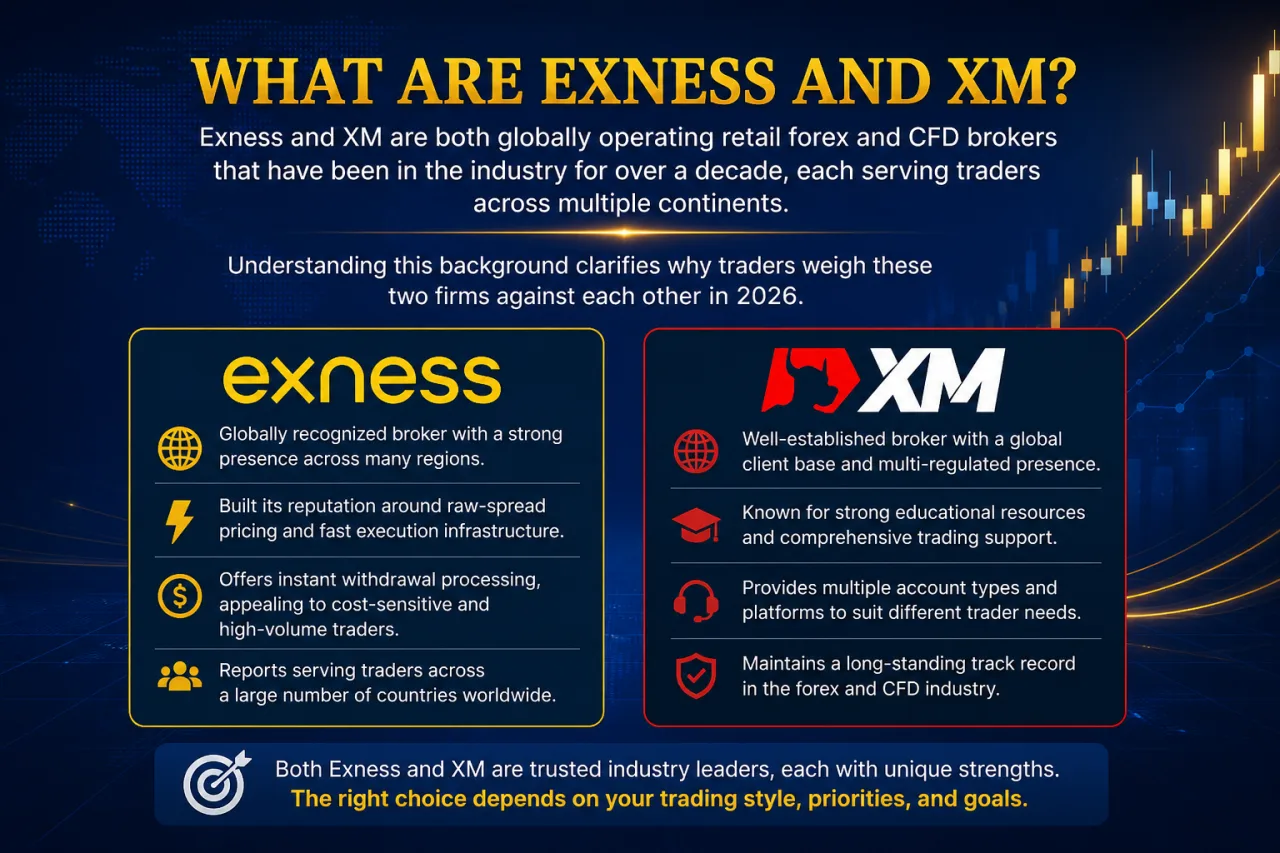
Exness and XM are both globally operating retail forex and CFD brokers that have been in the industry for over a decade, each serving traders across multiple continents.
Understanding this background clarifies why traders weigh these two firms against each other in 2026. Exness built its reputation around raw-spread pricing, fast execution infrastructure, and instant withdrawal processing marketed toward cost-sensitive and high-volume traders. Exness positions itself as a broker serving a wide international client base and promotes its trading volume disclosures as part of its transparency messaging.
XM built its reputation around fixed-spread accounts, no-requote execution claims, and structured welcome bonus programs aimed at newer traders. XM positions itself as a broker with a broad international client base supported by a network of regional offices worldwide.
Both brokers hold established reputations in the retail forex industry, though their positioning differs: Exness emphasizes execution and pricing transparency, while XM emphasizes accessibility and promotional support for beginners.
How Do Exness and XM Compare in Regulation and Safety?
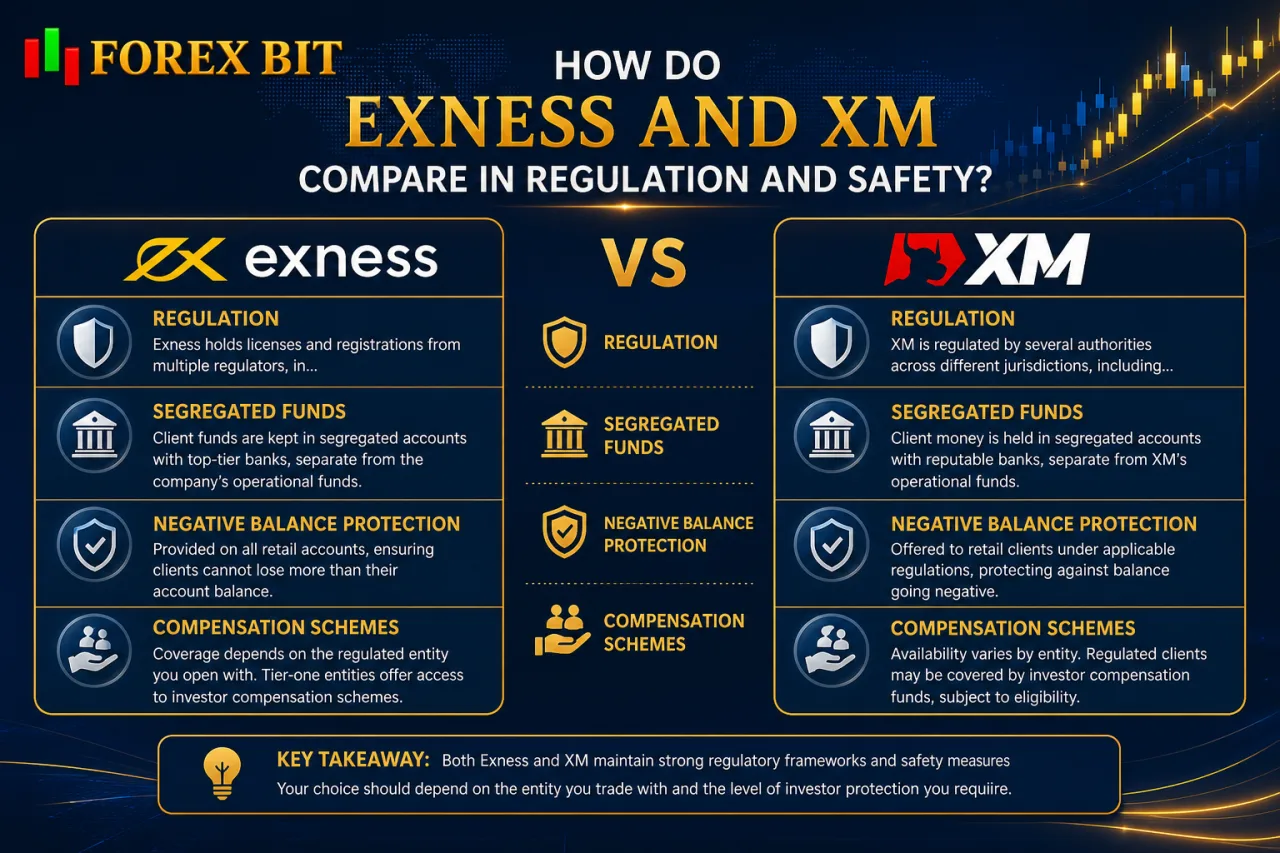
Exness and XM both operate under multiple licenses across tier-one and offshore jurisdictions, though the exact regulatory mix differs between the two brokers. This distinction matters for traders weighing fund safety, compensation coverage, and entity restrictions before opening an account.
The following breakdown covers licensing bodies, segregated funds, negative balance protection, and compensation schemes for each broker.
Exness holds licenses and registrations from multiple regulators, including both tier-one financial authorities and offshore jurisdictions.
XM operates under licenses from multiple regulators, spanning both tier-one and offshore jurisdictions.
Both brokers share similar safeguards for client funds:
- Client funds are separated from company operating capital through segregated bank accounts.
- Negative balance protection applies to retail accounts at both brokers.
- Traders under Exness and XM entities regulated by CySEC or the FCA may qualify for investor compensation schemes covering eligible claims, subject to the limits set by each respective regulator.
Regional entity restrictions also apply to both brokers. Certain countries are routed to offshore entities carrying lighter oversight than their FCA or ASIC counterparts.
Which Broker Offers Stronger Investor Protection?
XM shows a stronger investor protection profile on paper through FCA and CySEC-regulated entities offering statutory compensation schemes, while Exness offers comparable protection only under its own FCA and CySEC-licensed entities. This distinction matters because protection strength depends on which specific entity a trader gets onboarded to, not the broker’s global brand.
Traders registered under CySEC-regulated entities of Exness or XM may qualify for coverage under the Investor Compensation Fund, while UK-based clients under FCA-regulated entities of either broker may qualify for coverage under the Financial Services Compensation Scheme, subject to each scheme’s eligibility rules.
Negative balance protection applies as a baseline safeguard across retail accounts at both brokers, preventing clients from losing more than their deposited capital during volatile price swings. However, this protection typically applies only to entities regulated in jurisdictions that mandate it, such as the EU and UK, while offshore entities may offer it as a policy rather than a regulatory requirement.
Traders opening accounts under offshore entities of either broker, common for clients outside the EU, UK, or Australia, generally lose access to statutory compensation schemes even though negative balance protection often remains in place.
Exness vs XM: Which Platforms Do They Offer?
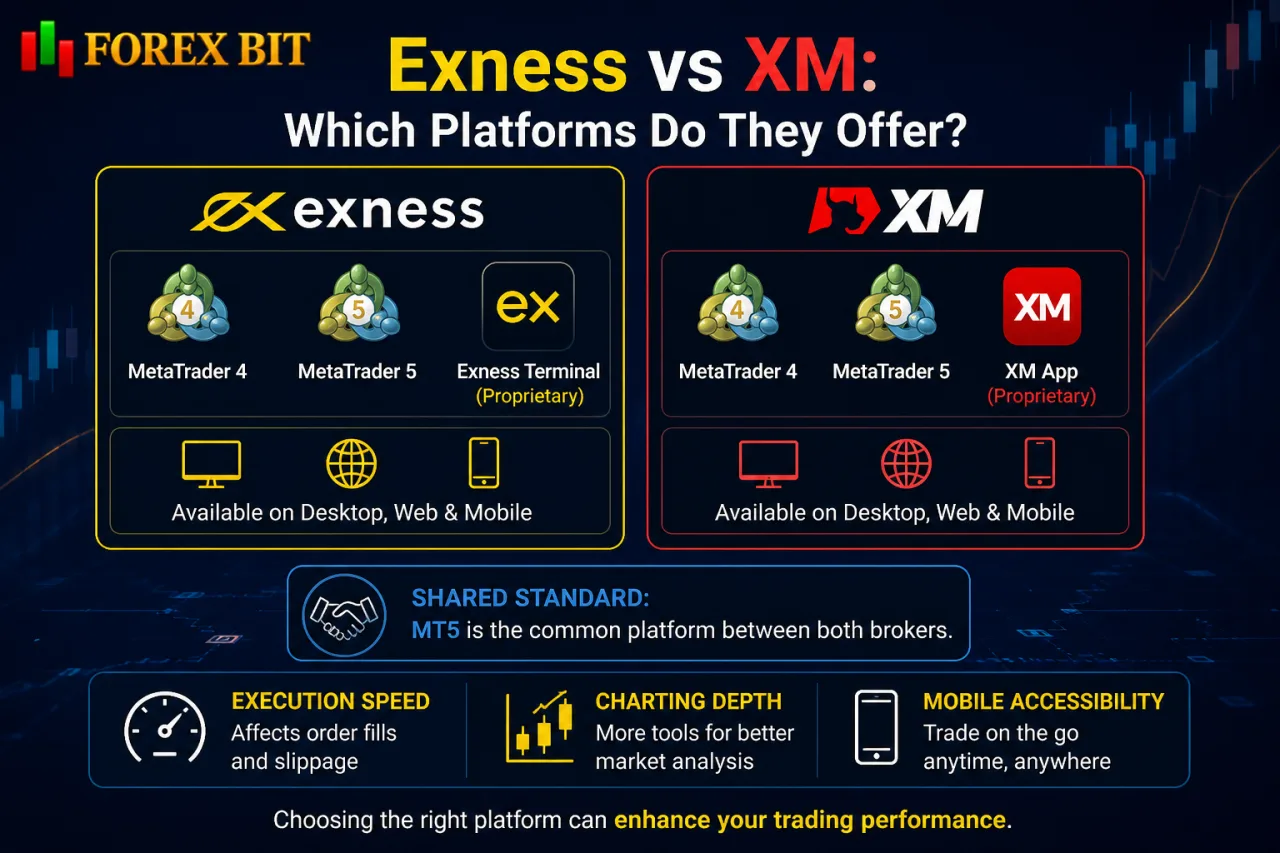
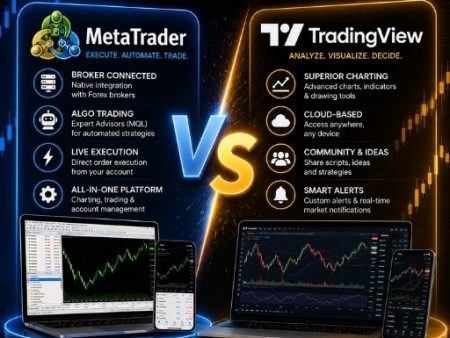
Exness supports MetaTrader 4 and MetaTrader 5 alongside its own Exness Terminal, while XM also runs MetaTrader 4 and MetaTrader 5 alongside a proprietary XM app, leaving MT5 as the shared standard between both brokers. Platform choice affects execution speed, charting depth, and mobile accessibility, so comparing each broker’s offerings clarifies which fits specific trading habits.
Exness delivers its MT4 and MT5 platforms across desktop, web, and mobile, paired with the Exness Terminal app built for quick order management and account monitoring on mobile devices. XM mirrors this setup with MT4 and MT5 on desktop, web, and mobile, plus its own XM app focused on account management, deposits, and market watch tools rather than full charting.
Exness Terminal emphasizes streamlined trade execution and real-time account tracking, while the XM app leans more toward account administration and educational content access. Both brokers offer web-based trading through browser platforms that mirror MT4/MT5 functionality without requiring downloads.
Neither broker currently lists a proprietary cTrader or TradingView-integrated platform as a core offering, keeping MT4 and MT5 as the primary trading environments for both. Traders relying on automated strategies or custom indicators find comparable support on both platforms, since MT4 and MT5 compatibility remains standardized across brokers.
What Account Types Do Exness and XM Offer?
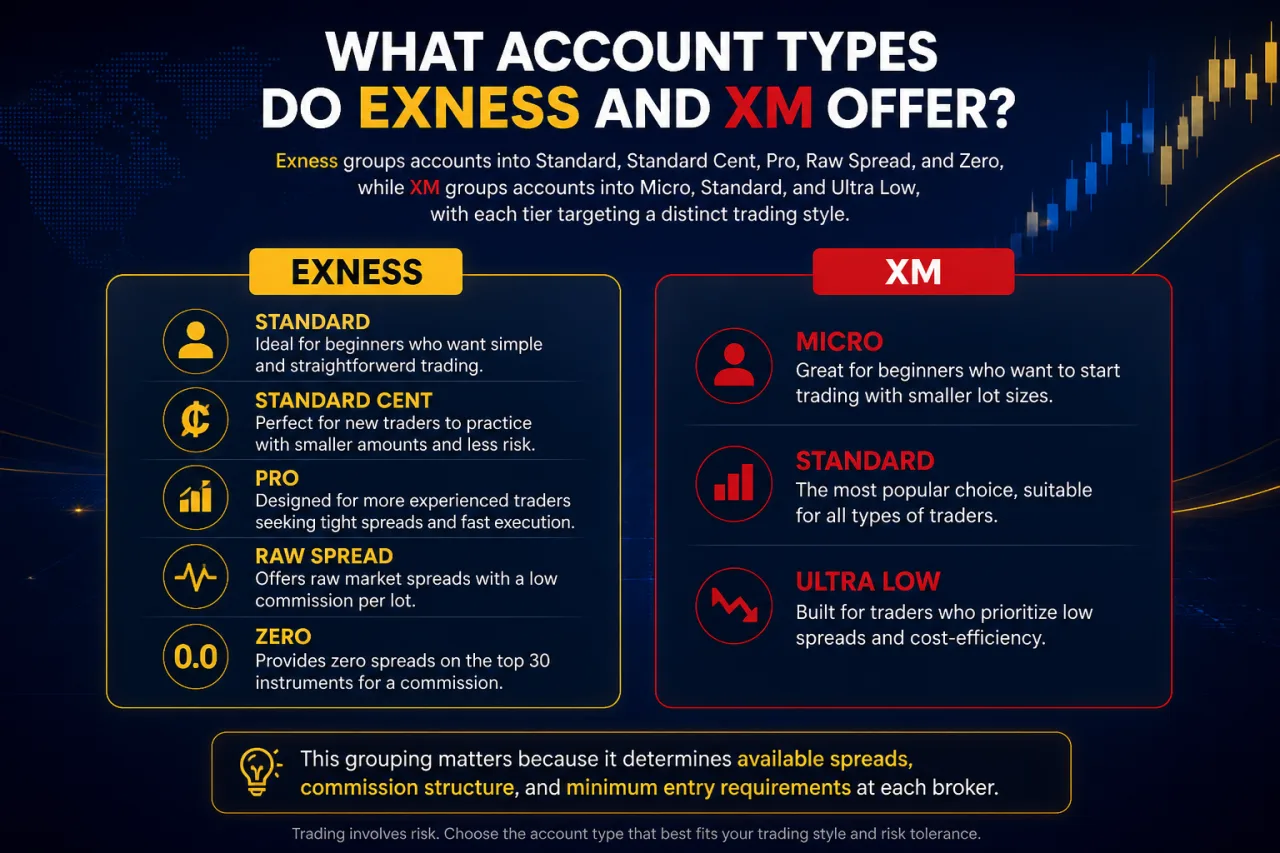
Exness groups accounts into Standard, Standard Cent, Pro, Raw Spread, and Zero, while XM groups accounts into Micro, Standard, and Ultra Low, with each tier targeting a distinct trading style. This grouping matters because it determines available spreads, commission structure, and minimum entry requirements at each broker.
Exness separates its lineup by execution model and cost structure. The Standard and Standard Cent accounts suit beginners testing strategies with smaller position sizes, while Pro, Raw Spread, and Zero accounts target cost-conscious traders through tighter spreads and, on Raw Spread and Zero, added commissions per lot.
XM organizes its lineup around simplicity and fixed pricing. The Micro account fits traders wanting smaller lot sizes for practice or low-risk exposure, the Standard account serves general retail traders with fixed spreads, and the Ultra Low account fits traders wanting reduced floating spreads with a small commission on trades.
Both brokers keep MT4 and MT5 compatibility across every account tier, so platform access does not vary by account type at either firm.
Exness vs XM: How Do Spreads, Commissions and Fees Compare?
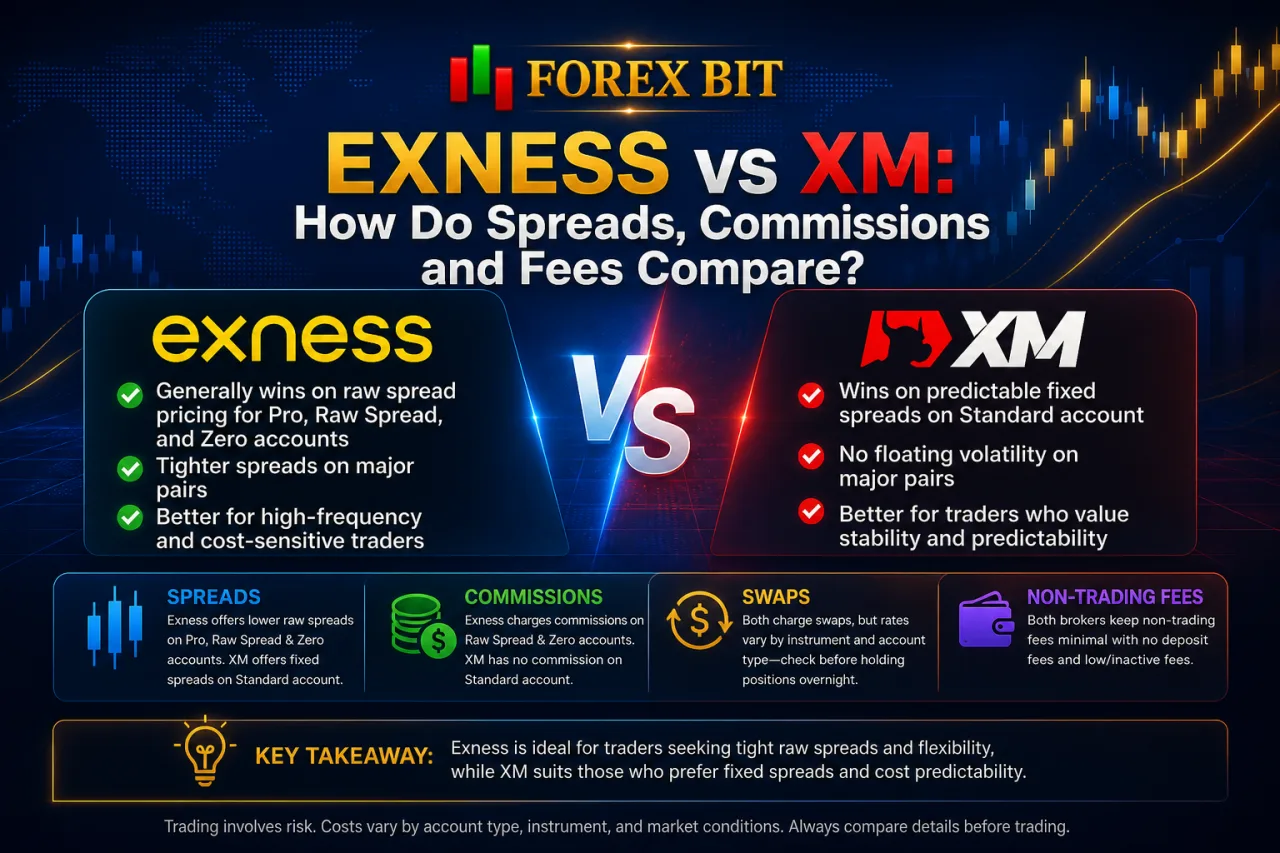
Exness generally wins on raw spread pricing for Pro, Raw Spread, and Zero accounts, while XM wins on predictable fixed spreads without floating volatility on its Standard account. Non-trading fees stay minimal at both brokers, though swap charges and account-specific commission structures create meaningful cost gaps depending on trading frequency.
The table below breaks down average spreads, commissions, and swap fees across each broker’s main account types for direct comparison.
| Broker | Account Type | Average Spread (EUR/USD) | Commission per Lot | Swap Fee |
|---|---|---|---|---|
| Exness | Standard | Floating, broker-published rate | None | Standard broker swap rate |
| Exness | Pro | Floating, tighter than Standard | None | Standard broker swap rate |
| Exness | Raw Spread | Near-zero floating spread | Charged per side | Standard broker swap rate |
| Exness | Zero | Near-zero floating spread | Charged per side | Standard broker swap rate |
| XM | Micro | Floating, broker-published rate | None | Standard broker swap rate |
| XM | Standard | Fixed or floating depending on market conditions | None | Standard broker swap rate |
| XM | Ultra Low | Reduced floating spread | Charged per side | Standard broker swap rate |
Exact spread, commission, and swap values fluctuate with market conditions and change over time, so traders should check each broker’s official pricing page for the current rates on the specific account type and instrument they plan to trade.
Which Broker Has Lower Trading Costs for Active Traders?
Exness delivers lower total trading costs for active traders through its Raw Spread and Zero accounts, combining near-zero spreads with per-lot commissions that undercut XM’s Ultra Low account on high-frequency execution. This cost comparison matters most for frequent traders where spread plus commission accumulates across dozens or hundreds of trades daily.
Exness Raw Spread and Zero accounts are generally positioned to offer very tight spreads on major pairs during peak liquidity, paired with a fixed commission charged per lot per side.
XM’s Ultra Low account tends to charge a competitive per-lot commission compared to Exness but can carry wider floating spreads on the same major pairs, which may narrow the total cost gap during high-volatility sessions.
For scalpers and high-volume traders running frequent round-trip trades, Exness typically produces a lower blended cost per lot once spread and commission are combined, while XM remains competitive mainly for traders prioritizing fixed-spread predictability over the absolute lowest total cost.
How Do Minimum Deposit and Leverage Compare Between Exness and XM?
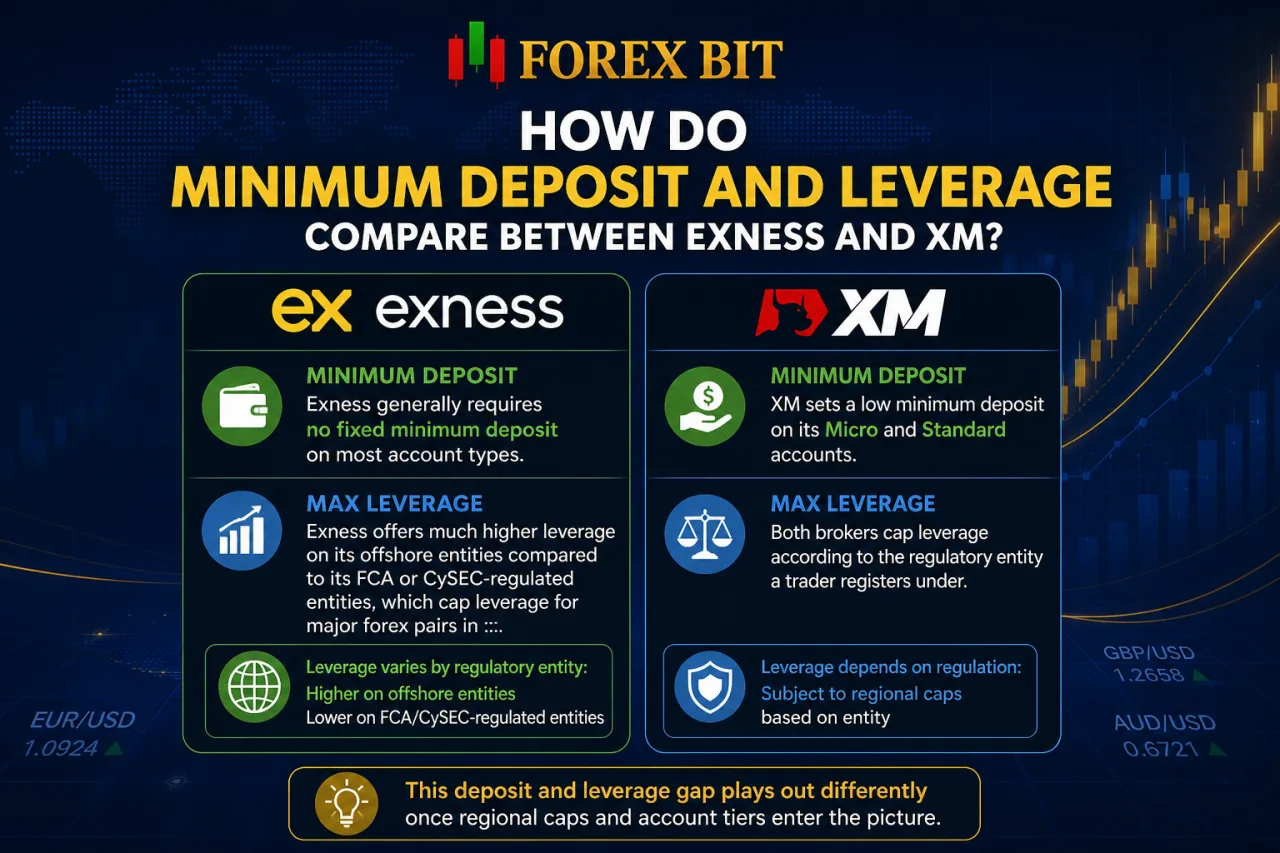
Exness requires no fixed minimum deposit on most accounts; XM sets a low minimum on its Micro and Standard accounts. Leverage caps depend on the regulatory entity a trader registers under at either broker.
This deposit and leverage gap plays out differently once regional caps and account tiers enter the picture.
Exness offers much higher leverage on its offshore entities compared to its FCA or CySEC-regulated entities, which cap leverage for major forex pairs in line with tier-one regulatory limits.
XM offers much higher leverage on its offshore entities compared to its CySEC-regulated entity, which caps leverage for retail clients trading major currency pairs in line with tier-one regulatory limits.
Traders opening accounts under EU or UK entities of either broker face the same 1:30 ceiling on major pairs, since this cap comes from ESMA and FCA rules rather than broker policy. Deposit requirements stay low at both brokers, so leverage availability under a trader’s specific regulated entity becomes the more decisive factor for margin-based strategies.
What Payment Methods and Deposit/Withdrawal Options Do They Support?
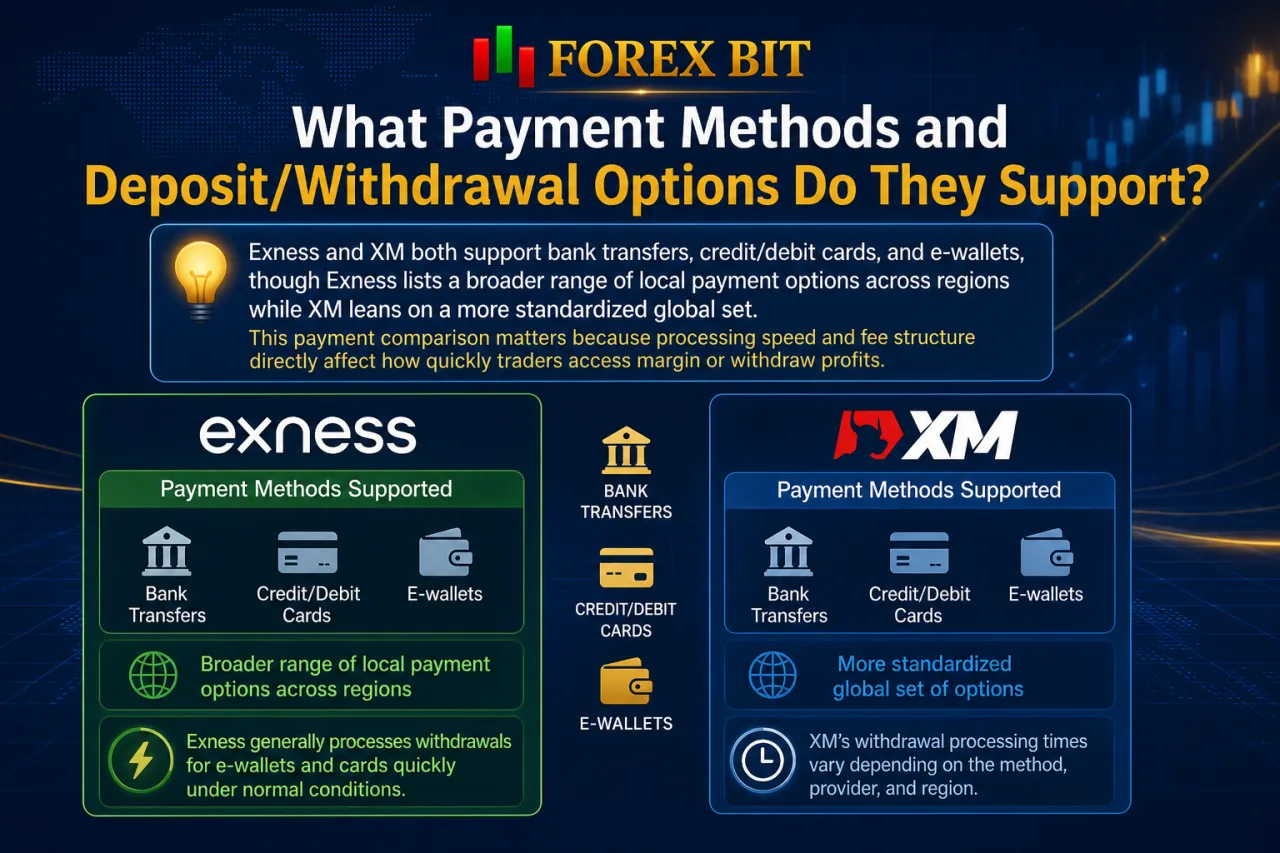
Exness and XM both support bank transfers, credit/debit cards, and e-wallets, though Exness lists a broader range of local payment options across regions while XM leans on a more standardized global set. This payment comparison matters because processing speed and fee structure directly affect how quickly traders access margin or withdraw profits.
Exness processes e-wallet and card withdrawals within 24 hours under normal conditions, while XM’s withdrawal processing typically takes 1-3 business days depending on the method used. Bank wire withdrawals at both brokers take longer than e-wallet or card methods, often requiring several business days due to intermediary bank processing.
Both brokers avoid charging deposit fees directly, though third-party payment providers or intermediary banks may apply their own charges outside broker control. Supported methods generally include:
- Bank wire transfers for larger deposit and withdrawal amounts
- Visa and Mastercard credit or debit cards
- E-wallets such as Skrill and Neteller
- Regional and local payment options that vary by country of registration
Traders relying on local payment channels typically find Exness offering a wider regional footprint, while XM keeps its payment menu more uniform across markets.
How Do Exness and XM Compare in Customer Support and Regional Availability?
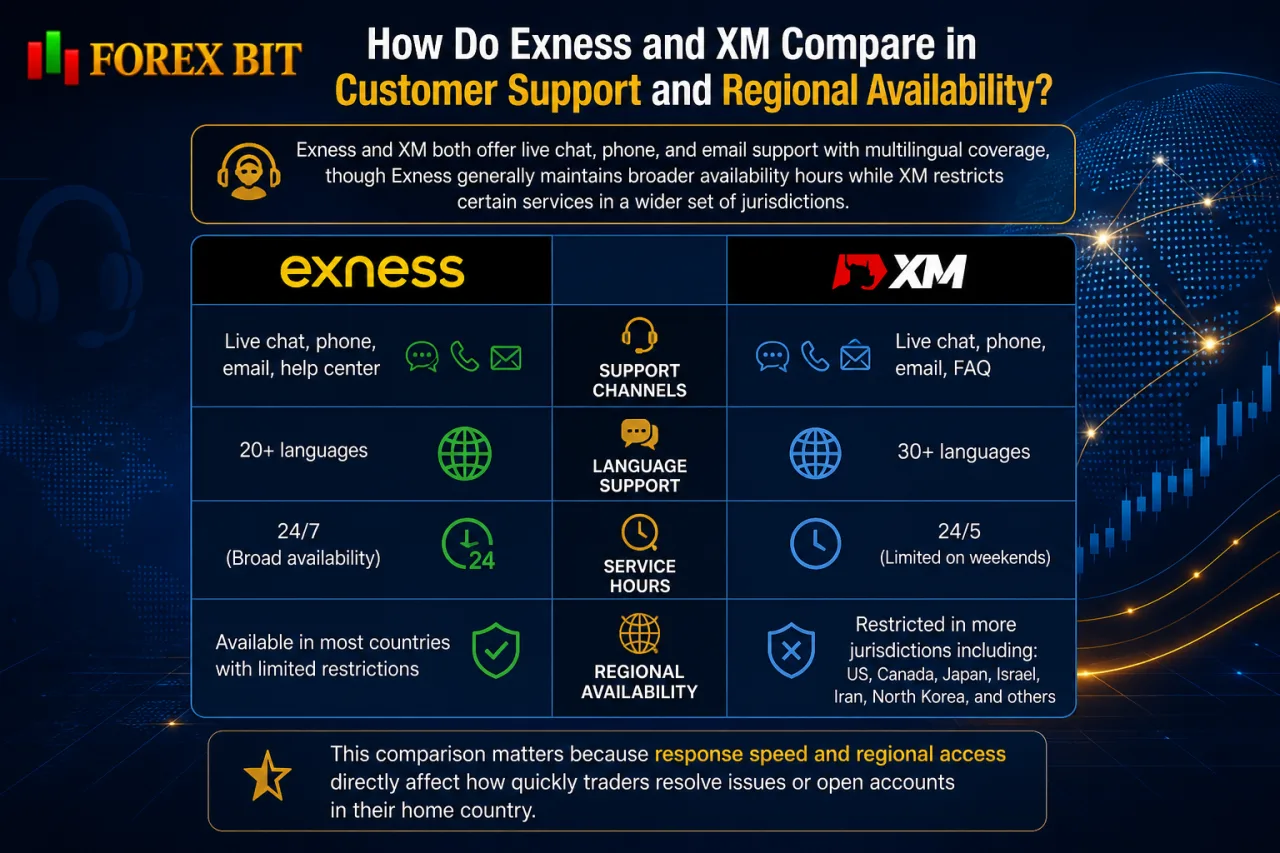
Exness and XM both offer live chat, phone, and email support with multilingual coverage, though Exness generally maintains broader availability hours while XM restricts certain services in a wider set of jurisdictions. This support and availability comparison matters because response speed and regional access directly affect how quickly traders resolve issues or open accounts in their home country. The breakdown below covers channel types, language reach, service hours, and restricted regions for each broker.
Exness provides customer support through live chat and email, with multilingual agents available to assist traders across major trading regions.
XM offers live chat, phone, and email support with multilingual coverage as well, though its phone lines tend to follow more limited business-hour schedules compared to Exness’s continuous chat access.
Both brokers restrict service to residents of certain countries, including the United States, due to regulatory constraints in those jurisdictions. Exness and XM each route traders in other restricted regions toward locally compliant entities or deny onboarding entirely depending on local financial regulations.
Which Broker Is Better Suited for Beginners, Scalpers or Copy Traders?
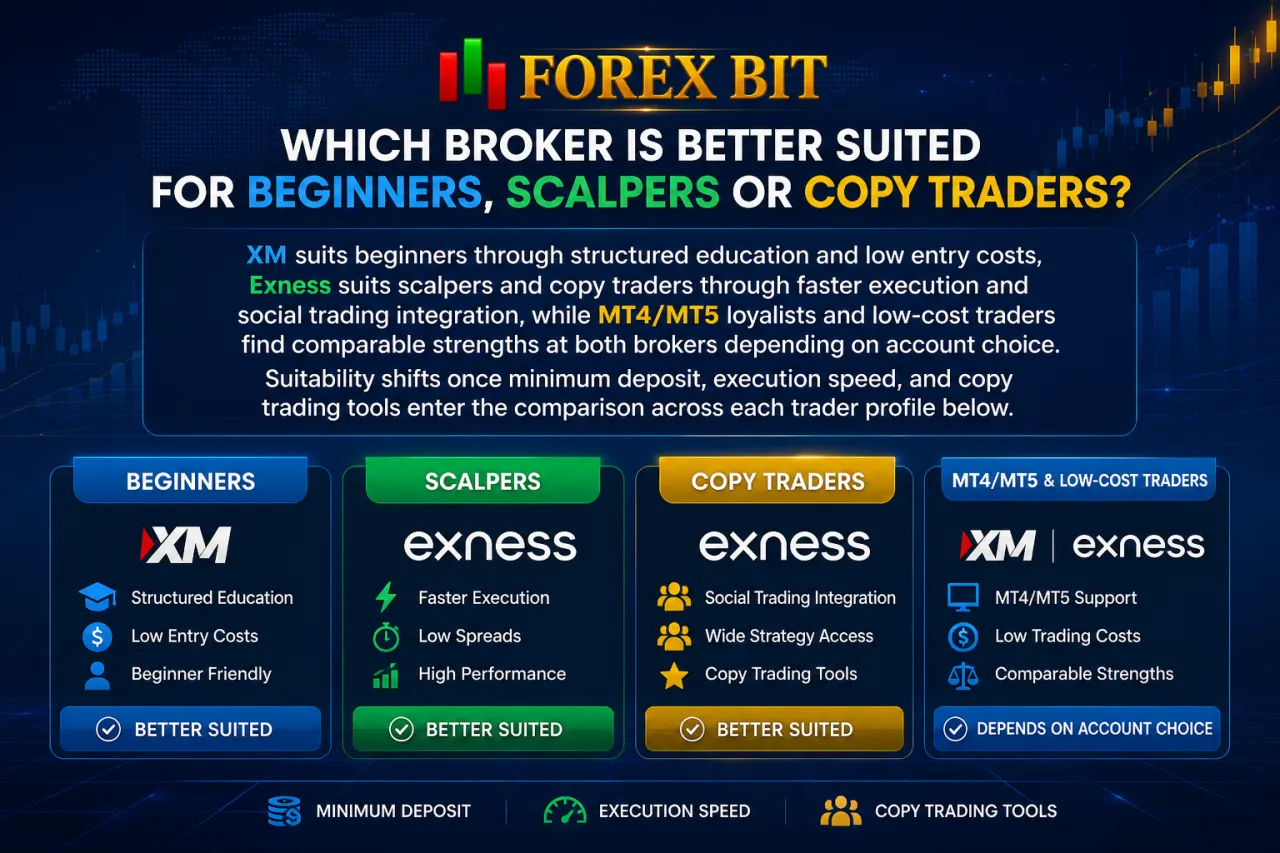
XM suits beginners, Exness suits scalpers and copy traders, while MT4/MT5 loyalists and low-cost traders find comparable strengths at both brokers. XM fits beginners through structured education and low entry costs. Exness fits scalpers and copy traders through faster execution and social trading integration. Suitability shifts once minimum deposit, execution speed, and copy trading tools enter the comparison across each trader profile below.
Is Copy Trading Better on Exness or XM?
Exness generally offers stronger copy trading depth through its Social Trading program, while XM’s copy trading runs through third-party integrations that require linking an external platform. This distinction matters for traders choosing which broker fits a hands-off, strategy-following approach.
Exness Social Trading lets traders browse strategy providers directly within the Exness ecosystem, with filtering options to help compare providers before allocating funds.
Setup stays within the broker’s own account structure, so followers do not need a separate third-party login to start mirroring a provider’s trades.
XM does not run a native copy trading platform, instead pointing traders toward third-party services that connect to XM’s MT4 or MT5 accounts.
This adds an extra setup step compared to Exness, since traders must register with the external provider before linking their XM trading account.
For traders wanting an integrated, single-platform copy trading experience, Exness fits more directly, while XM suits traders already comfortable managing a separate third-party copy trading service alongside their MT4 or MT5 account.
What Additional Tools and Programs Do Exness and XM Offer Beyond Standard Trading?
Exness and XM each extend beyond core trading through distinct extras: Exness centers on cashback/rebate-style perks and risk management tools, while XM centers on a loyalty points program, market research, webinars, and trading contests. These extras sit outside spreads, platforms, and account tiers already compared above, and they shape the day-to-day trading experience differently depending on whether a trader values cost rebates or engagement-based rewards.
Does Exness or XM Offer Better Loyalty and Rewards Programs?
XM tends to emphasize a broader loyalty and rewards structure through its points-based system and recurring promotions, while Exness focuses on cashback-style rebates tied directly to trading volume rather than a points scheme.
This distinction matters for traders comparing which broker rewards frequent activity more directly. XM’s loyalty program converts trading activity into redeemable points, which traders can exchange for bonus credit, while its promotional calendar includes periodic contests and deposit-linked offers. Exness ties its rebate-style perks to lot volume traded, crediting value back without requiring a separate points system. Traders who prefer straightforward volume-based cashback tend to find Exness more direct, while traders who value structured, redeemable point accumulation alongside contests tend to find XM’s program more engaging.
Which Broker Provides More Useful Educational and Research Resources?
XM provides deeper educational content and structured research output through regular webinars, market commentary, and trading guides, while Exness focuses more narrowly on market analysis tools and economic calendar data rather than structured courses. This distinction matters for traders weighing which broker builds skill and market awareness alongside execution and cost features already compared above.
XM runs scheduled webinars, video tutorials, and a structured education center covering technical and fundamental trading concepts for varying experience levels. Its research desk publishes daily market commentary alongside broader trading guides aimed at building trader knowledge over time.
Exness offers market analysis tools, an economic calendar, and technical insights through its platform and website, though it places less emphasis on live webinars or a formal course structure compared to XM.
Traders seeking guided learning and recurring live sessions generally find XM’s education program more comprehensive, while traders wanting quick access to market data and analysis tools without a formal curriculum find Exness sufficient for daily decision-making.
Conclusion
The Exness vs XM decision in 2026 hinges on trading style rather than a single overall champion. Exness holds the edge for cost-conscious and active traders through tighter raw spreads, faster execution, and integrated Social Trading, making it fit scalpers, copy traders, and MT4/MT5 users chasing lower blended costs. XM answers better for beginners and those valuing fixed-spread predictability, structured education, and a points-based loyalty program.
Regulatory protection depends on the specific entity a trader registers under rather than the broker’s overall brand, so matching account type, leverage cap, and jurisdiction to individual trading goals ultimately determines which broker delivers the stronger fit.
Michael Smith is a Forex Broker Comparison Specialist at Forex Bit, focusing on comparing brokers, trading platforms, account types, fees, spreads, commissions, and trading conditions. His work helps readers understand the key differences between providers so they can evaluate brokers based on their own trading needs and preferences.
Email: [email protected]
Best Brokers

Trade with the world’s largest retail broker and benefit from better - than - market conditions.

We offer a superior trading environment that puts traders in the best position to profit.

Trade with the best trading conditions. WIN THE BEST TRADING ACCOUNT AWARD.

Trade global markets with Interactive Brokers – a highly regulated multi-asset broker built for active and professional investors.






Forex Bit provides in-depth analysis of commodities, forex, and stock markets to help traders make informed investment decisions.
Best Brokers
Metatrader 5 Brokers
Metatrader 4 Brokers
Lowest Spread Forex Broker
Regulated Forex Brokers
Forex Copy Trading
Ctrader Brokers
Best Forex Broker For Beginners